What Is Clave Rhythm in Jazz Music?

GOOD FOR

Learn Jazz Standards Instuments
The Big Myth About Playing What You Hear

If you’ve ever listened to Afro-Cuban jazz, salsa, or even New Orleans second-line grooves, you’ve probably felt the powerful pulse of clave. But what exactly is clave rhythm, and why should jazz musicians care?

In this article, we’ll break down everything you need to know about clave. We’ll cover:

  • What the clave rhythm is.
  • Where clave rhythmic patterns come from.
  • What clave rhythms sound like.
  • What makes clave distinct from other Caribbean and Latin-American styles of music
  • And—most importantly—how to incorporate it into your jazz playing to expand your rhythmic vocabulary and strengthen your groove.

Rhythm is an essential and often overlooked part of the average jazz student’s journey! Be a cut above average and take your jazz chops to the next level with the Learn Jazz Standards Inner Circle. The Inner Circle has everything you need to master jazz rhythmic patterns and level up!

Improve in 30 days or less. Join the Inner Circle.

What Does Clave Mean?

In Spanish, clave means “key,” and in Afro-Cuban music, it’s exactly that. Clave is the key to the rhythm. It’s not just a pattern you play on wood blocks—it’s a time-feel and a rhythmic structure that underpins entire genres of Latin music.

Clave helps organize rhythmic phrases and aligns (or contrasts) with melodic and harmonic ideas. In jazz, clave offers a way to infuse the genre with Latin grooves.

History of the Clave Rhythm

Clave rhythms trace their roots back to West Africa. As African musical traditions were brought to the Americas through the transatlantic slave trade, they merged with Spanish and Caribbean influences, especially in Cuba.

By the 19th century, these rhythmic systems had crystallized into formalized patterns like son clave and rumba clave, which became foundational in Cuban traditional music and popular music. Later, clave rhythms filtered into jazz through figures like Dizzy Gillespie, Chano Pozo, Machito, and Mario Bauzá.

Afro-Cuban jazz (sometimes called Cubop) emerged as an explosive hybrid of bebop and Cuban rhythm in the 1940s. Today, clave-based playing remains a vital tool for any jazz musician interested in rhythmic depth and stylistic fluency.

History of Clave in Jazz

The fusion of clave rhythms with jazz began in earnest in the 1940s, when bebop pioneers in New York started to collaborate with Cuban percussionists.

The turning point came in 1947 when trumpeter Dizzy Gillespie joined forces with Cuban conguero Chano Pozo, creating a revolutionary blend of modern jazz harmony with Afro-Cuban rhythm.
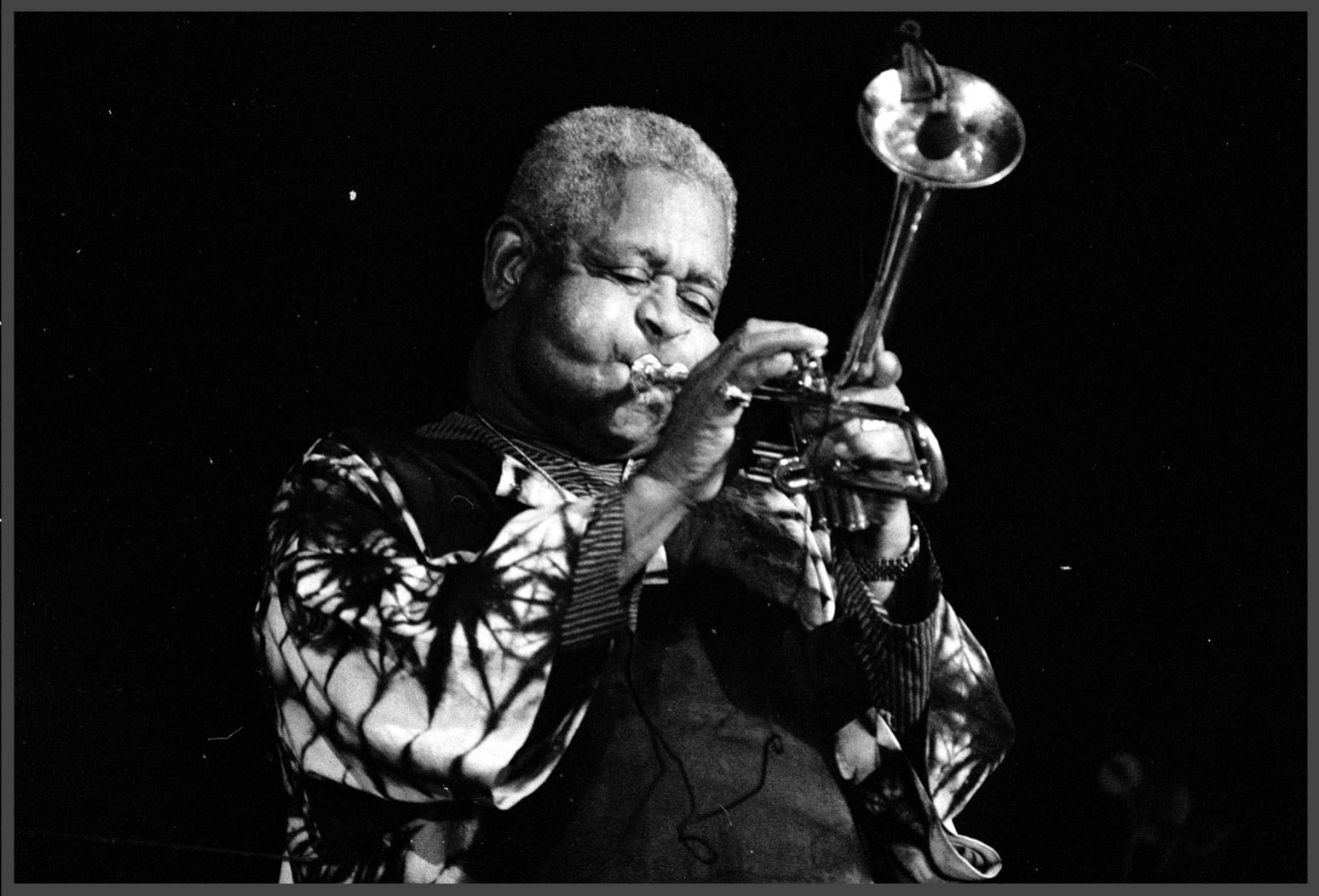
Dizzy Gillespie

image source: Wikimedia Commons

Their composition “Manteca” is widely regarded as one of the first bona fide Afro-Cuban jazz pieces, and it’s built around a 2-3 clave rhythm (even though there isn’t a clear clave instrument playing the 2-3 clave).

At the heart of this new style—often called Cubop—was the clave rhythm. Cuban clave rhythms dictated the phrasing of melodies, the accents of the rhythm section, and even the arc of improvised solos.

Cuban musicians like Machito, Mario Bauzá, and Mongo Santamaría brought an authentic clave-based rhythmic foundation, while American jazz musicians added harmonic complexity and improvisational language.

Through the 1950s and 60s, the clave made its way into recordings by Art Blakey, Cal Tjader, Herbie Mann, and Kenny Dorham. Pianist Eddie Palmieri and vibraphonist Tito Puente helped solidify the language of Latin jazz as a genre of its own, where an understanding of clave was essential.

Today, clave remains a critical element in Latin jazz, Brazilian jazz, and even modern straight-ahead settings. Knowing how to play with the clave rather than against it can elevate your sense of groove, timing, and interaction in a band setting, especially if you’re playing with percussion instruments.

Check out this article on the best jazz trumpet players for more on Dizzy Gillespie.

Clave Instruments vs Clave Rhythmic Patterns

Let’s clear up a common confusion.

Clave can refer to the Cuban clave rhythms as well as the hardwood sticks often used to play them.

Clave (instrument)
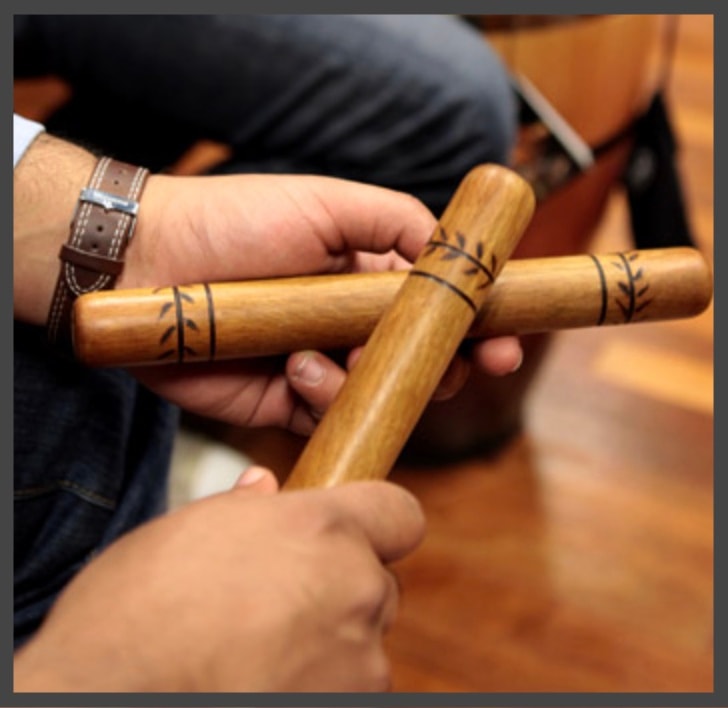
Clave Instrument; Clave rhythm

image source: Wikimedia Commons

The clave instrument consists of two wooden sticks struck together to produce clave rhythms.

Clave (rhythmic pattern)

3:2 Son Clave Pattern in 4/4

The clave rhythmic pattern is a repeating rhythmic pattern that demarcates the passage of musical time in Afro-Cuban music. Clave can be implied across several instruments, even if no one is literally playing the wooden sticks.

Yes, you can play clave without playing the claves. The classic recording of “Manteca,” shared above, doesn’t feature the clave instrument, but strongly implies the 2-3 Son clave with its layers of percussion and melodic structure (more on Son clave below).

Cuban Clave and Western Music Theory

Clave organically developed outside of Western music theory concepts. Traditional musical concepts like clave weren’t the academic inventions of Western-trained musicians—instead, these concepts developed from rich musical traditions rooted in performance and oral tradition.

We can explain and understand rhythmic concepts like clave through the lens of standard Western notation, but that understanding isn’t superior. Clave patterns set the musical framework of Afro-Cuban music in the way that time signatures and measures structure Western musical pieces.

We can translate clave patterns onto the staff, but this is a kind of distillation in the same way that any musical notation is a distillation of the actual performance and playing of music. That being said, we can pretty accurately represent clave patterns on the staff. Here’s how they work.

The Clave Feel in Western Music Theory Terms

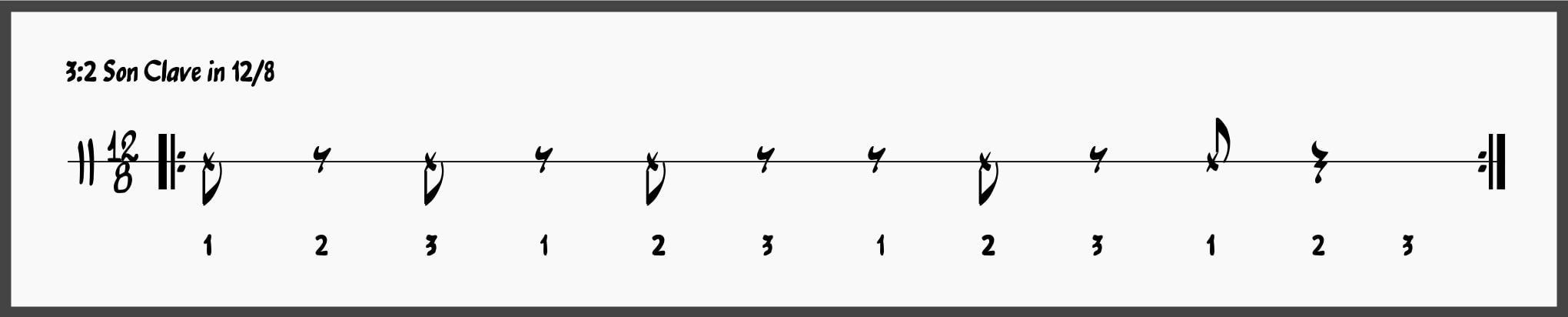
Clave patterns can be noted in different time signatures, but for this article, we’ll stick to 4/4 time as it is most familiar to Western-trained musicians. Note, however, that clave can be played with a triple pulse and notated in 6/8 or 12/8, or it can be played with a duple pulse and notated in 2/4 or 4/4.

Clave Notated in 4/4 (Duple Pulse)

Clave Notated in 4/4

Clave Notated in 12/8 (Triple Pulse)

Clave Notated in 12/8

For our purposes, the clave rhythm plays with the rhythmic contrast between a measure of three accented beats and a measure of two accented beats, when translated for 4/4 time.

Therefore, the clave pattern is a two-measure rhythmic pattern that serves as the pulse and structure of Afro-Cuban music (and other types of Latin music). We can label the side with three beats the three-side of the clave and the side with two beats the two-side of the clave.

Antecedent and consequent are sometimes used to describe the first group and the second group, respectively.

Three-Side (Antecedent) and Two-Side (Consequent) of Clave

These two “sides” rhythmically contrast with one another and, when taken together, constitute a whole unit of rhythmic time. Remember, Western music theory isn’t the only way to understand clave patterns. We’re taking one system of understanding to explain another system that evolved separately.

BEFORE YOU CONTINUE...

If music theory has always seemed confusing to you and you wish someone would make it feel simple, our free guide will help you unlock jazz theory secrets.

Jazz Theory Made Easy Fast Track Guide Ebook Cover

Son Clave and Rumba Clave—Two Types of Cuban Clave Rhythms in Jazz Music

There are two primary types of clave rhythms used in Afro-Cuban music and Latin jazz:

  1. Son Clave
  2. Rumba Clave

Each comes in two versions: 3:2 and 2:3. These numbers refer to the order of rhythmic groupings. For our examples, each grouping, either two accented beats or three accented beats, will sit across two measures.

Son Clave Rhythm

The son clave is the most commonly used clave in jazz and salsa. Here’s how the 3-2 son clave looks and sounds.

3:2 Son Clave

With a 3:2 son clave, the first bar has three accented beats and the second bar has two.

3:2 Son Clave in 4/4

The 2-3 son clave simply flips the order of accented groupings. Now the first measure has two beats and the second measure has three. Here is the 2:3 son clave.

2:3 Son Clave

2:3 Son Clave in 4/4

Rumba Clave Rhythm

The rumba clave is almost the same pattern, except it has a slight difference in the group of three beats. With the rumba clave, the last beat in the grouping of three occurs on an upbeat instead of the downbeat. This intensifies the syncopated feel of the clave groove.

3:2 Rumba Clave

3:2 Rumba Clave in 4/4

2:3 Rumba Clave

2:3 Rumba Clave in 4/4

The rumba clave is often used in guaguancó and other folkloric Cuban styles, but you’ll also hear it in jazz interpretations of Afro-Cuban forms. Jazz musicians need to be able to distinguish and switch between these two clave feels.

Mixing Clave Patterns

In modern Latin music and jazz, there isn’t a need to stay consistent with a particular clave feel throughout a whole performance. Sometimes, musicians will alternate between 3:2 and 2:3 clave patterns. It isn’t unheard of to mix son and rumba clave within the same performance, either.

Mixed Son Clave (3:2; 2:3)

Mixed Son Clave (3:2; 2:3)

Here, we start with a 3:2 son clave and finish on a 2:3 son clave.

Mixed Son Clave (2:3; 3:2)

Mixed Son Clave (2:3; 3:2)

This example is the opposite of the previous example. We start with a 2:3 son clave and finish on a 3:2 son clave.

Mixed Rumba Clave (3:2; 2:3)

Mixed Rumba Clave (3:2; 2:3)

Here we have a mixed 3:2; 2:3 rumba clave pattern.

Mixed Rumba Clave (2:3; 3:2)

Mixed Rumba Clave (2:3; 3:2)

In this example, we see the inverse of the previous example. We have a 2:3; 3:2 rumba clave pattern.

You can come up with other patterns by mixing son and rumba clave in the same set!

Clave and Brazilian Music—What About Bossa Nova?

While clave is central to Afro-Cuban and Caribbean styles, Brazilian music follows a different (albeit related) rhythmic logic. That said, it’s just as important to understand if you’re exploring Latin rhythms in jazz.

Bossa nova, samba, and baião, all forms of Brazilian music, don’t rely on a fixed 2-bar clave pattern the same way Afro-Cuban music does.

Instead, they’re built on composite rhythms created by layering percussion instruments (like the surdo, tamborim, agogô, and pandeiro) with syncopated guitar and bass figures.

So What’s the Connection?

  • Both Afro-Cuban and Brazilian styles emphasize syncopation, polyrhythm, and rhythmic tension/release.
  • In jazz contexts, Brazilian grooves are often interpreted with a quasi-clave feel—meaning you still need to be aware of where rhythmic accents fall, even if they don’t match son or rumba clave precisely.
  • The bossa nova guitar pattern, famously played by João Gilberto, uses steady eighth-note syncopations that “float” across the bar line, creating a relaxed but rhythmically rich texture.

This rhythmic tension between a steady bass pulse and syncopated chord hits is similar in spirit to clave, even though the structure differs.

Check out this article to learn more about Bossa Nova and Bossa Nova chord progressions.

Why It Matters for Jazz Musicians

Understanding the differences between Afro-Cuban and Brazilian rhythmic traditions is crucial. They aren’t interchangeable “Latin” grooves. Each has its own set of rules, instruments, phrasing styles, and performance practices.

Mastering both will massively expand your rhythmic flexibility and stylistic range—not just as a soloist, but as a rhythm section player too.

Check out this article on jazz rhythms for more information.

Why You Should Incorporate Latin Rhythms Into Your Playing

If you want to level up your rhythmic vocabulary, start learning clave-based grooves. Here’s why:

  • Deepens your time-feel: Clave teaches rhythmic layering, tension and release, and syncopation.
  • Expands stylistic fluency: Latin jazz, bossa nova, samba, and Afro-Cuban styles are essential branches of the jazz tree.
  • Improves comping and solo phrasing: Clave structures help you phrase more intentionally, especially over Latin grooves or straight-eighth feels.
  • Enhances group communication: Knowing clave lets you lock in with percussionists, bassists, and rhythm section players who are playing within that rhythmic tradition.

Practice Clave Patterns This Way!

Start with a metronome set to a moderate tempo (120 bpm). Each click represents beats 1, 2, 3, and 4.

  1. Clap and count 3:2 and 2:3 son clave rhythms.
  2. Clap and count 3:2 and 2:3 rumba clave rhythms.
  3. Tap each clave rhythm with your left hand, while playing steady quarternotes with your right.
  4. Switch hands and play the clave with your right hand while keeping the beat with your left.

Next, cut the tempo of the metronome in half (60 bpm)! Now, each click represents beats 2 and 4, but the “tempo” of the exercise remains the same. You have less rhythmic information and are now responsible for keeping track of beats 1 and 3.

  1. Clap and count 3:2 and 2:3 son clave rhythms.
  2. Clap and count 3:2 and 2:3 rumba clave rhythms.
  3. Tap each clave rhythm with your left hand, while playing steady quarternotes with your right.
  4. Switch hands and play the clave with your right hand while keeping the beat with your left.

Finally, cut the tempo of the metronome in half again (30 bpm). Now, each click represents beat 2 only! You are responsible for beats 1, 3, and 4. This will be the most challenging version of this exercise.

  1. Clap and count 3:2 and 2:3 son clave rhythms.
  2. Clap and count 3:2 and 2:3 rumba clave rhythms.
  3. Tap each clave rhythm with your left hand, while playing steady quarternotes with your right.
  4. Switch hands and play the clave with your right hand while keeping the beat with your left.

Now it’s time to take these exercises to your instrument!

Take Your Rhythm Skills to the Next Level—Join the Inner Circle!

Rhythmic fluency is a lifelong journey, and clave is a powerful tool to turn your rhythm chops pro. If you want to supercharge your jazz practice, gain access to valuable step-by-step courses, and surround yourself with a passionate community of jazz lovers, join the Learn Jazz Standards Inner Circle.

The Inner Circle has everything you need to take your jazz playing to the next level.

Improve in 30 days or less. Join the Inner Circle.
TAKE YOUR JAZZ PLAYING TO THE NEXT LEVEL.

We help musicians of all instruments start improvising confidently over jazz standards in just 30 days without mind-numbing hours of practice or the overwhelm.

TAKE YOUR JAZZ PLAYING TO THE NEXT LEVEL.

We help musicians of all instruments start improvising confidently over jazz standards in as little as 30 days without mind-numbing hours of practice or the overwhelm.

“Jazz music is the power of now. There is no script. It’s conversation. The emotion is given to you by musicians as they make split-second decisions to fulfill what they feel the moment requires.”
WYNTON MARSALIS

YOU MAY ALSO BE INTERESTED IN

Learn Jazz Standards The Smart Way Ebook Cover

OUR PROVEN PROCESS FOR LEARNING JAZZ STANDARDS LIKE A PRO

A step-by-step guide for how to effectively learn jazz standards so you’ll feel confident playing them, and won’t forget them.

TERMS AND CONDITIONS

Welcome to LearnJazzStandards.com! We’ve created this page so that you (and any visitor to LearnJazzStandards.com) will understand the terms and conditions that govern your use of this website. If you continue to browse and use this website you are agreeing to comply with and be bound by the following terms and conditions, which together with our privacy policy comprise our (LearnJazzStandards.com’s) entire relationship with you.

Exclusion of Liability

The content found on any page of this website is for your general information and use only, and it is subject to change without notice. Neither we nor any third parties provide any warranty or guarantee as to the accuracy, timeliness, performance, completeness or suitability of the information and materials found or offered on this website for any particular purpose. You acknowledge that such information and materials may contain inaccuracies or errors and we expressly exclude liability for any such inaccuracies or errors to the fullest extent permitted by law. Your use of any information or materials on this website is entirely at your own risk, for which we shall not be liable. It shall be your own responsibility to ensure that any products, services or information available through this website meet your specific requirements.

Indemnity

By accessing our website, you agree to indemnify and hold us harmless from all claims, actions, damages, costs and expenses including legal fees arising from or in connection with your use of our website.

Copyright Laws & Intellectual Property

This website contains some material which is owned by or licensed to us. This material includes, but is not limited to, the design, layout, look, appearance and graphics. Reproduction is prohibited other than in accordance with the copyright notice, which forms part of these terms and conditions. All logos, trademarks, and other intellectual property found on LearnJazzStandards.com are the property of their respective owners. They do not indicate ownership, affiliation, sponsorship, or any other relationship with LearnJazzStandards.com. In addition, this website may also include links to other websites. These links are provided for your convenience to provide further information. They do not signify that we endorse those websites, and we have no responsibility for the content of those linked websites.

Unauthorized Use

Your use of this website and any dispute arising out of such use of the website is subject to the laws of the United States of America. Any unauthorized use of this website may give rise to a claim for damages and/or be a criminal offense. Thanks, and enjoy LearnJazzStandards.com!

Return Policy for Products

Refund Policy

For play-alongs and eBooks:

Because these are digital downloads, and not returnable, we have a strict no refund policy. All purchases are final and cannot be reversed. Please be sure that you fully understand the product you are purchasing and what is and what is not included. Of course, if you ever have any questions about a product feel free to contact us or visit our FAQ page.

For 30 Days to Better Jazz Playing eCourse

Please make sure you completely understand the product you are buying before purchasing. 14 Day 100% Money Back Guarantee
  • This guarantee lasts 14 days, which completely covers almost half of the course, enough for you to observe its’ effectiveness.
  • We can’t guarantee you will be Miles Davis, Charlie Parker, or John Coltrane in 2 weeks. We’d be suspicious of anyone who could promise that. Becoming a better jazz musician is a process and it requires work.
  • If you’re not happy with the quality of this program…send us an email and showing you did the work. We’ll refund 100% of your money (We’ll even eat the credit-card processing fees) and we’ll part as friends. We believe in the power of this course and so we’ll take responsibility for it.

For Inner Circle Membership

Please make sure you completely understand the product you are buying before purchasing. 30 Day 100% Money Back Guarantee
  • This guarantee lasts 30 days, which is enough for you to observe the membership’s effectiveness.
  • We can’t guarantee you will be Miles Davis, Charlie Parker, or John Coltrane in 30 days. We’d be suspicious of anyone who could promise that. Becoming a better jazz musician is a process and it requires work.
  • If you’re not happy with the quality of this program…send us an email and showing you did the work. We’ll refund 100% of your money (We’ll even eat the credit-card processing fees) and we’ll part as friends. We believe in the power of this course and so we’ll take responsibility for it.

Rights of use

All digital products are for the use of the individual customer only. Redistribution or reselling of our digital products is strictly prohibited and a violation of United States and New York State law.

PRIVACY POLICY

At Learn Jazz Standards LLC, we recognize that privacy of your personal information is important.

Here are the types of personal information we may collect when you use and visit LearnJazzStandards.com, and how we safeguard your information. We never sell your personal information to third parties.

Log Files

As with most other websites, we collect and use the data contained in log files. The information in the log files include your IP (internet protocol) address, your ISP (internet service provider, such as AOL or Shaw Cable), the browser you used to visit our site (such as Internet Explorer or Firefox), the time you visited our site and which pages you visited throughout our site.

Cookies and Web Beacons

We may use cookies to store information, such as your personal preferences when you visit our site. This could include only showing you a popup once in your visit, or the ability to log in to some of our features, such as forums. We collect this information to help send you only pertinent content that we believe you are interested in and will benefit from.

We also use third party advertisements on LearnJazzStandards.com to support our site. Some of these advertisers may use technology such as cookies and web beacons when they advertise on our site, which will also send these advertisers (such as Google through the Google AdSense program) information including your IP address, your ISP, the browser you used to visit our site, and in some cases, whether you have Flash installed.

This is generally used for geotargeting purposes (showing New York real estate ads to someone in New York, for example) or showing certain ads based on specific sites visited (such as showing cooking ads to someone who frequents cooking sites).

DoubleClick DART cookies

We also may use DART cookies for ad serving through Google’s DoubleClick service, which places a cookie on your computer when you are browsing the web and visit a site using DoubleClick advertising (including some Google AdSense advertisements).

This cookie is used to serve ads specific to you and your interests (“interest based targeting”). The ads served will be targeted based on your previous browsing history (For example, if you have been viewing sites about visiting Las Vegas, you may see Las Vegas hotel advertisements when viewing a non-related site, such as on a site about hockey).

DART uses “non personally identifiable information.” It does NOT track personal information about you, such as your name, email address, physical address, telephone number, social security numbers, bank account numbers or credit card numbers. You can opt-out of this ad serving on all sites using this advertising by visiting http://www.doubleclick.com/privacy/dart_adserving.aspx

You can chose to disable or selectively turn off our cookies or third-party cookies in your browser settings, or by managing preferences in programs such as Norton Internet Security. However, this can affect how you are able to interact with our site as well as other websites. This could include the inability to login to services or programs, such as logging into forums or accounts.

Deleting cookies does not mean you are permanently opted out of any advertising program. Unless you have settings that disallow cookies, the next time you visit a site running the advertisements, a new cookie will be added.

Email Addresses

If you share your email address with LearnJazzStandards.com via the contact page, we will only use it to contact you, and will NOT add you to any lists or newsletters without your consent.

In addition, if you sign up for the free newsletter, your email address will only be used to send special offers and updates from LearnJazzStandards.com. Addresses are recorded and kept secure through MailChimp, which we use to distribute information to our subscribers. Neither MailChimp nor LearnJazzStandards.com will give or sell your address to any third party, nor will you be added to any additional lists.

Right to Be Forgotten

If at any point you wish to be completely deleted from our databases, whether it be as a newsletter subscriber or an account holder on learnjazzstandards.com, you have the complete right to do so.

Contact us, and we will ensure your data is cleared from our system.

Data Control Contact

If you ever wish to reach out to us regarding the use of your data, we are reachable at [email protected]. Additionally, you can use our contact page, to reach out any time.

In short, your information is safe with us, and we greatly value your trust.

Thanks for using Learn Jazz Standards!

Terms of Use

Welcome to LearnJazzStandards.com!

We’ve created this page so that you (and any visitor to LearnJazzStandards.com) will understand the terms and conditions that govern your use of this website.

If you continue to browse and use this website you are agreeing to comply with and be bound by the following terms and conditions, which together with our privacy policy comprise our (LearnJazzStandards.com’s) entire relationship with you.

Exclusion of Liability

The content found on any page of this website is for your general information and use only, and it is subject to change without notice.

Neither we nor any third parties provide any warranty or guarantee as to the accuracy, timeliness, performance, completeness or suitability of the information and materials found or offered on this website for any particular purpose.

You acknowledge that such information and materials may contain inaccuracies or errors and we expressly exclude liability for any such inaccuracies or errors to the fullest extent permitted by law.

Your use of any information or materials on this website is entirely at your own risk, for which we shall not be liable. It shall be your own responsibility to ensure that any products, services or information available through this website meet your specific requirements.

Indemnity

By accessing our website, you agree to indemnify and hold us harmless from all claims, actions, damages, costs and expenses including legal fees arising from or in connection with your use of our website.

Copyright Laws & Intellectual Property

This website contains some material which is owned by or licensed to us. This material includes, but is not limited to, the design, layout, look, appearance and graphics. Reproduction is prohibited other than in accordance with the copyright notice, which forms part of these terms and conditions.

All logos, trademarks, and other intellectual property found on LearnJazzStandards.com are the property of their respective owners. They do not indicate ownership, affiliation, sponsorship, or any other relationship with LearnJazzStandards.com.

In addition, this website may also include links to other websites. These links are provided for your convenience to provide further information. They do not signify that we endorse those websites, and we have no responsibility for the content of those linked websites.

Unauthorized Use

Your use of this website and any dispute arising out of such use of the website is subject to the laws of the United States of America. Any unauthorized use of this website may give rise to a claim for damages and/or be a criminal offense.

Thanks, and enjoy LearnJazzStandards.com!

Return Policy for Products

Refund Policy

For play-alongs and eBooks:

Because these are digital downloads, and not returnable, we have a strict no refund policy. All purchases are final and cannot be reversed. Please be sure that you fully understand the product you are purchasing and what is and what is not included. Of course, if you ever have any questions about a product feel free to contact usor visit our FAQ page.

For 30 Days to Better Jazz Playing eCourse

Please make sure you completely understand the product you are buying before purchasing.

14 Day 100% Money Back Guarantee

  • This guarantee lasts 14 days, which completely covers almost half of the course, enough for you to observe its’ effectiveness.
  • We can’t guarantee you will be Miles Davis, Charlie Parker, or John Coltrane in 2 weeks. We’d be suspicious of anyone who could promise that. Becoming a better jazz musician is a process and it requires work.
  • If you’re not happy with the quality of this program…send us an email and showing you did the work. We’ll refund 100% of your money (We’ll even eat the credit-card processing fees) and we’ll part as friends. We believe in the power of this course and so we’ll take responsibility for it.

Rights of use

All digital products are for the use of the individual customer only. Redistribution or reselling of our digital products is strictly prohibited and a violation of United States and New York State law.

Learn Jazz Standards Messaging Terms & Conditions

Effective Date:

This SMS message program is a service of Learn Jazz Standards. By providing your cell phone number, you agree to receive recurring automated promotional and personalized marketing text messages (e.g., SMS/MMS cart reminders, sale notices, etc) from Learn Jazz Standards. These messages include text messages that may be sent using an automatic telephone dialing system, to the mobile telephone number you provided when signing up or any other number that you designate. You give Learn Jazz Standards permission to send text messages to the enrolled cell phone number through your wireless phone carrier, unless and until you end permission per these Terms & Conditions. Consent to receive automated marketing text messages is not a condition of any purchase. Message & data rates may apply.

Message frequency may vary. Learn Jazz Standards reserves the right to alter the frequency of messages sent at any time, so as to increase or decrease the total number of sent messages. Learn Jazz Standards also reserves the right to change the short code or phone number from which messages are sent and we will notify you if we do so.

Not all mobile devices or handsets may be supported and our messages may not be deliverable in all areas. Learn Jazz Standards, its service providers and the mobile carriers supported by the program are not liable for delayed or undelivered messages.

By enrolling in the Learn Jazz Standards messaging program, you also agree to these messaging terms & conditions (“Messaging Terms”), our Learn Jazz Standards Terms of Use and Learn Jazz Standards Privacy Policy.

Cancellation

Text the keyword STOP, STOPALL, END, CANCEL, UNSUBSCRIBE or QUIT to the telephone number, long code, or short code that sends you our initial confirmation message to cancel. After texting STOP, STOPALL, END, CANCEL, UNSUBSCRIBE or QUIT to the telephone number, long code, or short code that sends you our initial confirmation message you will receive one additional message confirming that your request has been processed. If you change your preferences, it may take up to 48 hours for it to take effect. You acknowledge that our text message platform may not recognize and respond to unsubscribe requests that do not include the STOP, STOPALL, END, CANCEL, UNSUBSCRIBE or QUIT keyword commands and agree that Learn Jazz Standards and its service providers will have no liability for failing to honor such requests. If you unsubscribe from one of our text message programs, you may continue to receive text messages from Learn Jazz Standards through any other programs you have joined until you separately unsubscribe from those programs.

Help or Support

Text the keyword HELP to the telephone number, long code, or short code that sends you our initial confirmation message to receive a text with information on how to unsubscribe.

No Warranty

TO THE MAXIMUM EXTENT ALLOWED BY APPLICABLE LAW, YOU ACKNOWLEDGE AND AGREE THAT THE MESSAGING PROGRAM IS PROVIDED ON AN “AS IS” AND “AS AVAILABLE” BASIS WITHOUT WARRANTIES OF ANY KIND, WHETHER EXPRESS OR IMPLIED.

Limitation of Liability

TO THE MAXIMUM EXTENT ALLOWED BY APPLICABLE LAW, YOU AGREE THAT IN NO EVENT SHALL EITHER OF Learn Jazz Standards OR ANY PARTY ACTING ON BEHALF OF Learn Jazz Standards BE LIABLE FOR: (A) ANY CLAIMS, PROCEEDINGS, LIABILITIES, OBLIGATIONS, DAMAGES, LOSSES OR COSTS IN AN AGGREGATE AMOUNT EXCEEDING THE GREATER OF THE AMOUNT YOU PAID TO Learn Jazz Standards HEREUNDER OR $100.00; OR (B) ANY DIRECT, INDIRECT, CONSEQUENTIAL, SPECIAL, INCIDENTAL, PUNITIVE OR ANY OTHER DAMAGES. YOU AGREE EVEN IF Learn Jazz Standards HAS BEEN TOLD OF POSSIBLE DAMAGE OR LOSS ARISING OR RESULTING FROM OR IN ANY WAY RELATING TO YOUR USE OF THE Learn Jazz Standards MESSAGING PROGRAM. Learn Jazz Standards AND ITS REPRESENTATIVES ARE NOT LIABLE FOR THE ACTS OR OMISSIONS OF THIRD PARTIES, INCLUDING BUT NOT LIMITED TO DELAYS OR NON-DELIVERY IN THE TRANSMISSION OF MESSAGES.

Indemnity

To the maximum extent allowed by applicable law, you agree to indemnify, defend and hold harmless Learn Jazz Standards, its directors, officers, employees, servants, agents, representatives, independent contractors and affiliates from and against any and all claims, damages, liabilities, actions, causes of action, costs, expenses, including reasonable attorneys’ fees, judgments or penalties of any kind or nature arising from or in relation to the these Messaging Terms or your receipt of text messages from Learn Jazz Standards or its service providers.

Dispute Resolution

  1. General. Any dispute or claim arising out of or in any way related to these Messaging Terms or your receipt of text messages from Learn Jazz Standards or its service providers whether based in contract, tort, statute, fraud, misrepresentation, or any other legal theory, and regardless of when a dispute or claim arises will be resolved by binding arbitration. YOU UNDERSTAND AND AGREE THAT, BY AGREEING TO THESE MESSAGING TERMS, YOU AND Learn Jazz Standards ARE EACH WAIVING THE RIGHT TO A TRIAL BY JURY OR TO PARTICIPATE IN A CLASS ACTION AND THAT THESE MESSAGING TERMS SHALL BE SUBJECT TO AND GOVERNED BY ARBITRATION.
  2. Exceptions. Notwithstanding subsection (a) above, nothing in these Messaging Terms will be deemed to waive, preclude, or otherwise limit the right of you or Learn Jazz Standards to: (i) bring an individual action in small claims court; (ii) pursue an enforcement action through the applicable federal, state, or local agency if that action is available; (iii) seek injunctive relief in aid of arbitration from a court of competent jurisdiction; or (iv) file suit in a court of law to address an intellectual property infringement claim.
  3. Arbitrator. Any arbitration between you and Learn Jazz Standards will be governed by the JAMS, under the Optional Expedited Arbitration Procedures then in effect for JAMS, except as provided herein. JAMS may be contacted at www.jamsadr.com. The arbitrator has exclusive authority to resolve any dispute relating to the interpretation, applicability, or enforceability of this binding arbitration agreement.
  4. No Class Actions. YOU AND Learn Jazz Standards AGREE THAT EACH MAY BRING CLAIMS AGAINST THE OTHER ONLY IN AN INDIVIDUAL CAPACITY AND NOT AS A PLAINTIFF OR CLASS MEMBER IN ANY PURPORTED CLASS OR REPRESENTATIVE PROCEEDING. Further, unless both you and Learn Jazz Standards agree otherwise in a signed writing, the arbitrator may not consolidate more than one person’s claims, and may not otherwise preside over any form of a representative or class proceeding. You agree that, by agreeing to these Messaging Terms, you and Learn Jazz Standards are each waiving the right to a trial by jury or to participate in a class action, collective action, private attorney general action, or other representative proceeding of any kind.
  5. No Class Actions. YOU AND Learn Jazz Standards AGREE THAT EACH MAY BRING CLAIMS AGAINST THE OTHER ONLY IN AN INDIVIDUAL CAPACITY AND NOT AS A PLAINTIFF OR CLASS MEMBER IN ANY PURPORTED CLASS OR REPRESENTATIVE PROCEEDING. Further, unless both you and Learn Jazz Standards agree otherwise in a signed writing, the arbitrator may not consolidate more than one person’s claims, and may not otherwise preside over any form of a representative or class proceeding.
  6. Modifications to this Arbitration Provision. Notwithstanding anything to the contrary in these Messaging Terms, if Learn Jazz Standards makes any future change to this arbitration provision, you may reject the change by sending us written notice within 30 days of the change to Learn Jazz Standards’s contact information provided in the “Contact Us” section below, in which case this arbitration provision, as in effect immediately prior to the changes you rejected, will continue to govern any disputes between you and Learn Jazz Standards.
  7. Enforceability. If any provision of these Messaging Terms is found to be unenforceable, the applicable provision shall be deemed stricken and the remainder of these Messaging Terms shall remain in full force and effect.

Changes to the Messaging Terms

We reserve the right to change these Messaging Terms or cancel the messaging program at any time. By using and accepting messages from Learn Jazz Standards after we make changes to the Messaging Terms, you are accepting the Messaging Terms with those changes. Please check these Messaging Terms regularly.

Entire Agreement/Severability

These Messaging Terms, together with any amendments and any additional agreements you may enter into with us in connection herewith, will constitute the entire agreement between you and Learn Jazz Standards concerning the Messaging Program.

Contact

Please contact us with any inquiries or concerns at [email protected]

OUR PROVEN PROCESS FOR LEARNING JAZZ STANDARDS LIKE A PRO

Get our FREE eGuide “Learn Jazz Standards the Smart Way” and follow the 5 simple steps for crushing it with jazz standards.

Learn Jazz Standards The Smart Way Cover

OUR PROVEN PROCESS FOR LEARNING JAZZ THEORY LIKE A PRO

Get our FREE “Jazz Theory Made Easy Fast Track Guide” and follow the 4 simple steps that make learning jazz theory easy.

Jazz Theory Made Easy Fast Track Guide Ebook Cover

OUR PROVEN PROCESS FOR IMPROVISING JAZZ SOLOS LIKE A PRO

Get our FREE “Jazz Improv Made Easy Fast Track Guide” and follow the 3 simple steps for improvising amazing jazz solos.

Jazz Improv Made Easy Fast Track Guide Ebook Cover

DOWNLOAD THIS CHORD CHART

Get our FREE "What Is Clave Rhythm in Jazz Music?" chord chart and our entire library of 200+ jazz standards!

Chord Chart

DOWNLOAD THIS CHORD CHART

Get our FREE "What Is Clave Rhythm in Jazz Music?" chord chart and our entire library of 200+ jazz standards!

Chord Chart

DOWNLOAD THIS CHORD CHART

Get our FREE "What Is Clave Rhythm in Jazz Music?" chord chart and our entire library of 200+ jazz standards!

Chord Chart