Are you ready to embark on a journey and discover the 50 greatest jazz trumpet players of all time? In this article, we pull from over a century of jazz history to deliver you the most influential figures in jazz trumpet.
You’ll know many of these jazz trumpet players, but some of them will surely be new! I wanted to include trumpet players from the full range of jazz history, from the early years of Hot Jazz trumpeters to modern jazz trumpet players.
I’ll be sure to include a listening example and recommended albums under each entry so you can explore each jazz trumpeter in depth!
Before we dig into the 50 best jazz trumpet players, I want to encourage you to check out the Learn Jazz Standards Inner Circle. An Inner Circle membership will help you develop into the best jazz musician you can be!
Want to find out how you can improve in 30 days or less? Check out the Inner Circle.
Table of Contents
Early Jazz Trumpet Pioneers and the Jazz Trumpeters of the Swing Era
The trumpet helped define the sound of early jazz, from New Orleans street parades to roaring big bands. In this era, players used mutes, growls, and bold melodic lines to drive the music forward. These trumpeters laid the groundwork for everything that followed, combining virtuosity with expressive flair.
1. Louis Armstrong (1901–1971)
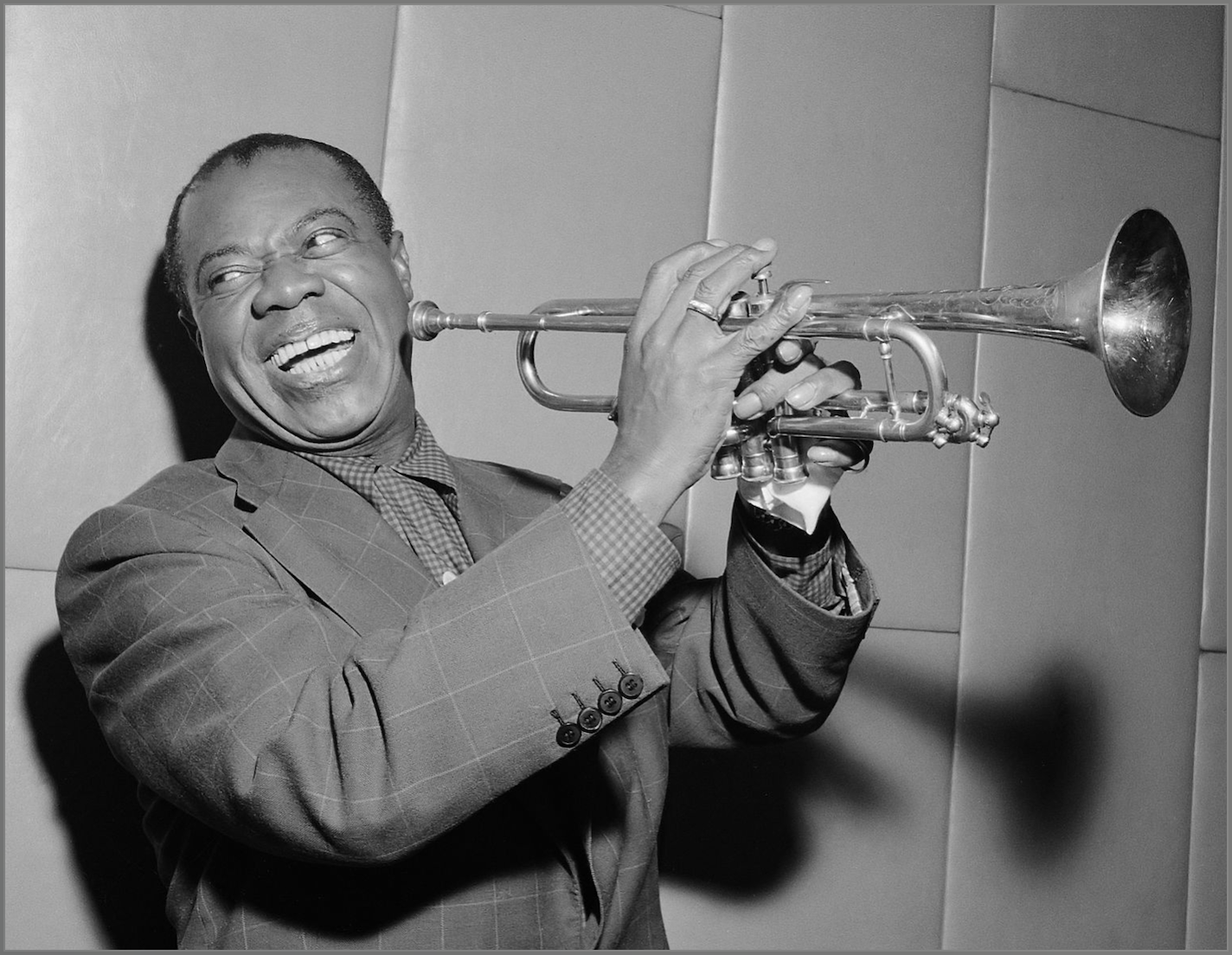
image source: Wikimedia Commons
It should come as no surprise that we’re starting off our list of jazz trumpet players with Louis Armstrong.
Often referred to as “Satchmo” or “Pops,” Louis Armstrong is arguably the most influential figure in jazz history. He significantly impacted trumpet playing and vocal stylings. His professional career began in the 1910s in New Orleans and lasted until 1971.
Louis Armstrong witnessed jazz from birth well into its maturity, and many consider him the best jazz musician ever. From “Potato Head Blues” and “West End Blues” to “It’s a Wonderful World,” Louis Armstrong had so much to offer the world.
His recordings with King Oliver and his own Hot Five and Hot Seven introduced virtuosic trumpet solos, a bright timbre, and rhythmic freedom that set the standard for improvisation. His later recordings popularized scat singing and brought jazz into the mainstream.
His influence on other jazz trumpet players (and jazz in general) can’t be understated either. He influenced everyone from “Little Jazz” Roy Eldridge to Dizzy Gillespie and Wynton Marsalis.
Albums to check out:
- Hot Fives and Sevens (2000)
- Louis Armstrong Plays W. C. Handy (1954)
- Ella and Louis (1956)
- What A Wonderful World (1968)
Check out the pivotal Louis Armstrong recording of “West End Blues.”
Louis Armstrong transcended the jazz trumpet and is considered one of the greatest jazz musicians of all time. Check out this article to learn more about the other 49 greatest jazz musicians of all time.
2. Joseph “King” Oliver (1885–1938)
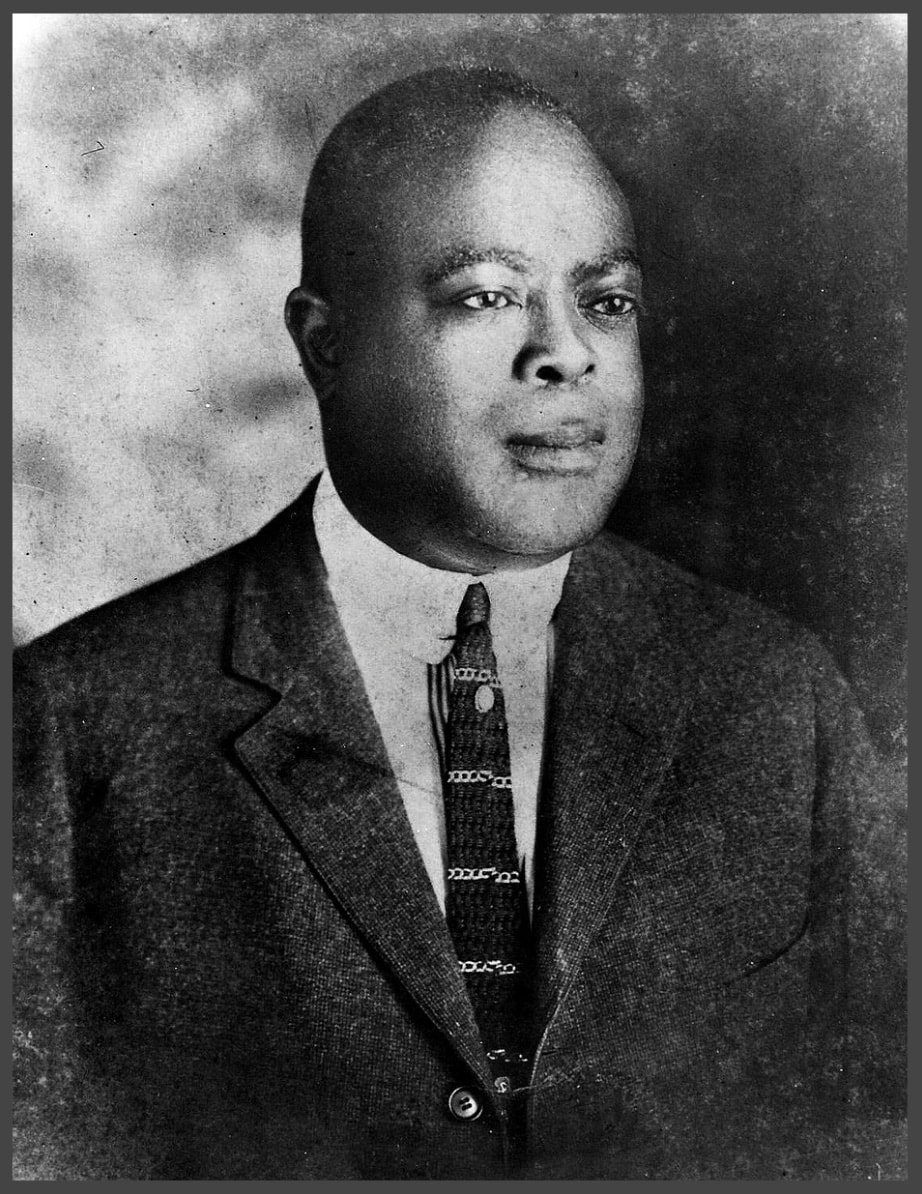
image source: Wikimedia Commons
Ever wonder where Louis Armstrong got his sound? Look no further than his mentor: King Oliver, the dignified cornetist from Edgard, Louisiana, who became a foundational architect of early jazz.
By the early 1920s, Oliver was leading the Creole Jazz Band in Chicago, fusing New Orleans ensemble traditions with the vibrancy of the Northern urban scene. His use of mutes—notably rubber plungers and metal Derby hats—added a vocal-like, expressive quality to his horn.
These “wah-wah” inflections would define the emotional nuance of early jazz solos.
Oliver’s pieces, such as “Dippermouth Blues,” helped codify early jazz styles.
3. Bubber Miley (1903–1932)
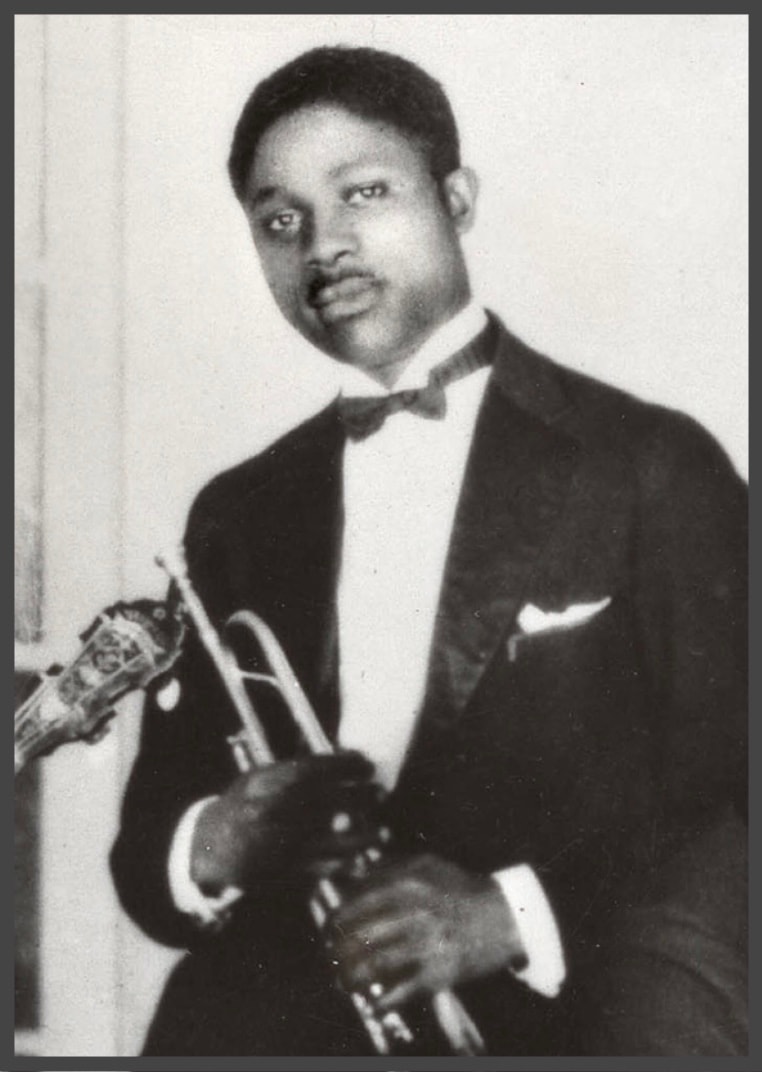
image source: Wikimedia Commons
There would be no “jungle sound” without Bubber Miley. Born in Aiken, South Carolina, and deeply influenced by King Oliver’s plunger techniques, Miley joined Duke Ellington’s Washingtonians and transformed their sonic palette in the mid-1920s.
Miley didn’t just play notes—he growled, wailed, and wept through a muted trumpet that mimicked the human voice. You can hear it in “East St. Louis Toodle-oo,” where his gritty tone conjures images of smoky clubs and brooding dancers.
His collaboration with Ellington helped birth the orchestra’s signature sound long before Duke became a household name. Sadly, Miley’s career was cut short by tuberculosis at age 29, but his innovations endure.
Check out Bubber Miley playing with Duke Ellington’s Kentucky Club Orchestra in 1927
4. Henry “Red” Allen (1908–1967)
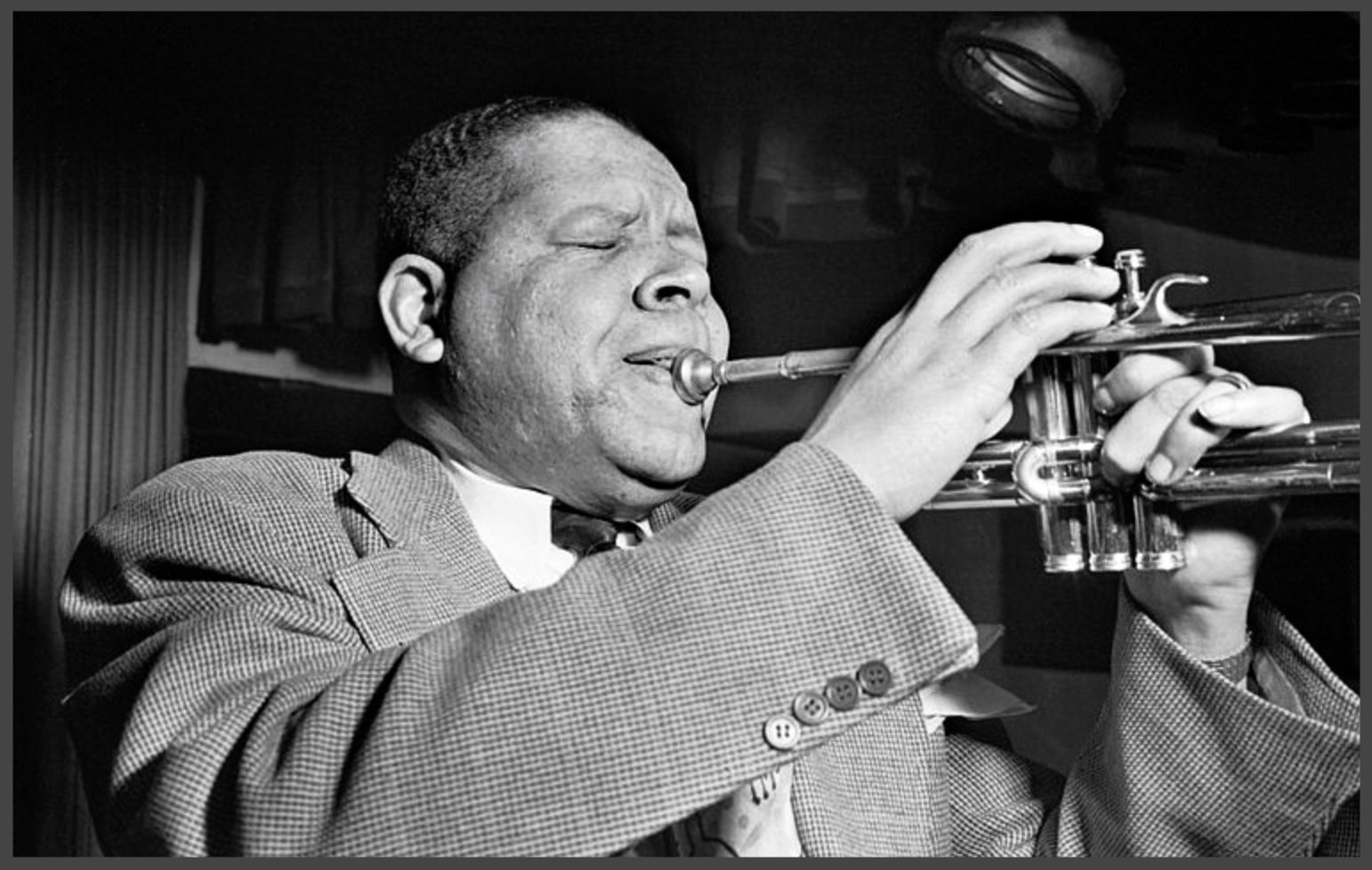
image source: Wikimedia Commons
What happens when the fiery pulse of New Orleans meets the big-city swing of Harlem? Enter Red Allen, born in Algiers, Louisiana, whose trumpet voice carried the fire of Armstrong and the phrasing of the moderns.
Allen played with King Oliver, Luis Russell, and Fletcher Henderson, but he always retained his own bold personality. He made his mark both as a sideman and bandleader, laying the groundwork for future stylistic hybrids that blurred the line between traditional jazz and swing.
Check out Red Allen playing on the 1933 track “Feeling Drowsy.”
5. Bunny Berigan (1908–1942)
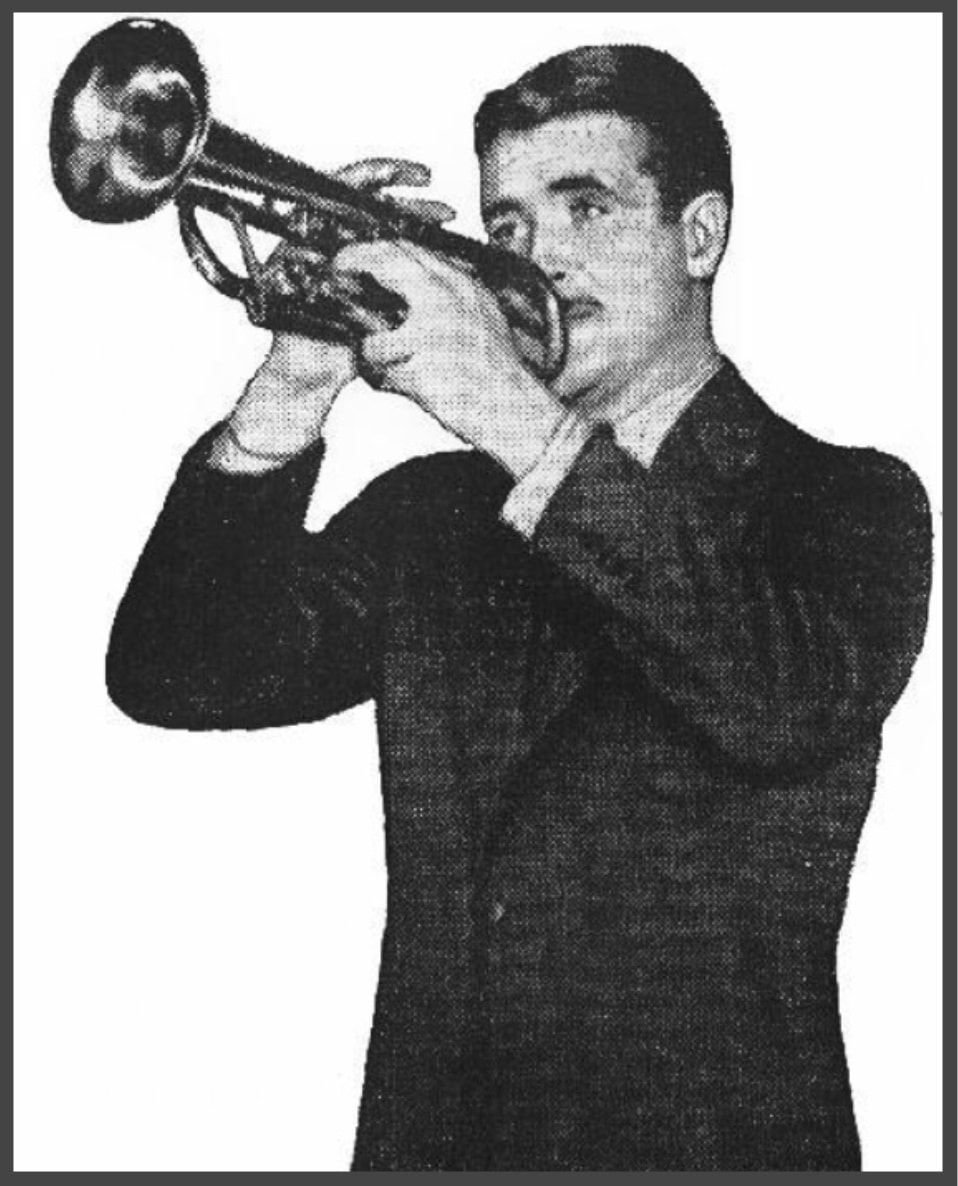
image source: Wikimedia Commons
Few swing trumpeters burned as brightly as Bunny Berigan. Born in Wisconsin, Berigan’s fat tone, daring phrasing, and bravura technique made him a standout in the Benny Goodman Orchestra and beyond.
Despite a tragic early death linked to alcoholism, Berigan’s recordings remain some of the finest trumpet playing of the big band era.
His 1937 recording of “I Can’t Get Started” became his signature tune.
6. Harry James (1916–1983)
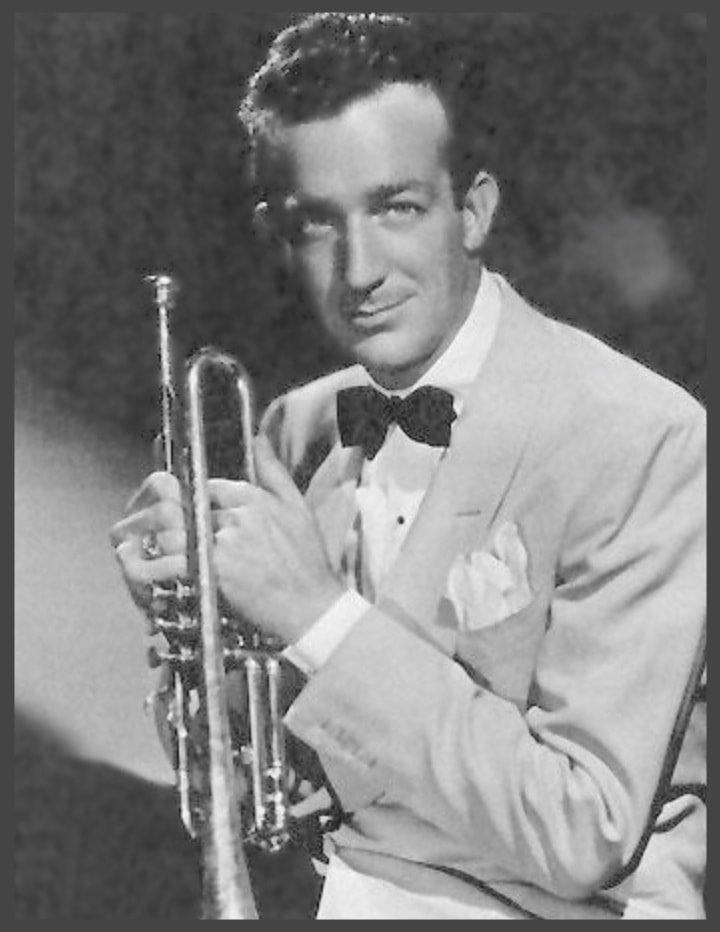
image source: Wikimedia Commons
Harry James was born in Albany, Georgia, and was known for his classically trained chops and crowd-pleasing showmanship.
After joining Benny Goodman’s band in 1937, James quickly earned a reputation for brilliant high notes and dazzling runs. By 1939, he’d formed his own big band—one that launched the career of a young Frank Sinatra and scored hit after hit.
His playing on “You Made Me Love You” is golden-era Hollywood jazz:
7. Cootie Williams (1911–1985)
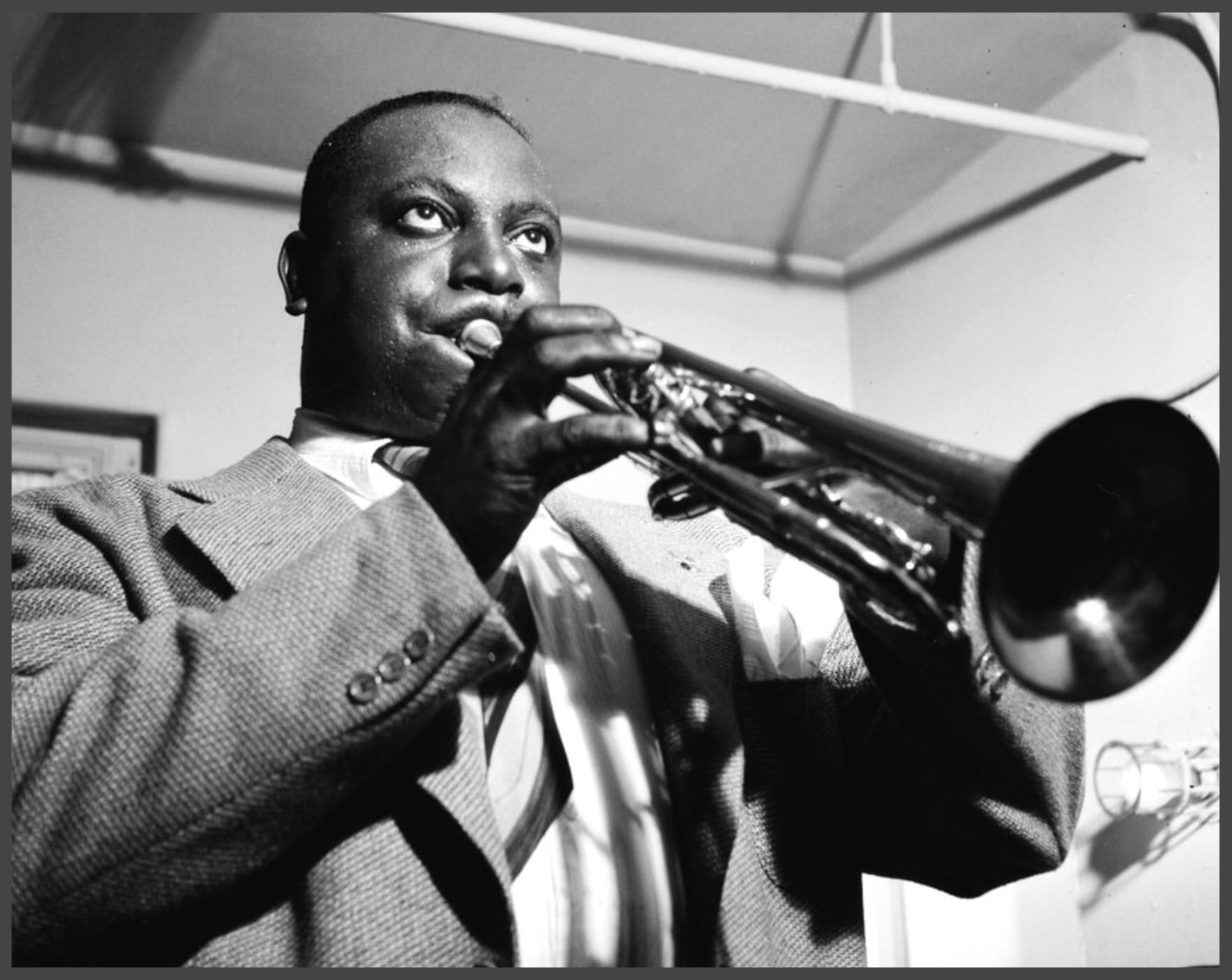
image source: Wikimedia Commons
Born in Mobile, Alabama, Cootie Williams was a self-taught jazz trumpet phenom who took over Bubber Miley’s chair in Duke Ellington’s orchestra in 1929, adding his soulful touches to the Ellington palette.
A master of plunger-muted effects, Williams could make his horn cry, whisper, or croon. His feature “Concerto for Cootie” (1940) became the basis for the later Ellington ballad “Do Nothin’ Till You Hear From Me”, showcasing his rich tone both muted and open.
Williams also brought his gritty style into the bebop era, recording with Thelonious Monk and Charles Mingus, proving that his growl aged gracefully.
His plunger‑mute effects were showcased in “Concerto for Cootie.”
8. Roy Eldridge (1911–1989)
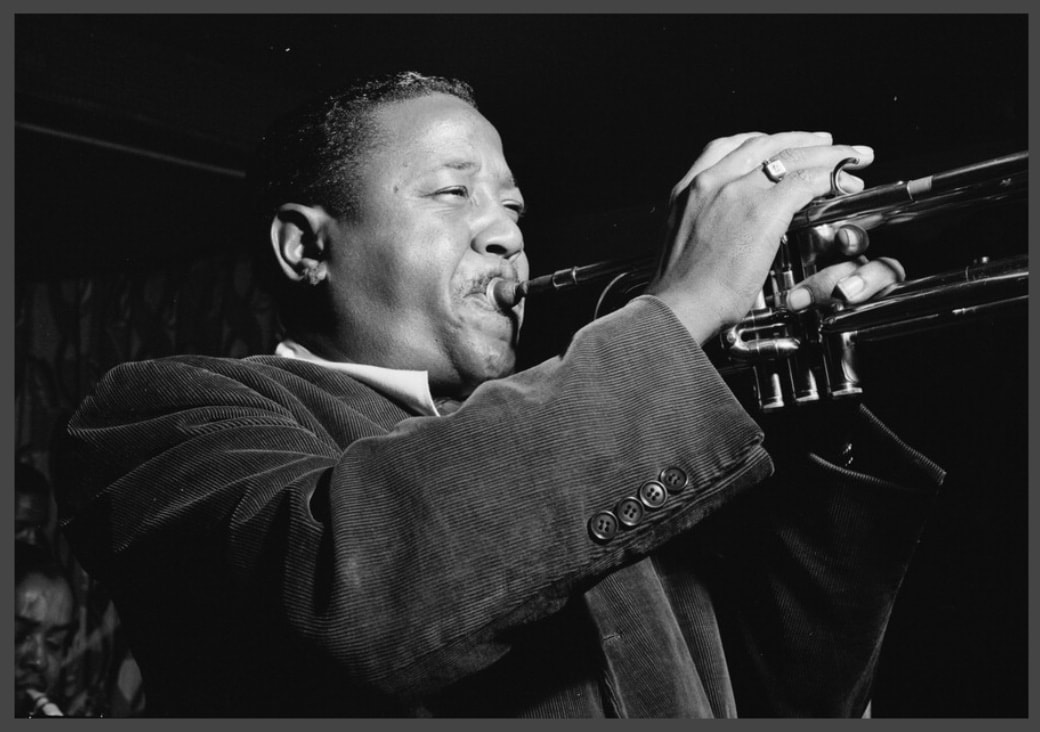
image source: Wikimedia Commons
No trumpet player pushed the instrument’s boundaries in the 1930s quite like Roy “Little Jazz” Eldridge. Born in Pittsburgh, Eldridge was Armstrong’s spiritual heir and the direct precursor to Dizzy Gillespie’s modernism.
Eldridge’s solos were thrilling: packed with intensity, full of range-defying leaps, and rhythmically advanced. He was a standout in the bands of Gene Krupa, Artie Shaw, and Fletcher Henderson, and he shattered racial barriers as one of the first Black musicians to integrate a white big band.
Check out Roy Eldridge playing on the tune “Rockin’ Chair” with Gene Krupa.
9. Ziggy Elman (1914–1968)
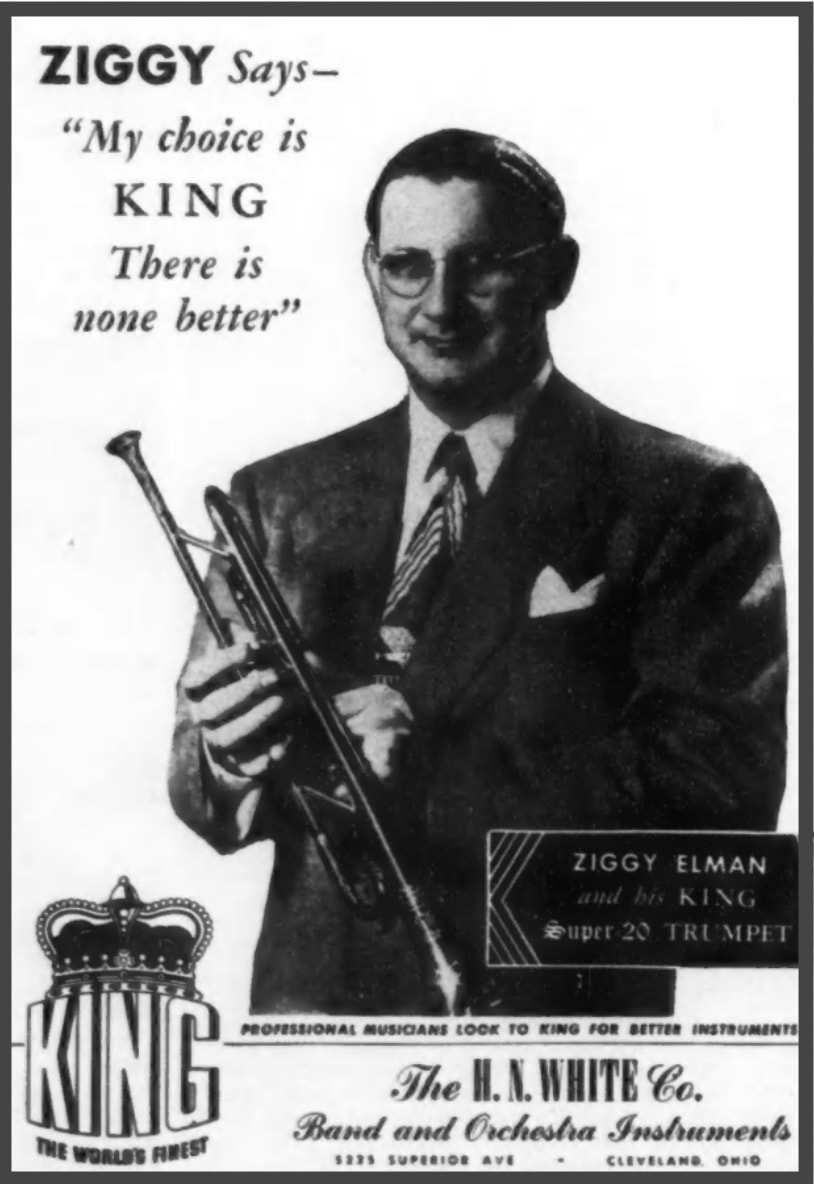
image source: Wikimedia Commons
Ziggy Elman, born Harry Finkelman in Philadelphia, brought a touch of Eastern Europe into American swing. A key soloist with Benny Goodman’s orchestra, Elman could deliver screaming high notes and boisterous bravado—but also dance across klezmer-inspired lines with grace.
Check out Ziggy Elman playing the tune “And the Angels Sing.”
Bebop and Hard‑Bop Jazz Trumpet Players
Bebop shattered conventions with speed, complexity, and harmonic daring. Trumpeters of this era took their cues from Charlie Parker and Dizzy Gillespie, crafting blistering solos and advanced vocabulary. Hard bop soon followed, grounding bebop’s fire in gospel, blues, and groove.
Check out this article to learn more about hard bop.
10. Miles Davis (1926 – 1991)
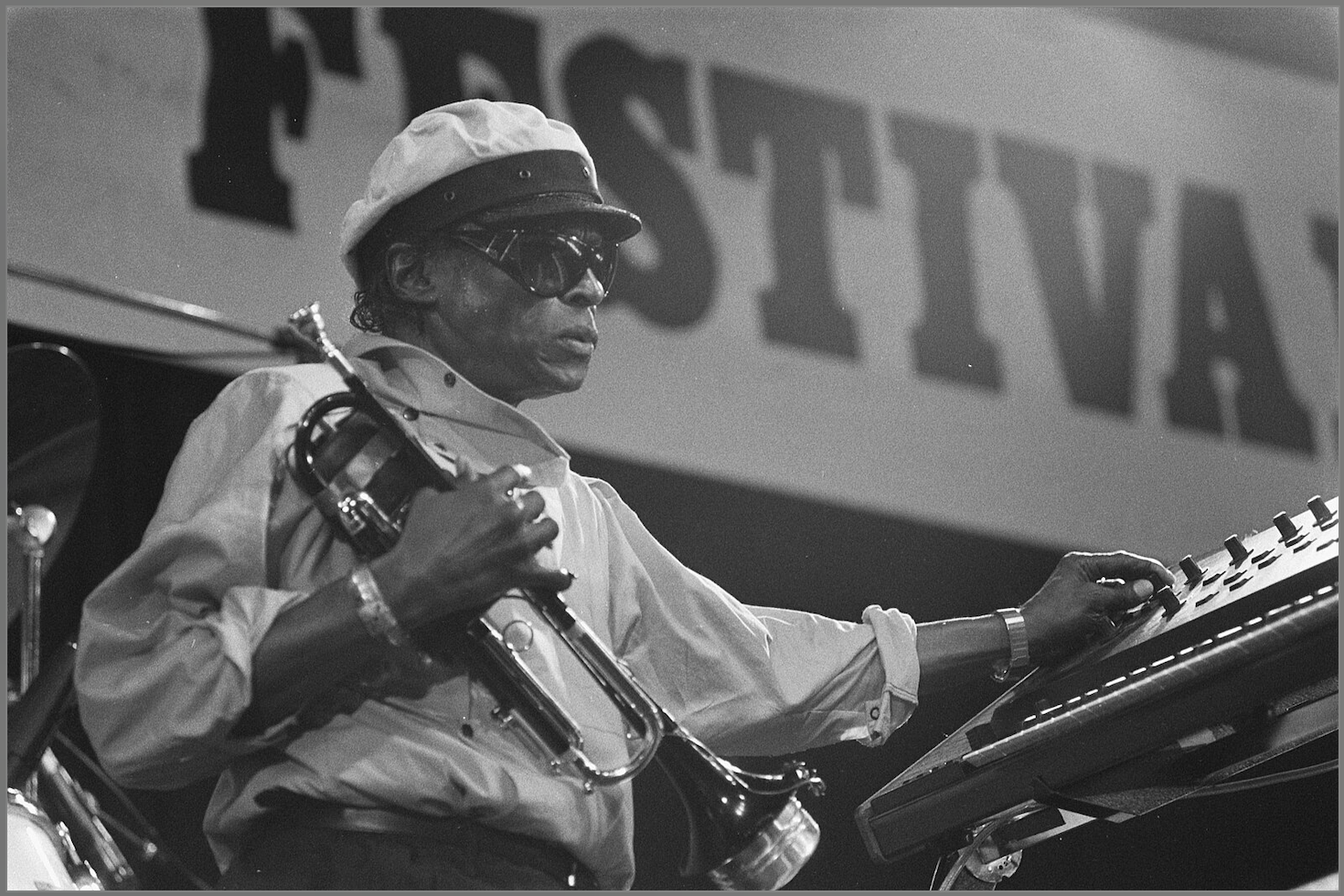
image source: Wikimedia Commons
Perhaps the most famous of all jazz trumpeters (and maybe all jazz musicians), Miles Davis was a significant figure in multiple jazz movements, including cool jazz, hard bop, and fusion. His long career began in the age of bebop and acoustic jazz and continued well into the electronic era.
Miles Davis had a smooth tone and distinctive sound that influenced all jazz trumpet players that came after him. His trumpet tone and musical personality are instantly recognizable, whether he is playing on one of his early albums or a later release.
Check out these Miles Davis albums:
- Kind of Blue (1959)
- Bitches Brew (1970)
- Birth of the Cool (1957)
- Sketches of Spain (1960)
Check out this early recording of Miles Davis playing “So What.”
11. Dizzy Gillespie (1917–1993)
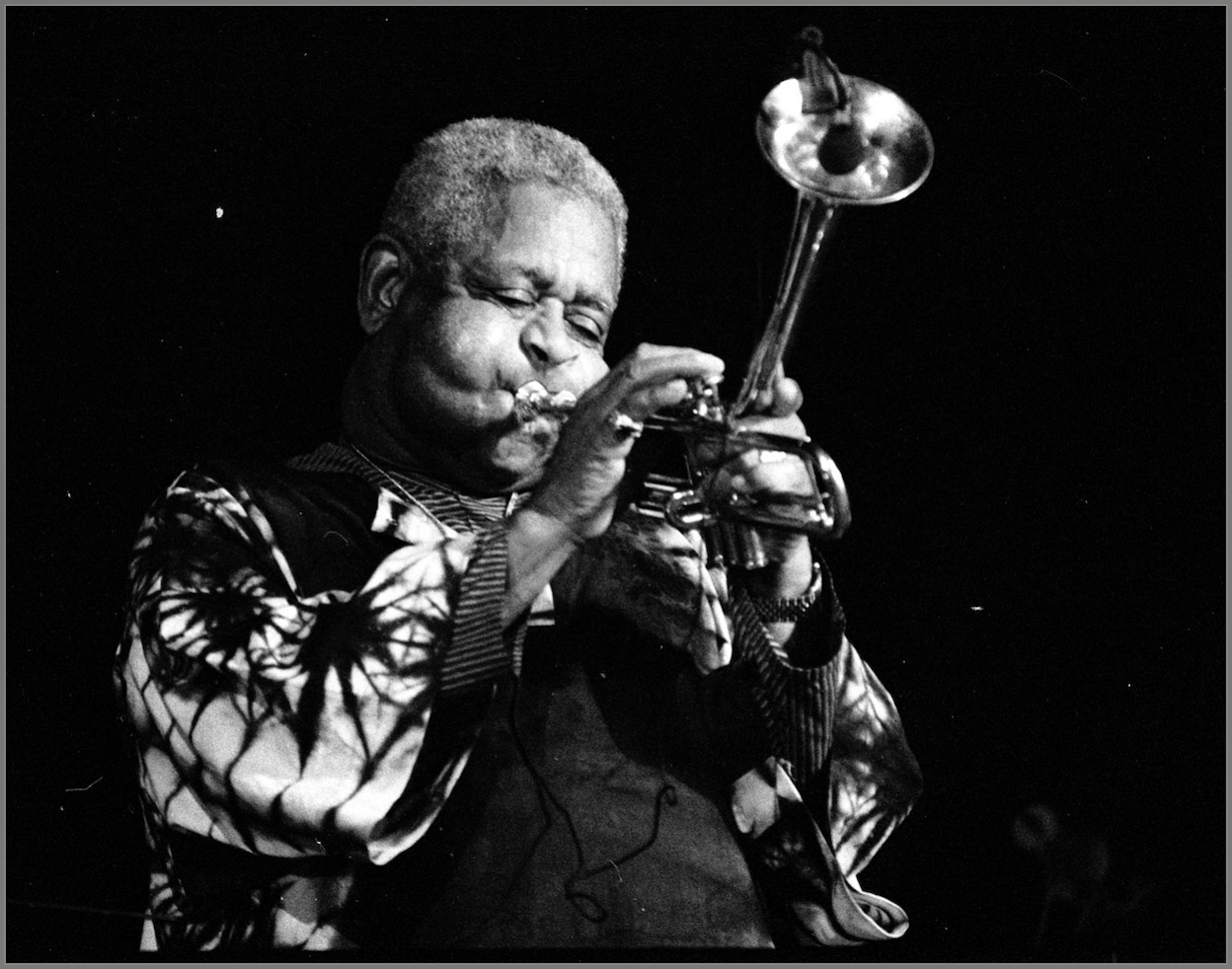
image source: Wikimedia Commons
Known for his swollen cheeks and bent trumpet, Dizzy Gillespie was a pioneer of bebop and Afro-Cuban jazz. Diz played alongside legends such as Bud Powell, Charlie Parker, Sonny Rollins, Milt Jackson, and John Coltrane throughout his long career and served as band leader for his own groups.
This jazz musician was highly influential in the Bebop era and beyond.
Be sure to check out these Dizzy Gillespie albums:
- Birks’ Works (1957)
- World Statesman (1956)
- Diz and Getz (1955)
Also, check out Dizzy Gillespie playing on his composition “A Night in Tunisia” live in 1981:
12. Clark Terry (1920 – 2015)
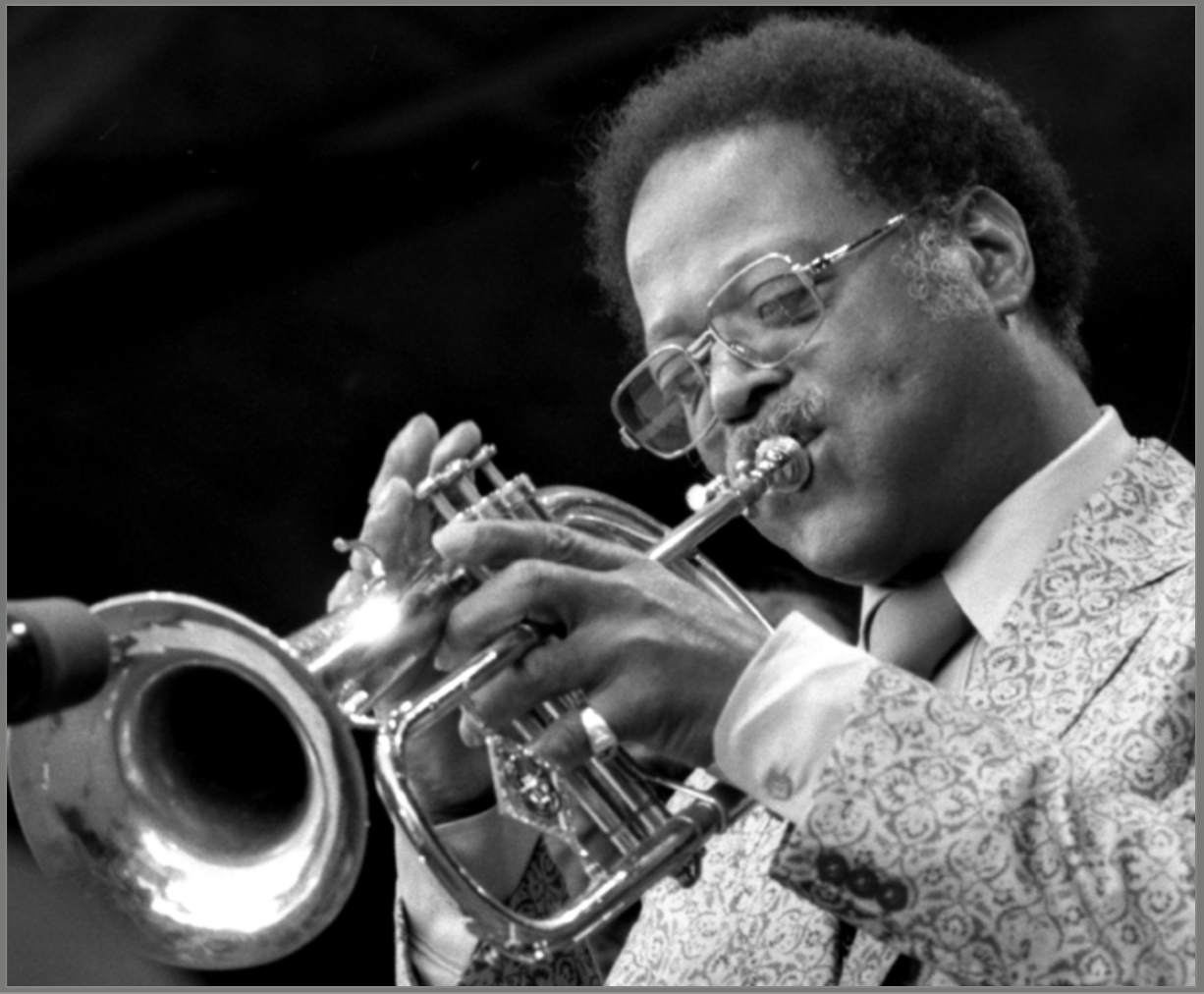
image source: Wikimedia Commons
Clark Terry was a celebrated trumpeter and flugelhorn player. He was recognized for his impressive technical prowess and rich, warm tone.
He had an expansive career that spanned many 70 years and included performances with some of the most significant big bands and musicians in jazz history (he was a member of the Count Basie Orchestra and Duke Ellington’s orchestra).
Check out these Clark Terry albums:
- Serenade to a Bus Seat (1957)
- Color Changes (1961)
- Portraits (1989)
- In Orbit (1958)
Check out Clark Terry playing with valve trombonist Bob Brookmeyer:
13. Fats Navarro (1923–1950)
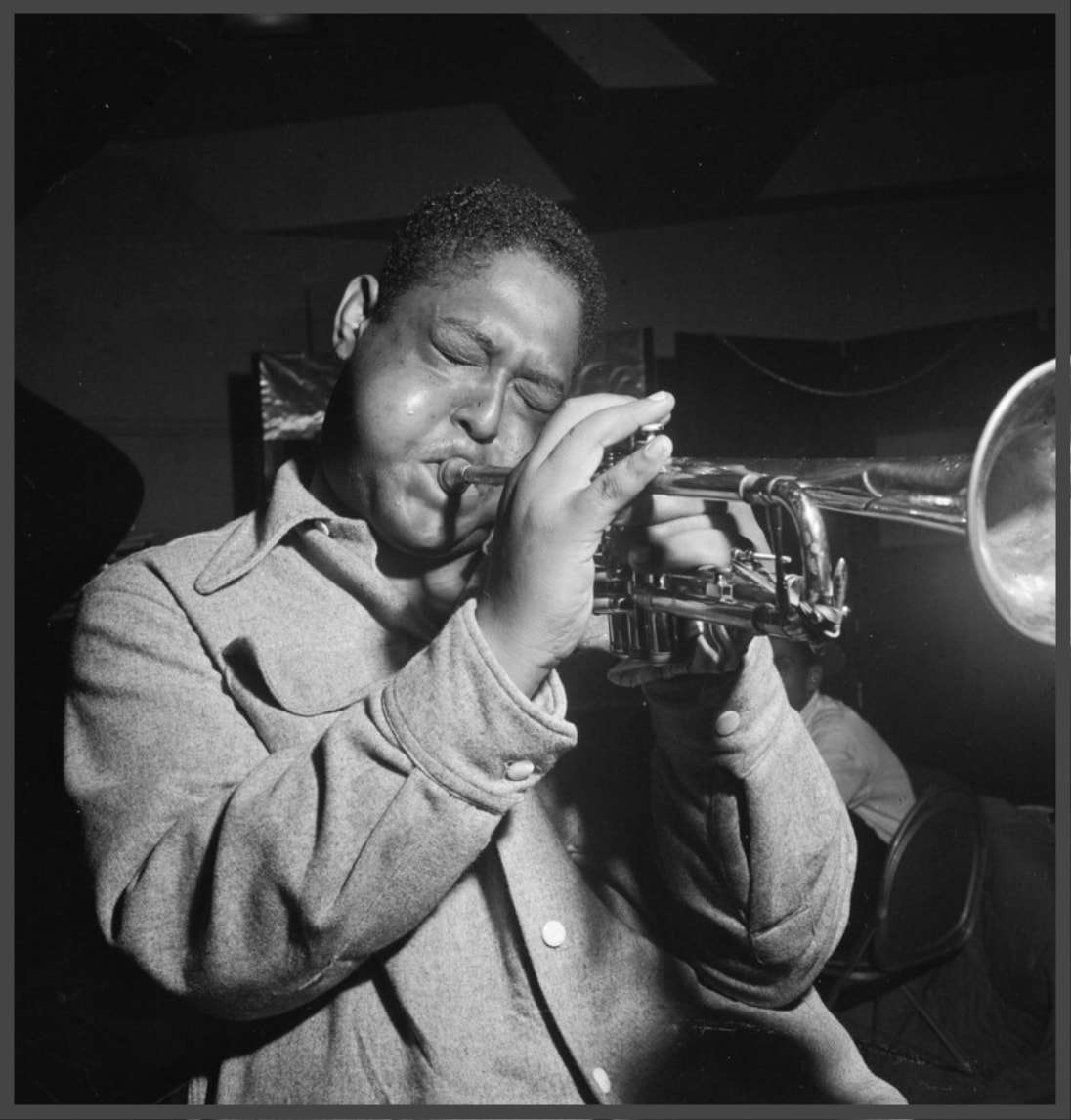
image source: Wikimedia Commons
Born in Key West, Florida, Navarro rose quickly through the New York scene in the 1940s, admired for his melodic phrasing, powerful tone, and effortless command of complex harmony.
Though his life was tragically short—he died at 26 of tuberculosis—Navarro’s legacy looms large. He performed with Bud Powell, Tadd Dameron, and Charlie Parker, and his playing had a profound influence on Clifford Brown, who carried Navarro’s lyrical ideas into the 1950s.
Check out these albums to hear Fats Navarro’s brief but impactful career.
- The Fabulous Fats Navarro Vol. 1 & 2 (Blue Note, 1947–1949)
- Nostalgia (Savoy, 1947)
- Fats Navarro Featured with the Tadd Dameron Band (1950)
Listen to “Nostalgia” for Navarro’s signature jazz trumpet sound.
14. Clifford Brown (1930–1956)
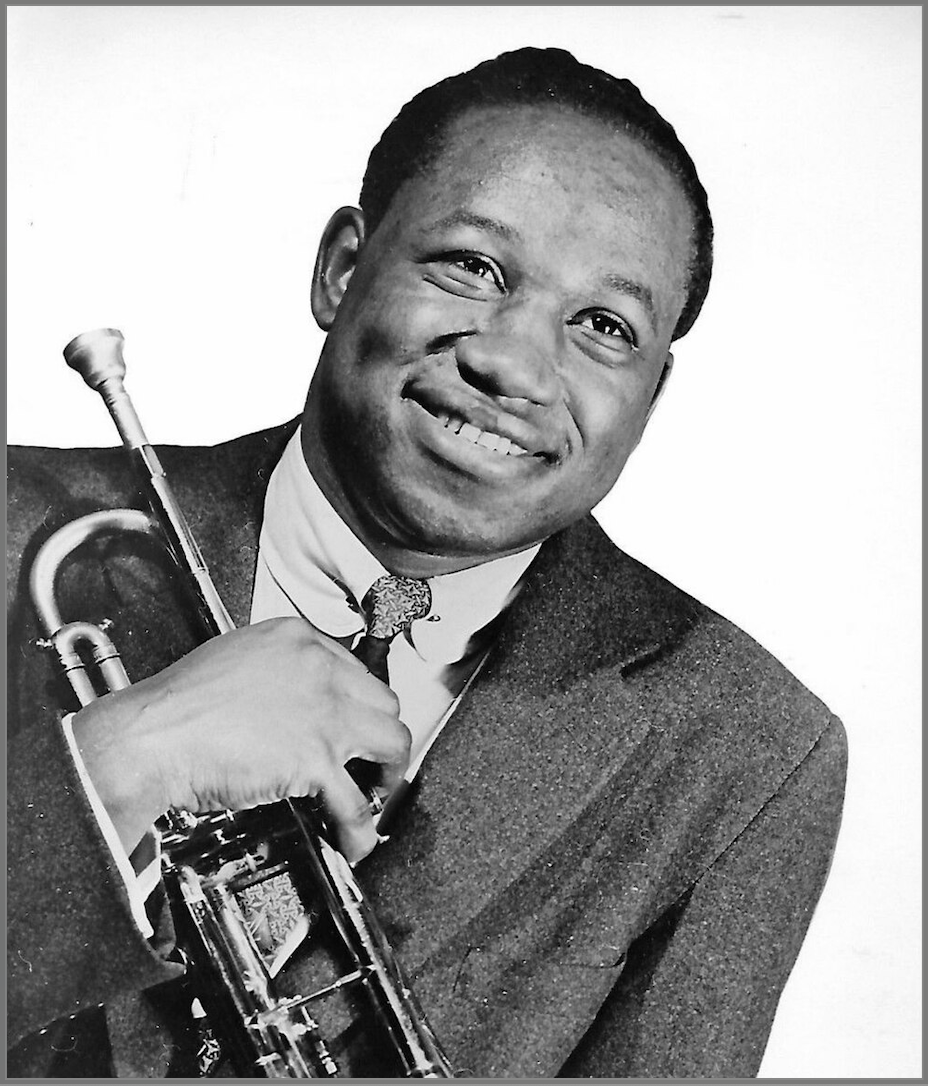
image source: Wikimedia Commons
His life was tragically cut short, but “Brownie” is remembered as one of the best jazz trumpeters in jazz history. A gentle personality from Wilmington, Delaware, Brown left a lasting legacy with his joyous tone and technical perfection. He co‑led the Brown‑Roach Quintet and penned standards like “Joy Spring.”
Clifford Brown played with renowned jazz musicians such as Max Roach, Miles Davis, and Horace Silver, and was a founding member of the group that would become Art Blakey’s Jazz Messengers.
Check out these Clifford Brown albums:
- Clifford Brown & Max Roach (1954)
- Study in Brown (1955)
- Brown and Roach Incorporated (1955)
Check out Clifford Brown playing in this rare TV clip:
15. Kenny Dorham (1924–1972)
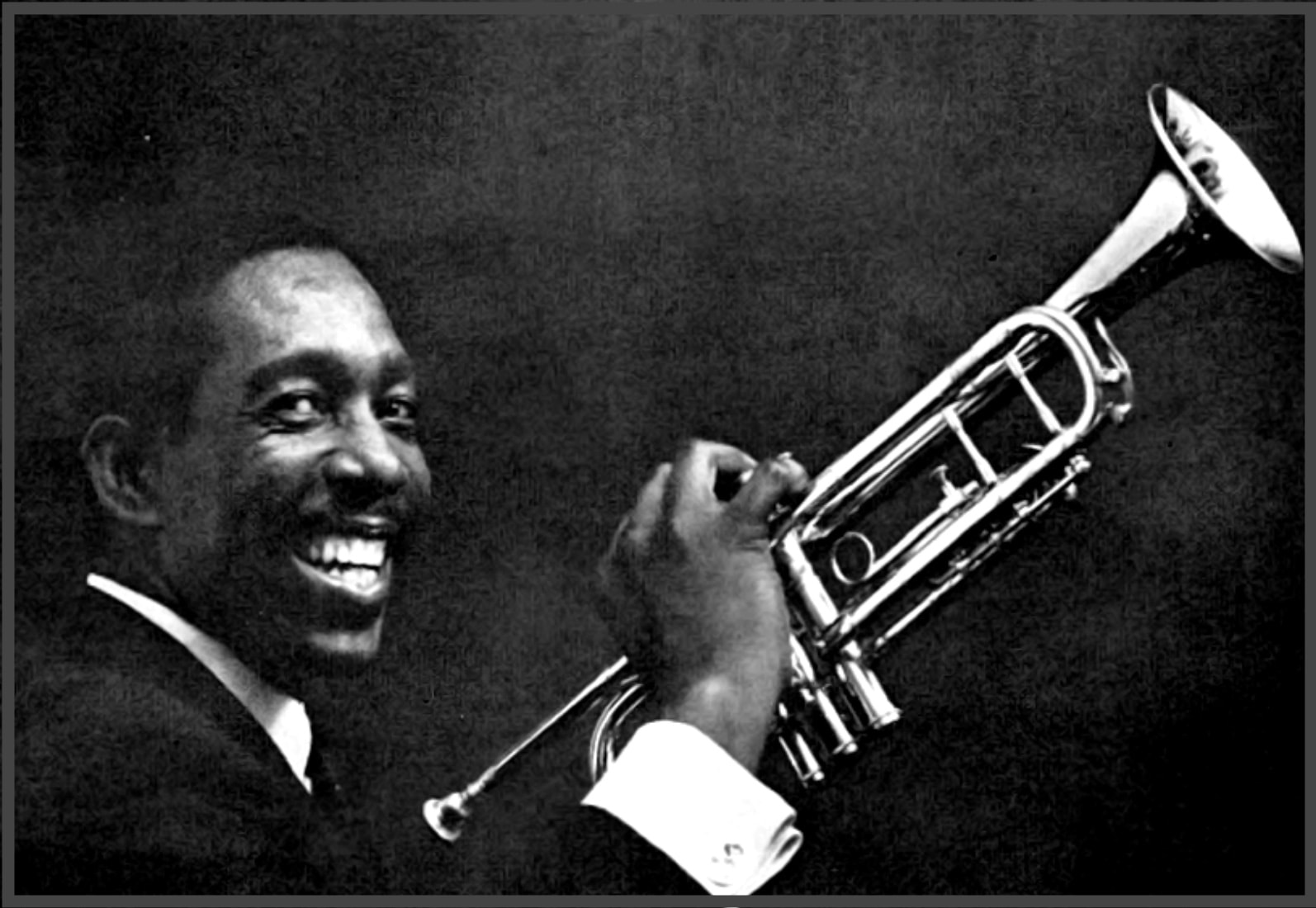
image source: Wikimedia Commons
Born in Fairfield, Texas, Kenny Dorham played in the bands of Charlie Parker, Dizzy Gillespie, and Billy Eckstine, and co-founded the original Jazz Messengers with Art Blakey.
Dorham was also a gifted composer. “Blue Bossa” remains a jam session favorite, bridging Latin and modal sounds. He led underrated albums like Quiet Kenny, Afro-Cuban, and Whistle Stop, and consistently delivered polished, emotionally resonant solos.
These albums are must-listens for any jazz trumpet player.
- Afro-Cuban (Blue Note, 1955)
- Quiet Kenny (New Jazz, 1959)
- Whistle Stop (Blue Note, 1961)
Listen to Kenny Dorham and Joe Henderson play on Dorham’s composition “Blue Bossa.”
16. Art Farmer (1928–1999)
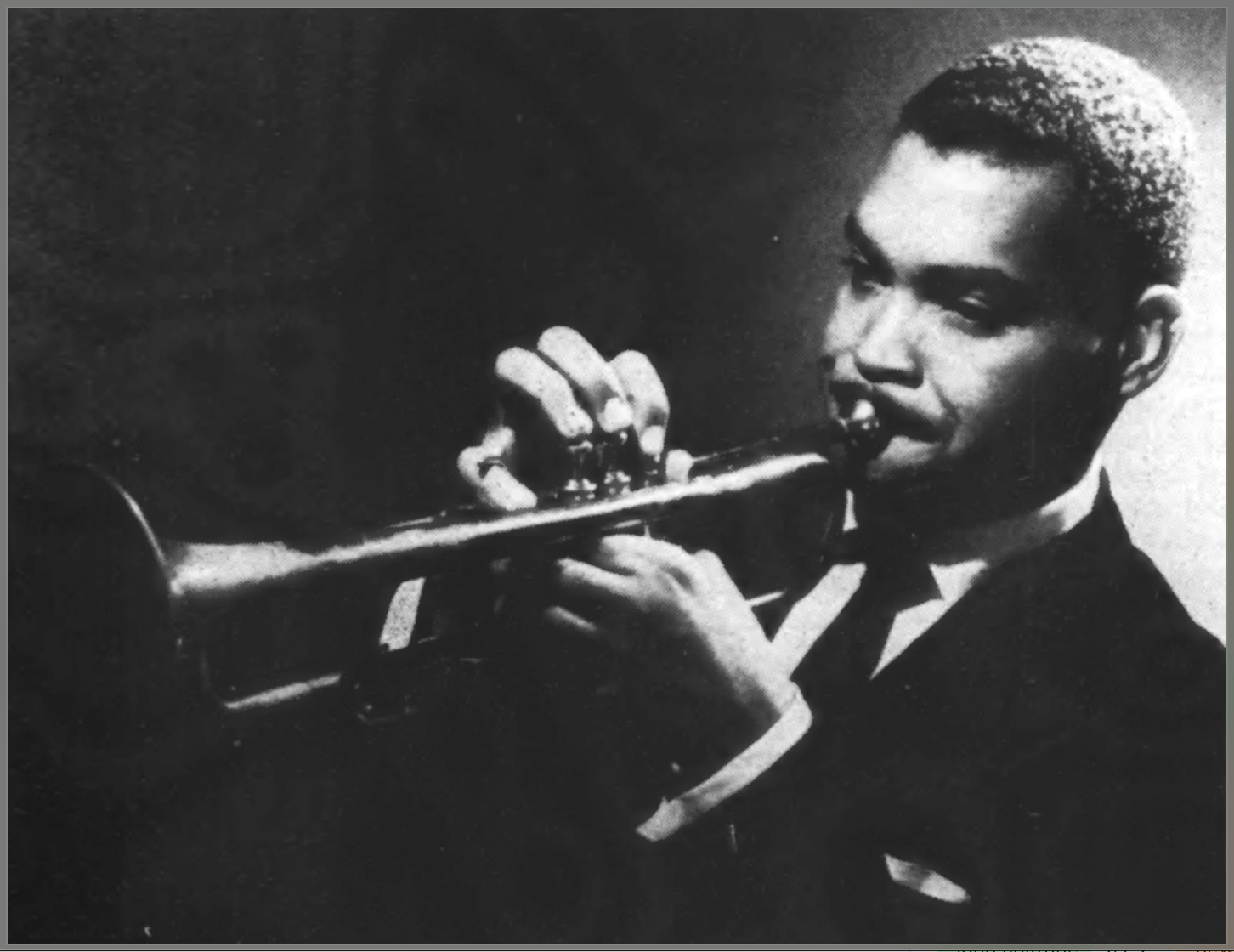
image source: Wikimedia Commons
Born in Iowa and raised in Arizona, Farmer helped popularise the flugelhorn and later played a hybrid “flumpet.” His warm tone graced groups led by Gerry Mulligan and Benny Golson, and he co‑founded the Jazztet.
He was too young to be drafted during World War II, which means he was available to play gigs in Los Angeles during the 1940s. Influenced by the swing era and the transition of big band musicians to bebop, Art Farmer incorporated these new musical elements into his own distinctive jazz style.
Here are some Art Farmer albums to check out:
- Meet the Jazztet (1960)
- Blame It on My Youth (1988)
- Modern Art (1958)
Check out Art Farmer playing in 1964 with Steve Swallow and Jim Hall.
Check out this article to learn more about Jim Hall and other incredible jazz guitarists.
17. Chet Baker (1929–1988)
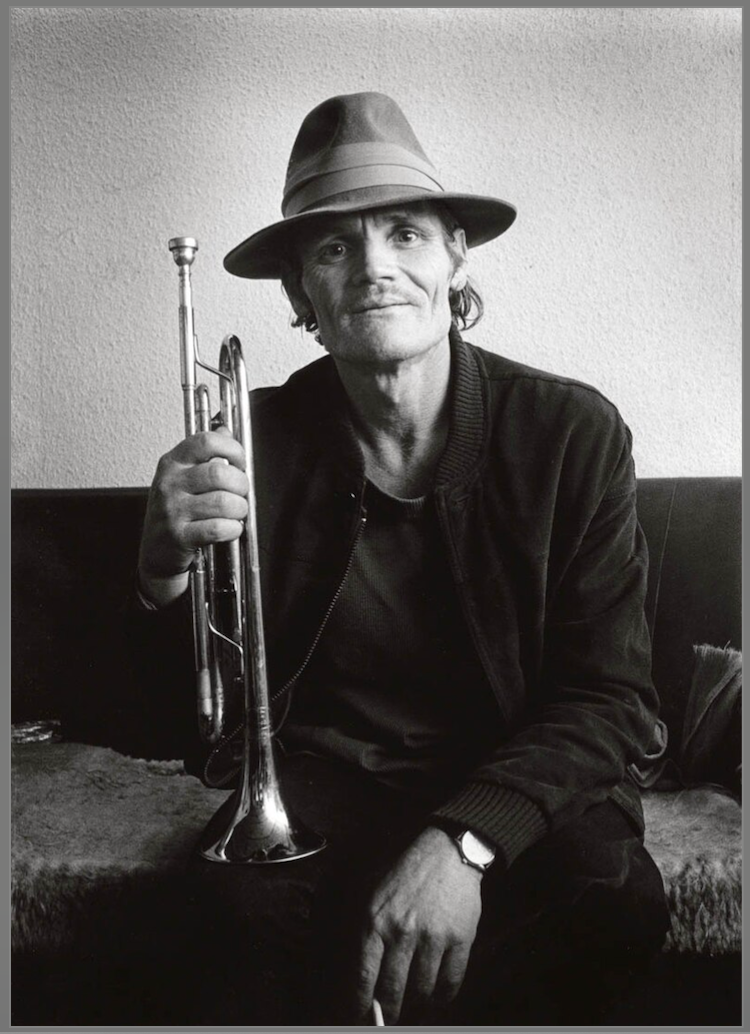
image source: Wikimedia Commons
The Oklahoma‑born trumpeter/singer epitomized West Coast cool jazz with his intimate tone and vocals. He achieved fame in Gerry Mulligan’s piano‑less quartet and maintained a tumultuous career marked by drug problems.
Renowned for his lyrical and melodic trumpet playing style, Baker was also an accomplished vocalist who had crossover appeal. His career took off when he joined the Gerry Mulligan Quartet in 1952.
Definitely listen to these Chet Baker records:
- Chet Baker Sings (1954)
- Chet (1959)
- Chet Baker & Strings (1954)
And check out Chet Baker and West Coast cool jazz tenor saxophone player Stan Getz playing together live. Chet Baker’s solo starts at 1:40.
18. Donald Byrd (1932–2013)
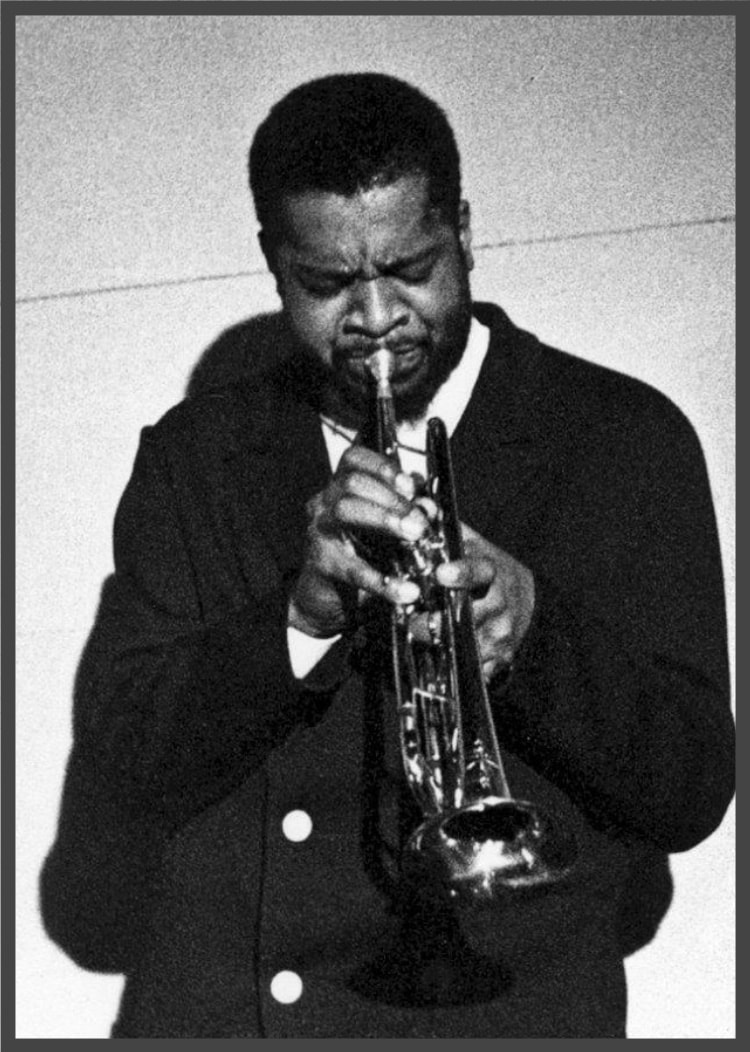
image source: Wikimedia Commons
Donald Byrd’s career traced the entire arc of post-bop innovation. Born in Detroit, Byrd replaced Clifford Brown in Art Blakey’s Jazz Messengers, then forged his own path through hard bop, soul jazz, and eventually fusion and funk.
Equally at home in academia and on the bandstand, Byrd earned degrees from multiple institutions and taught at Howard University. In the 1970s, he led The Blackbyrds, blending jazz with R&B grooves. His album Black Byrd (1973) became Blue Note’s all-time bestseller—a rare feat for a jazz trumpet record.
Check out some key albums from Donald Byrd’s career:
- Black Byrd (1973)
- Free Form (1961)
- A New Perspective (1963)
Listen to the jazz fusion funk dripping from his great tune “Black Byrd.”
19. Blue Mitchell (1930–1979)
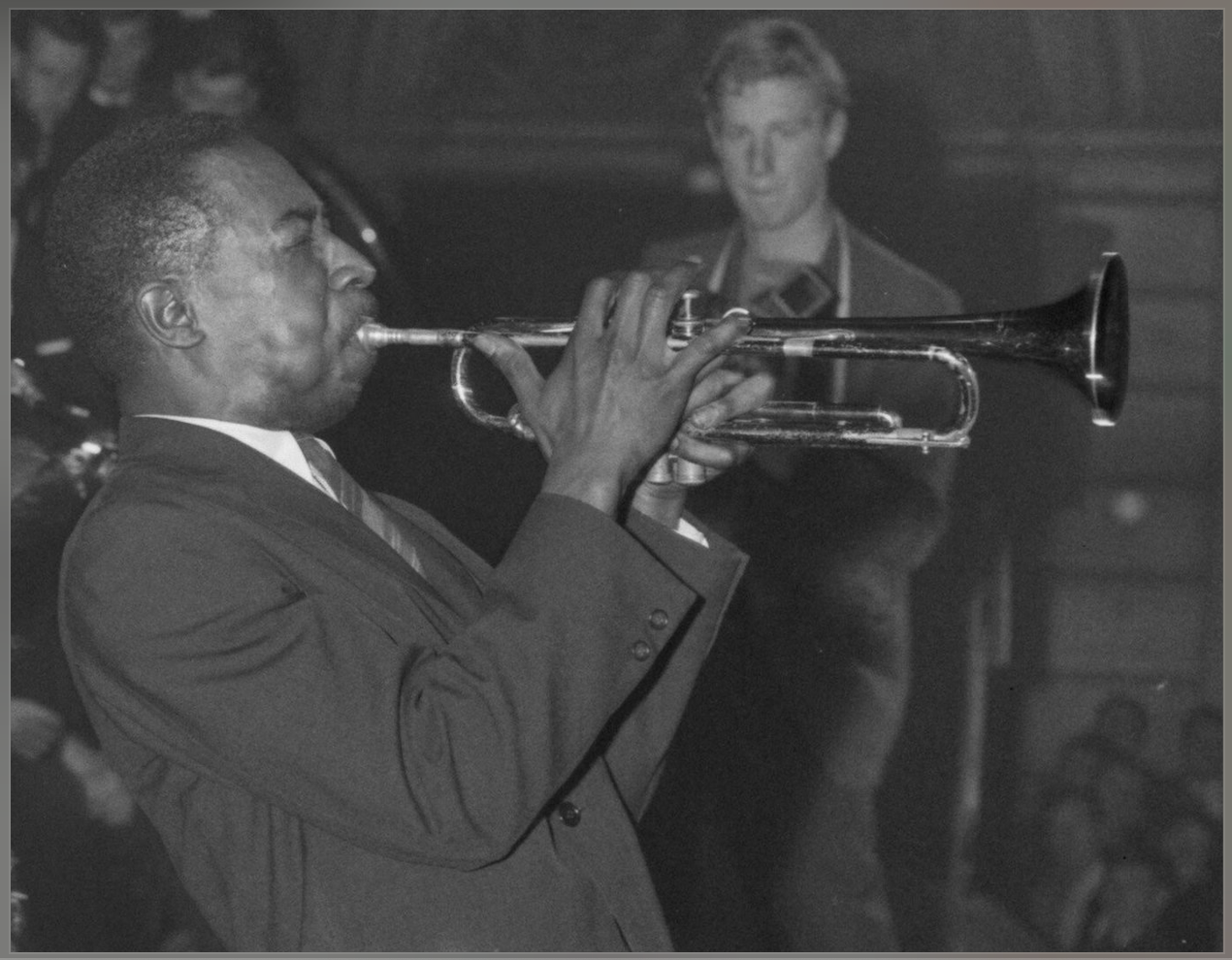
image source: Wikimedia Commons
Blue Mitchell was one of the more lyrical trumpet players, possessing a distinctive voice and a unique style. His composition “I’ll Close My Eyes” is one of my favorite tunes!
Blue Mitchell got his start playing with the Horace Silver Quintet, but he would soon collaborate with a wide range of incredible musicians, including Chick Corea and Ray Charles. He was also a Blue Note session musician, playing with various jazz legends, including Grant Green, Dexter Gordon, and Jimmy Smith.
Here are some Blue Mitchell albums to get you started:
- Blue Soul (1959)
- Blue’s Moods (1960)
- Collision in Black (1969)
Check out my favorite Blue Mitchell tune:
20. Lee Morgan (1938–1972)
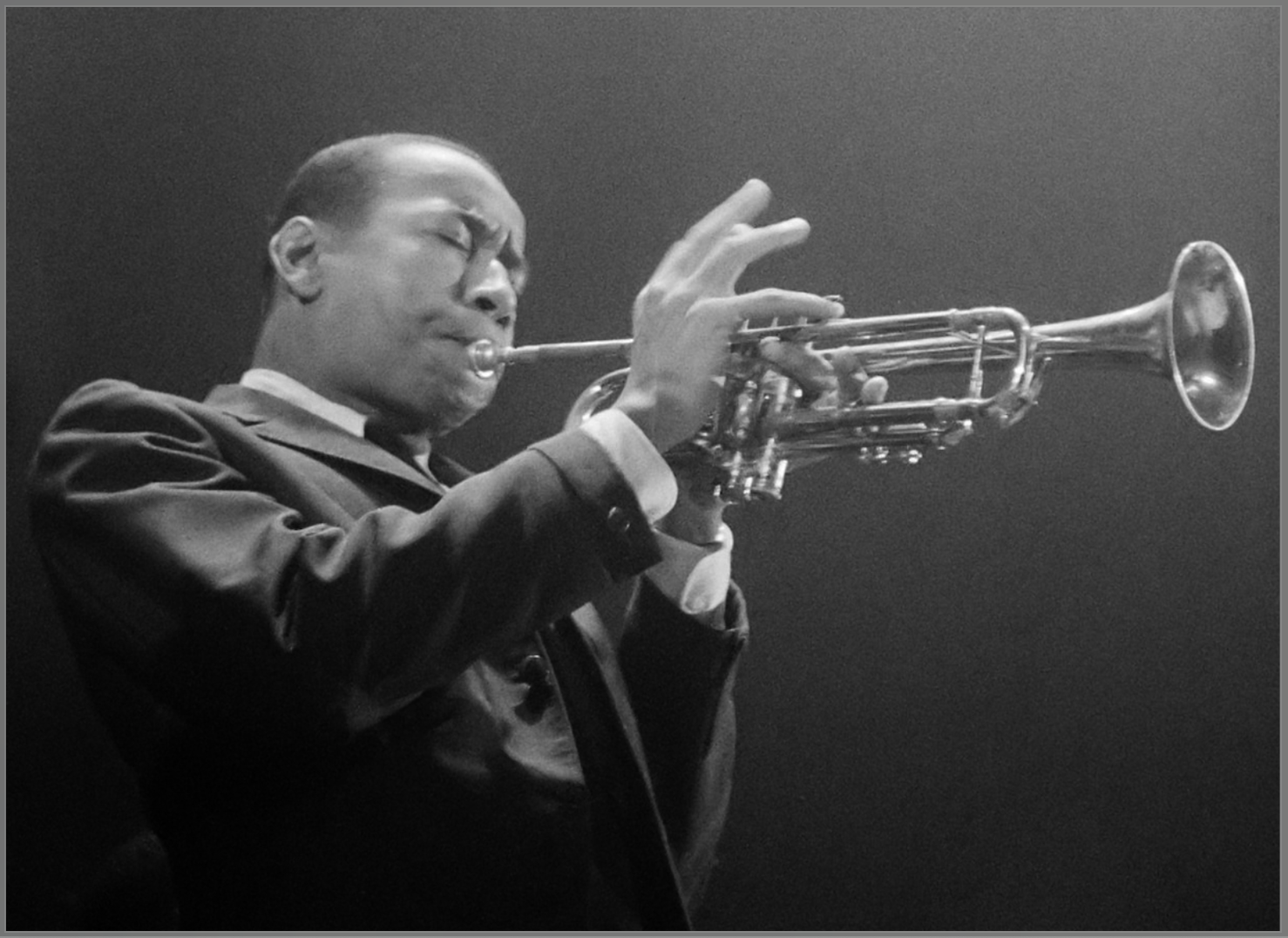
image source: Wikimedia Commons
Philadelphia prodigy Lee Morgan was a teenage member of Dizzy Gillespie’s big band before joining Art Blakey’s Jazz Messengers. Lee Morgan was a leading voice in hard bop and best known for his composition “The Sidewinder.”
Also, an alumnus of Art Blakey’s Jazz Messengers, Lee Morgan released several albums with his own band.
Check out these Lee Morgan albums:
- The Sidewinder (1964)
- Search for the New Land (1966)
- The Gigolo (1968)
Check out Lee Morgan playing with the Oscar Peterson Trio in 1961:
21. Freddie Hubbard (1938–2008)
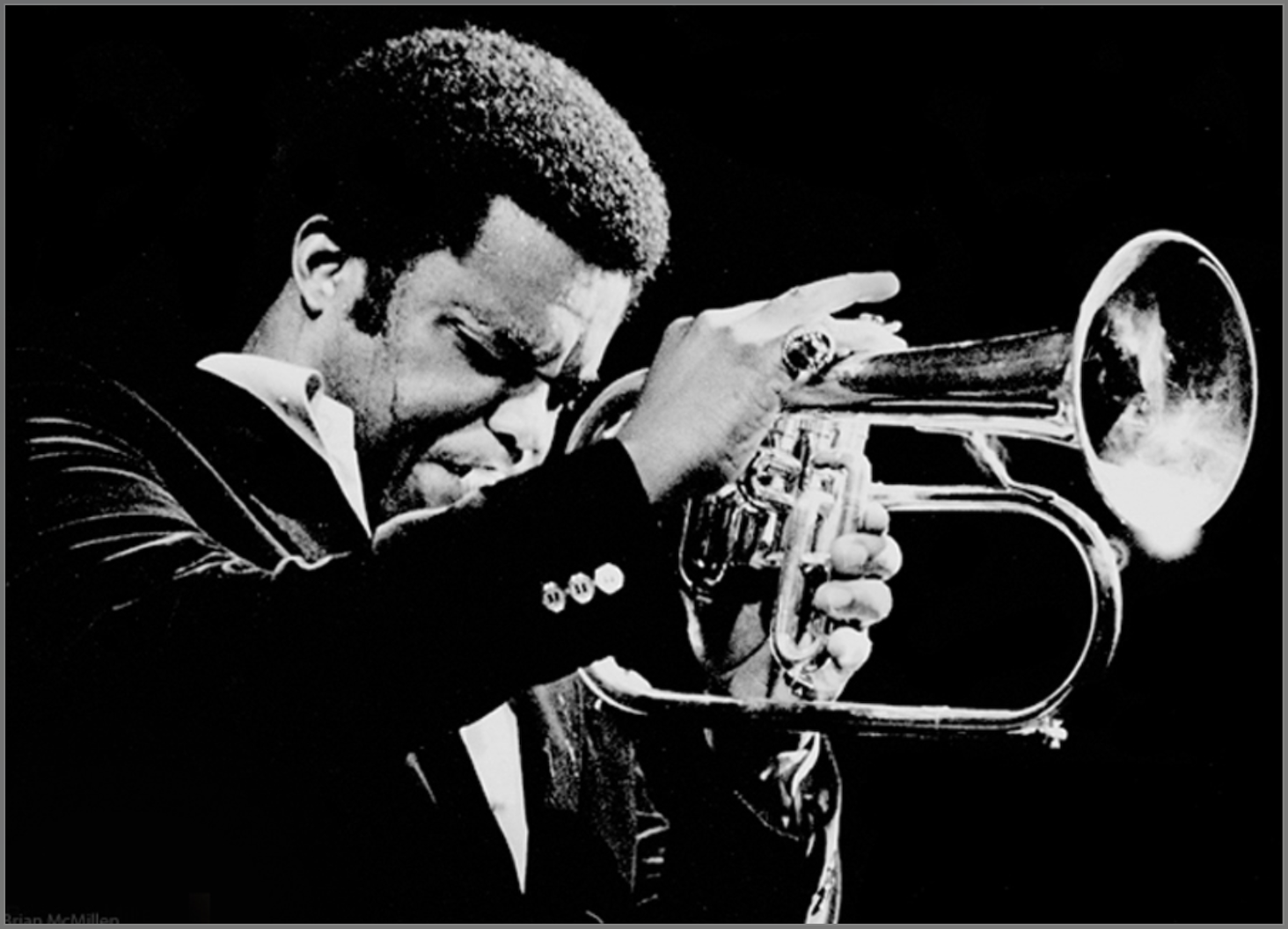
image source: Wikimedia Commons
If you haven’t checked out this jazz trumpet player, now is the time to indulge!
Hubbard, from Indianapolis, blended blistering technique with lyrical phrasing. After recording Open Sesame he joined Art Blakey’s band and later branched into fusion projects.
Freddie Hubbard is a renowned player recognized for his contributions to hard-bop and post-bop jazz. He was an alumnus of the great jazz group Art Blakey and the Jazz Messengers. He also played on one of my favorite albums of all time—Wayne Shorter’s Speak No Evil.
Here are some Freddie Hubbard albums to check out:
- Red Clay (1970)
- Straight Life (1971)
- Hub-Tones (1963)
Check out Freddie Hubbard playing on Joy Spring:
22. Nat Adderley (1931–2000)
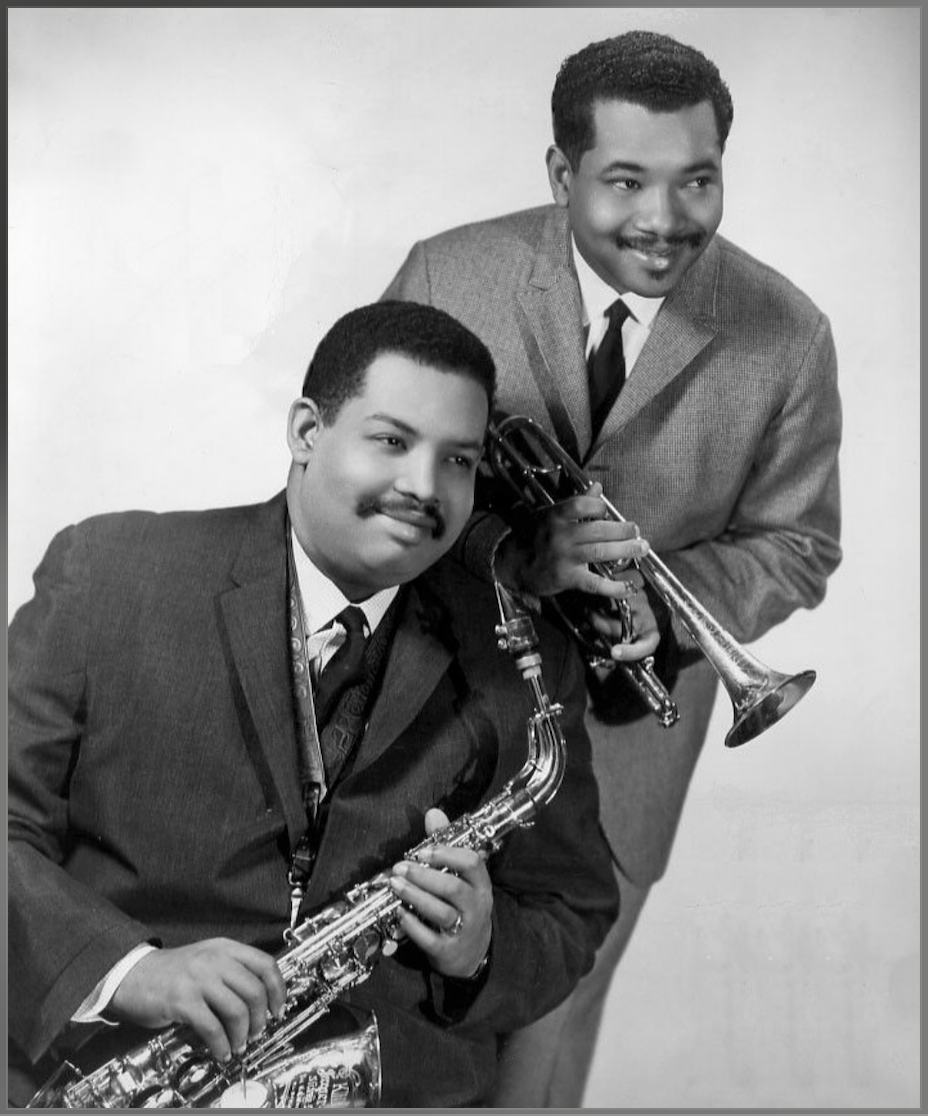
image source: Wikimedia Commons
Nat Adderley was the younger brother of Julian “Cannonball” Adderley, who rose to fame playing with the Miles Davis sextet on Kind of Blue.
Nat Adderley was an exceptional composer, arranger, and performer who collaborated with his brother in the Cannonball Adderley Quintet and with other notable musicians.
Adderley is most famous for his contributions to hard bop and soul jazz. His iconic composition, “Work Song,” is a jazz standard.
- Introducing Nat Adderley (1955)
- To the Ivy League from Nat (1956)
- Soul of the Bible (1972)
Check out Nat Adderley playing his original tune “Work Song” in 1990:
23. Bill Hardman (1933–1990)
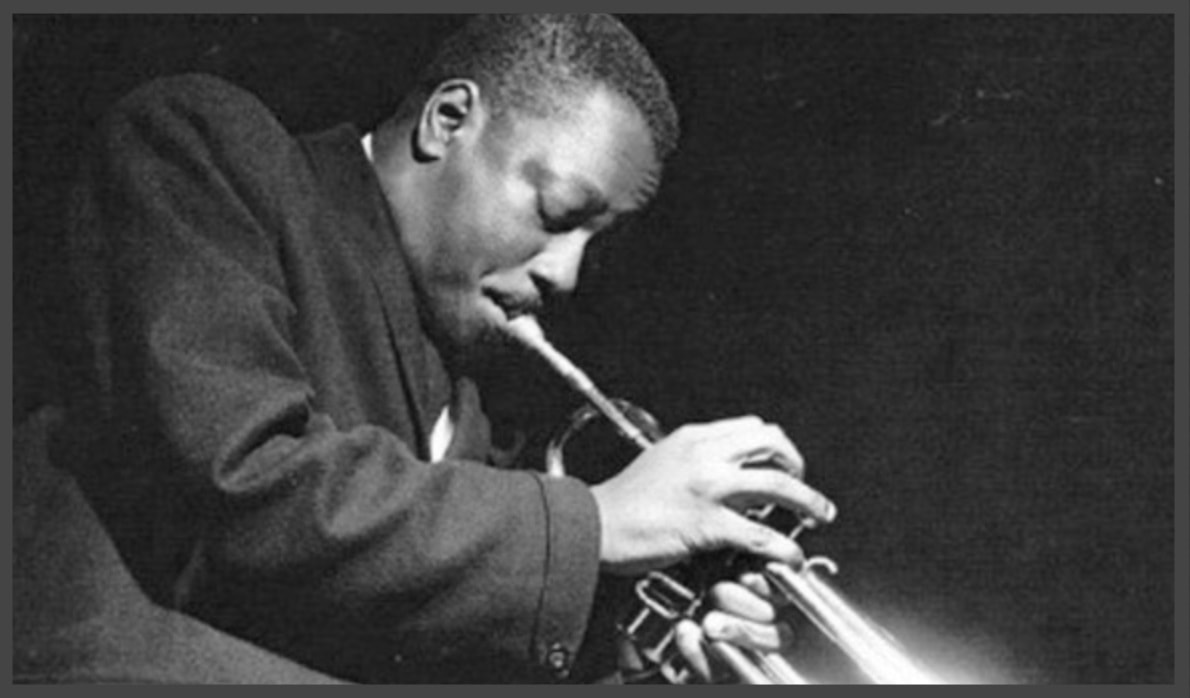
image source: https://apoloybaco.com/jazz/bill-hardman/
Born in Cleveland, Hardman joined Art Blakey’s Jazz Messengers in the late 1950s and later recorded with Horace Silver, Jackie McLean, and Lou Donaldson.
Hardman’s style was fiery and to the point: bebop lines delivered with punch and clarity. He often flew under the radar but was a respected figure among hard bop purists, known for his no-frills approach and swinging time feel.
Check out these pivotal jazz albums that feature Bill Hardman.
- Saying Something (Savoy, 1961)
- Politely (Muse, 1981)
- Moanin’ (Art Blakey, 1958)
Also, take a listen to this recording of his quintet playing the tune “Buckeye Blues.”
24. Idrees Sulieman (1923–2002)
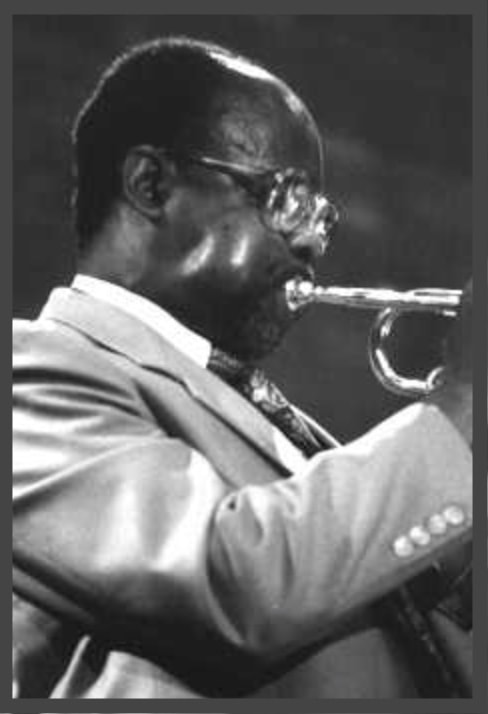
image source: Discogs
Born Leonard Graham in St. Petersburg, Florida, Sulieman changed his name after converting to Islam in the 1940s—a time when many Black musicians sought new identities and spiritual homes.
He recorded with Thelonious Monk on Monk’s first Blue Note session (1947), and later joined big bands led by Dizzy Gillespie, Lionel Hampton, and Cab Calloway. In the 1960s, Sulieman moved to Europe, where he spent the rest of his career.
These albums feature Idrees Sulieman, so give them a listen!
- Roots (Prestige All Stars, 1958)
- Now Is the Time (SteepleChase, 1976)
- Interplay (with John Coltrane, Mal Waldron, 1957)
Also, check out Idrees Suliemanplaying on the Dizzy tune “Groovin’ High.”
25. Thad Jones (1923–1986)
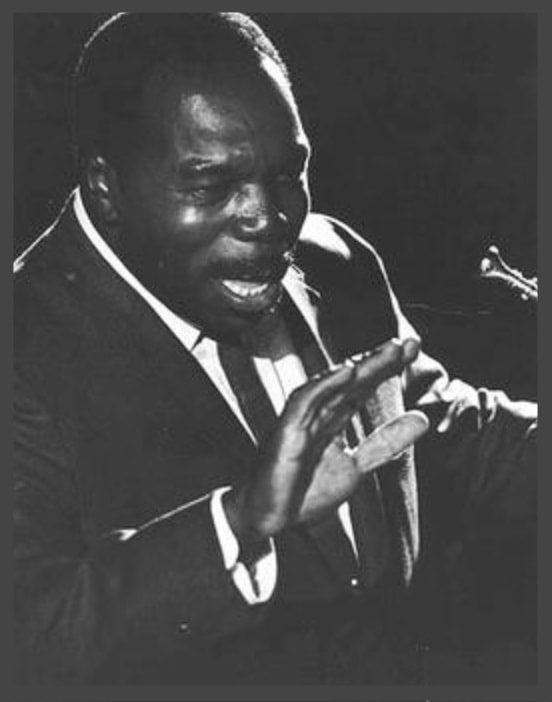
image source: Wikimedia Commons
Born in Pontiac, Michigan, Thad Jones played in Count Basie’s Orchestra, where his harmonic ingenuity stood out. He later co-founded the Thad Jones/Mel Lewis Orchestra, a groundbreaking ensemble that revitalized the large-ensemble jazz genre.
Jones’s tune “A Child Is Born” is a modern standard—delicate, chromatic, and emotionally rich. His trumpet solos were deeply melodic, and his compositions had a profound influence on jazz orchestration.
Check out these excellent Thad Jones albums:
- The Magnificent Thad Jones (Blue Note, 1956)
- Live at the Village Vanguard (Thad Jones/Mel Lewis Orchestra, 1967)
- Consummation (1970)
Listen to his hauntingly beautiful composition “A Child Is Born.”
Post‑Bop, Avant‑Garde & Fusion
This era expanded the trumpet’s expressive terrain. Post-bop explored modal harmony and freer forms, avant-garde players broke boundaries with sound and structure, and fusion artists blended jazz with rock, funk, and world music. Trumpeters became sonic architects, redefining what jazz could be.
Check out this article to learn more about jazz fusion.
26. Woody Shaw (1944–1989)
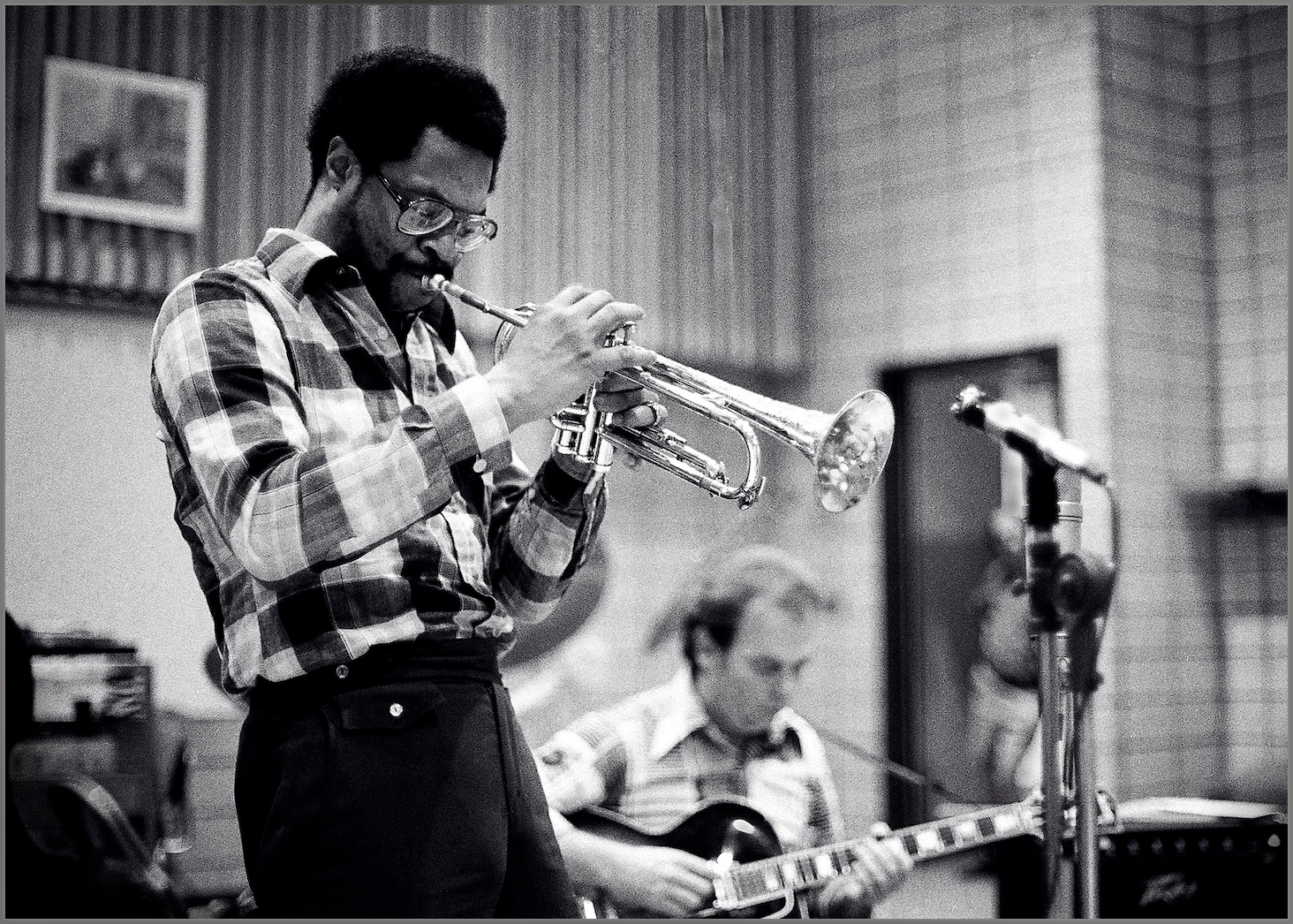
Woody Shaw is one of the finest trumpeters of the 20th century. He was not only an accomplished jazz musician but also an incredible band leader and arranger. He played with many outstanding jazz artists, like Chick Corea, Eric Dolphy, and Herbie Hancock.
Learn more about Chick Corea and Herbie Hancock by checking out this article on the greatest jazz pianists of all time!
Shaw grew up in Newark and studied classical trumpet. Inspired by Eric Dolphy, he developed a broad harmonic vocabulary and advanced trumpet technique, becoming one of the last great innovators in post-bop.
His role as a session musician for Blue Note Records helped him play jazz with other incredible players and made him a first-call, in-demand player.
- Love Dance (1976)
- Little Red’s Fantasy (1978)
- Woody Shaw Live Volume Four (2005)
Check out this audio recording of Woody Shaw soloing on “On Green Dolphin Street” in 1979:
27. Don Cherry (1936–1995)
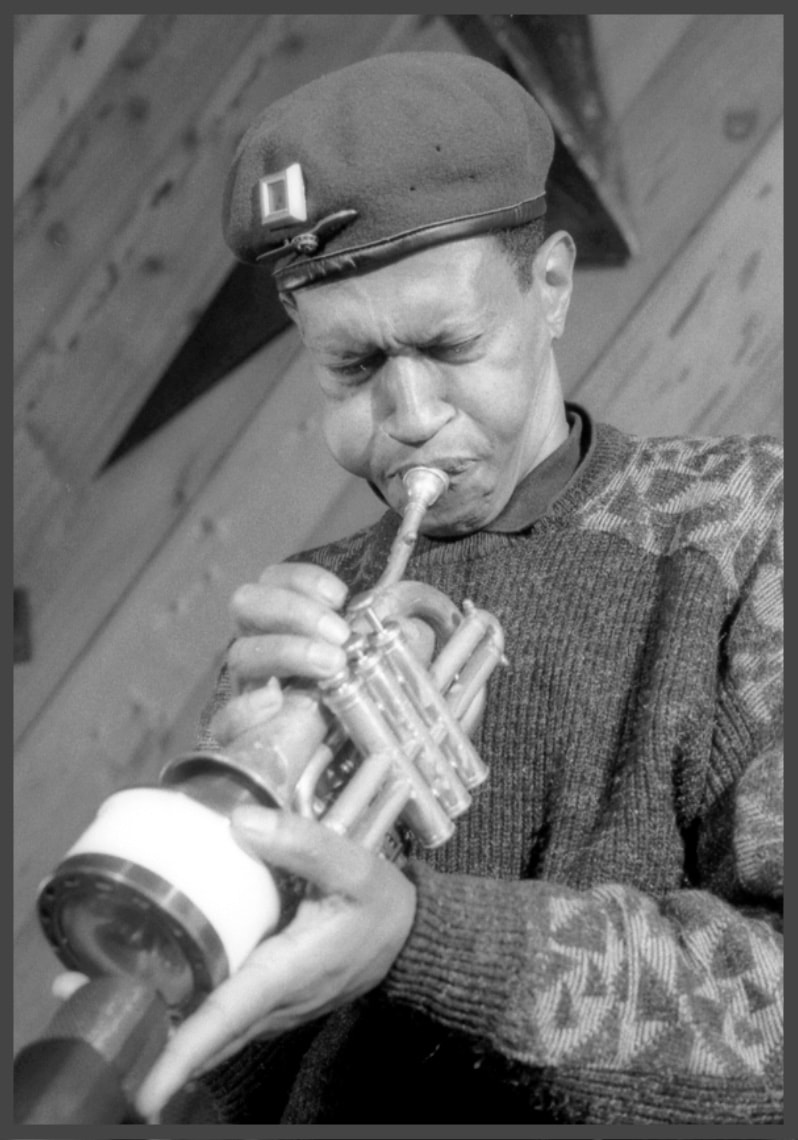
image source: Wikimedia Commons
Raised in Los Angeles, Cherry rose to prominence in the late 1950s as the pocket-trumpet-wielding right hand of Ornette Coleman, helping to launch the free jazz revolution with the album The Shape of Jazz to Come.
But Cherry didn’t stop with avant-garde fire. He spent much of his later career traveling the globe, absorbing and incorporating non-Western instruments and forms—everything from African percussion to Indian drone. He called it “world fusion” before the term existed.
His sound is never about virtuosity—it’s about spirit, texture, and the cultural blending.
Here are some key albums that demonstrate Don Cherry’s style and musical personality.
- The Shape of Jazz to Come (Ornette Coleman, 1959)
- Complete Communion (1966)
- Brown Rice (1975)
Here is Don Cherry’s tune, “Complete Communion.”
28. Lester Bowie (1941–1999)
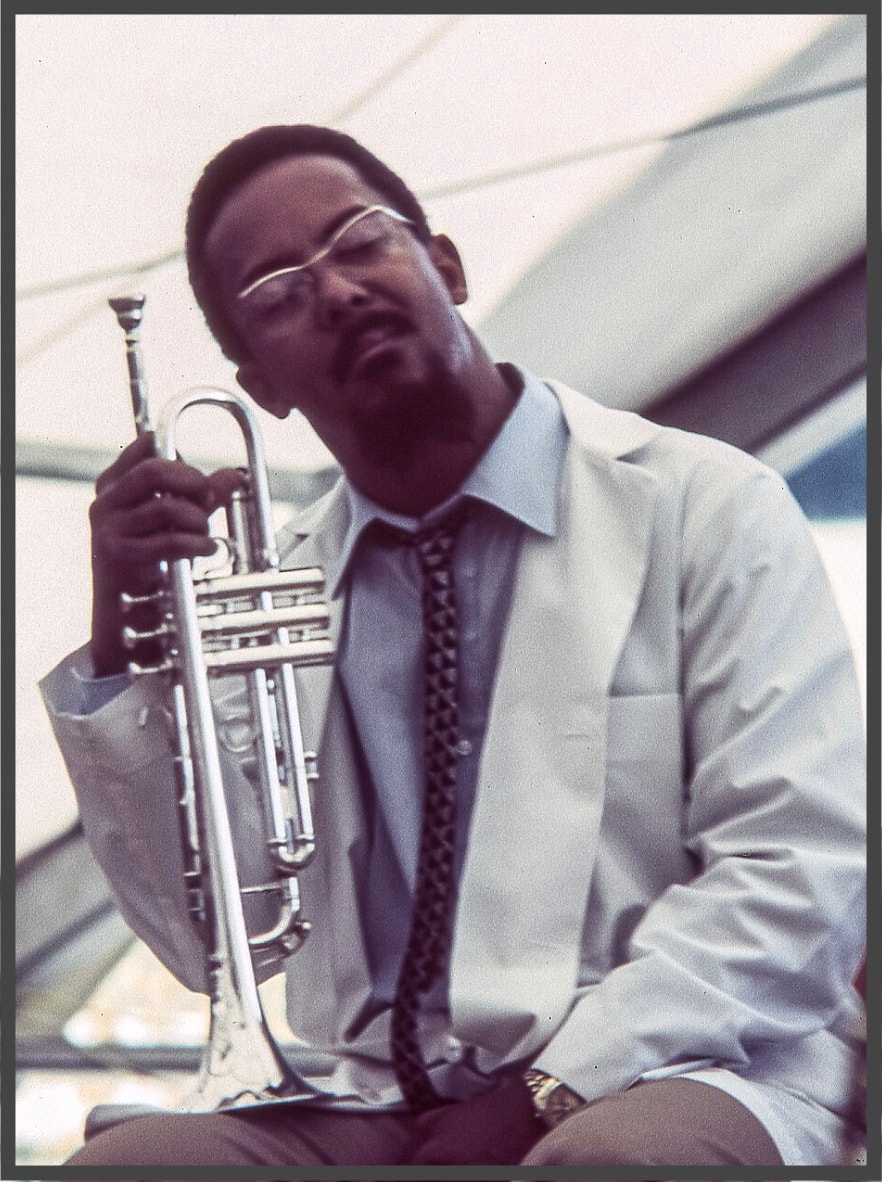
image source: Wikimedia Commons
Lester Bowie, born in Maryland, co-founded the Art Ensemble of Chicago and became one of the most theatrical and visionary voices in avant-garde jazz.
Bowie’s playing was full of contradiction: deep tradition and wild experimentation, sarcasm and sincerity. His use of extended techniques, muted smears, and slapstick effects stretched the trumpet’s expressive range while honoring its historical role in jazz and beyond.
He wore a lab coat on stage. He made the trumpet sneeze. He quoted Sousa next to Sun Ra. And he made it work.
Check out these Lester Bowie albums:
- People in Sorrow (Art Ensemble of Chicago, 1969)
- The Great Pretender (1981)
- Avant Pop (1986)
Listen to this recording of his composition “Theme de Yoyo.”
29. Jon Hassell (1937–2021)
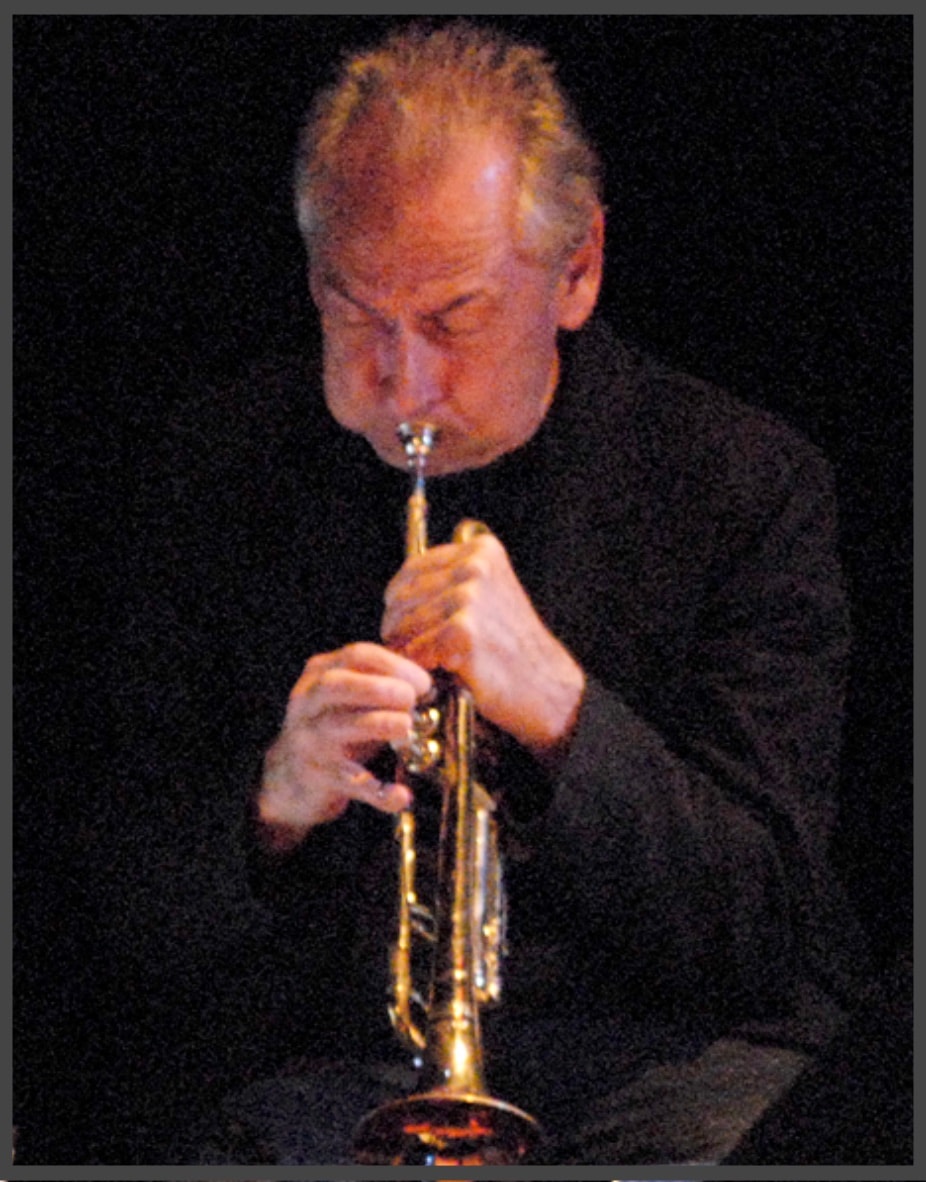
image source: Wikimedia Commons
Born in Memphis, Hassell studied electronic music with Karlheinz Stockhausen and trumpet with Nadja Boulanger, but found his own voice by creating “Fourth World” music—a blend of ambient textures, non-Western scales, and digital effects.
Hassell’s electronically processed horn often sounds more like a chant than a fanfare, a whisper in the jungle rather than a call from the bandstand. His collaborations with Brian Eno and Ry Cooder made him a key influence in ambient, electronic, and world music circles.
These albums showcase Jon Hassell’s unique sound and vision:
- Fourth World, Vol. 1: Possible Musics (with Brian Eno, 1980)
- Power Spot (1986)
- Last Night the Moon Came Dropping Its Clothes in the Street (2009)
Check out the tune “Chemistry” from his album with Brian Eno, Fourth World:
30. Wadada Leo Smith (b. 1941)
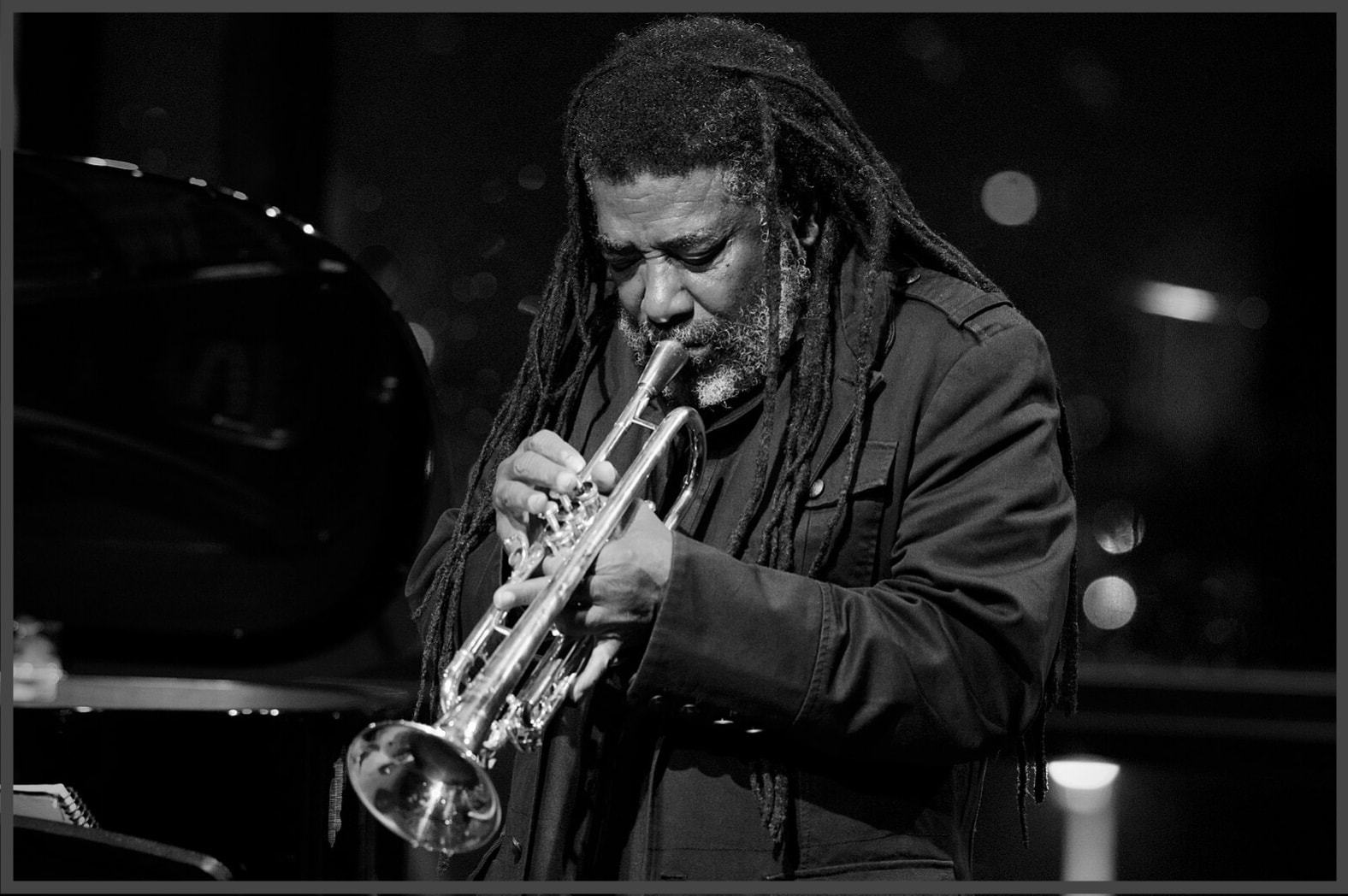
image source: Wikimedia Commons
Born in Leland, Mississippi, Wadada Leo Smith began composing at age 12 and later developed Ankhrasmation, a symbolic graphic notation system that merges visual art with improvisational direction.
As a key member of the AACM (Association for the Advancement of Creative Musicians), Smith helped redefine what it meant to be an American composer working in jazz and beyond.
His late-career output—including Ten Freedom Summers—has received Pulitzer Prize nominations and reaffirms his stature as a major figure in contemporary music.
These albums will give you a grand tour of Smith’s musical mind:
- Spiritual Dimensions (2009)
- Ten Freedom Summers (2012)
- The Great Lakes Suites (2014)
Check out his composition “Lake Biwa; A Fullmoon Purewater Gold.”
31. Tomasz Stańko (1942–2018)
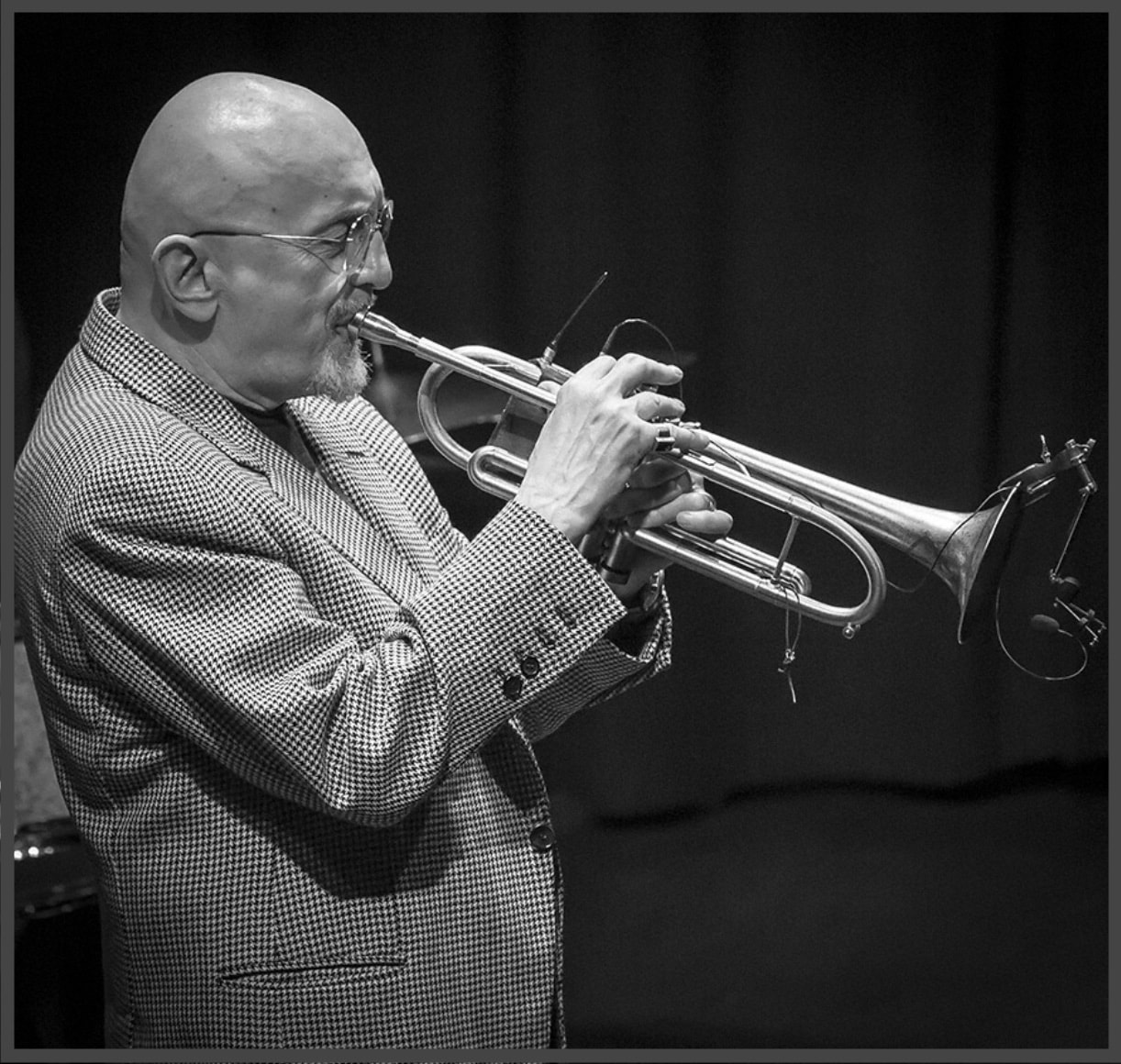
image source: Wikimedia Commons
Tomasz Stańko brought European sensibility into the free jazz vocabulary. Born in Rzeszów, Poland, he emerged in the 1960s alongside pianist Krzysztof Komeda, contributing to the classic Astigmatic and helping shape a uniquely Slavic approach to modern jazz.
Stańko’s later work on the ECM label showcases his haunting tone, long melodic arcs, and sparse lyricism. His music often feels cinematic—slow-burning, mournful, and intensely present.
Check out these essential albums from Tomasz Stańko’s career:
- Balladyna (1976)
- Suspended Night (2004)
- Lontano (2006)
Listen to his composition “Suspended Night, Variation VIII.”
32. Enrico Rava (b. 1939)
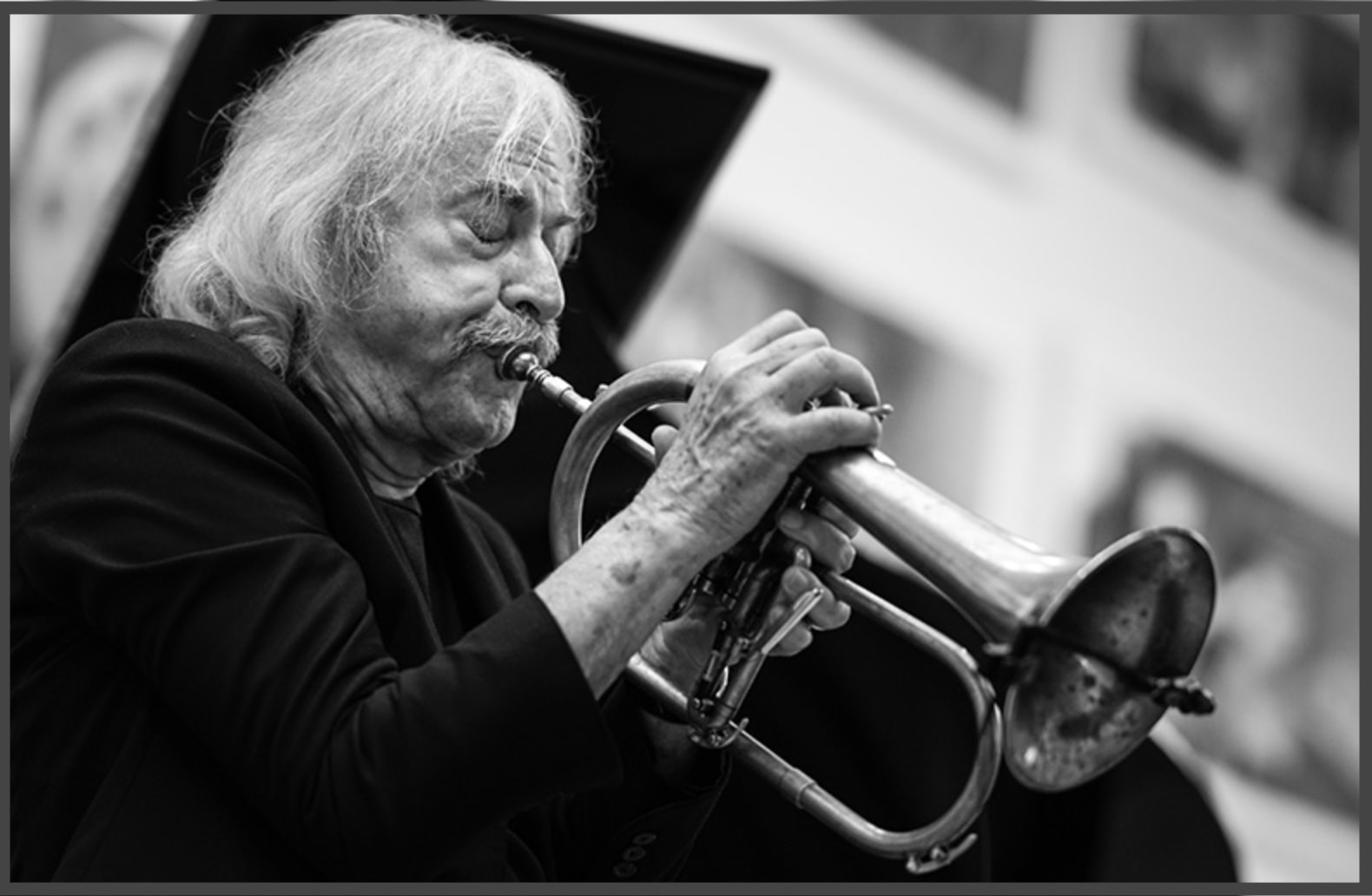
image source: Wikimedia Commons
Enrico Rava is an Italian jazz trumpet player who was born in Trieste and raised in Turin. He switched from trombone to trumpet after hearing Miles Davis and never looked back. His warm, lyrical tone and minimalist phrasing became cornerstones of modern European jazz.
Rava has worked with Steve Lacy, Roswell Rudd, and Paul Motian, but his ECM recordings truly define his voice: elegant, atmospheric, and rich with space.
These albums will give you a strong sense of Enrico Rava’s sound and style:
- The Pilgrim and the Stars (1975)
- Easy Living (2003)
- New York Days (2008)
Listen to his beautiful minimalist playing on the tune “The Pilgrim and the Stars.”
33. Mark Isham (b. 1951)
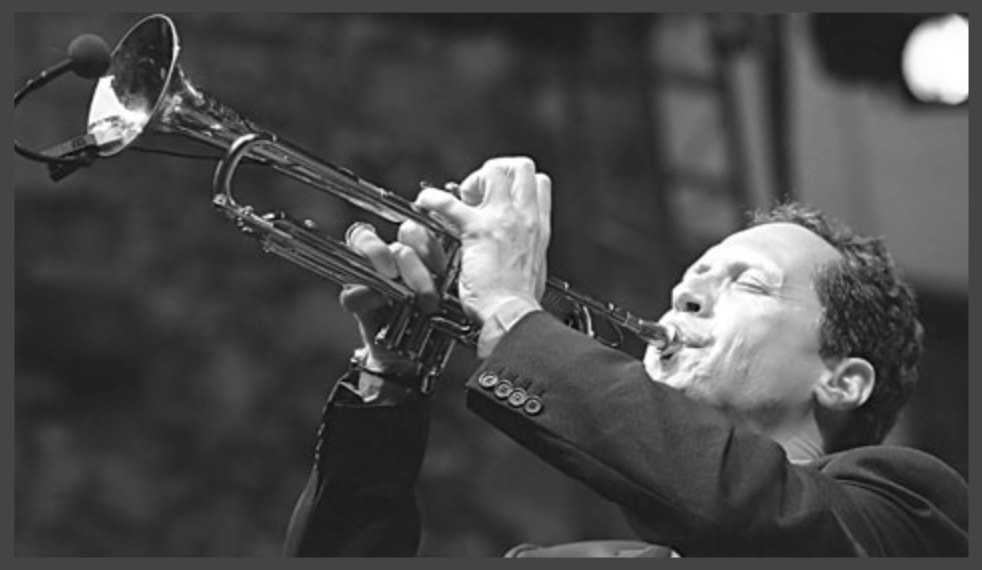
image source: isham.com
Classical roots, jazz chops, synth pads—Mark Isham blends them all. Born in New York and raised in the Bay Area, Isham studied violin, piano, and trumpet, and began his career performing in symphony orchestras before branching into jazz fusion and electronic music.
By the 1980s, he was producing richly textured solo albums and composing for film and television. His score for A River Runs Through It (1992) won him a Grammy and an Academy Award nomination. As a trumpeter, Isham helped define a cinematic ambient style, balancing tone with technology.
Listen to the grand scope of Mark Isham’s musical mind.
- Vapor Drawings (1983)
- Blue Sun (1995)
- Bittersweet (2009)
Listen to his tune “On the Threshold of Liberty.”
34. Chuck Mangione (1940–2025)
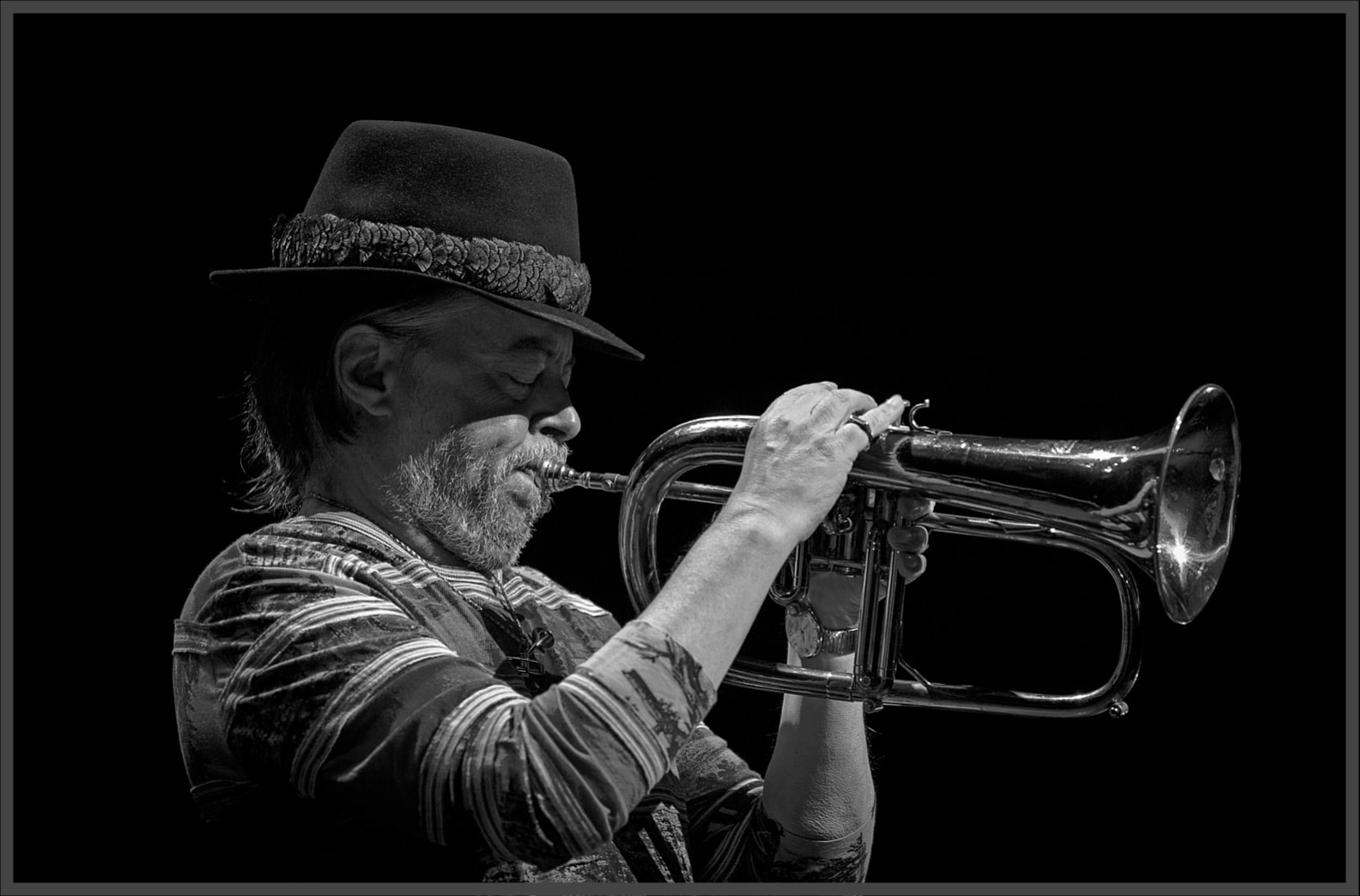
image source: Wikimedia Commons
Chuck Mangione made jazz mainstream again. Born in Rochester, New York, Mangione played with Art Blakey before pioneering a blend of jazz and pop that earned widespread mainstream appeal in the 1970s.
His 1977 album Feels So Good became a chart-topping sensation, led by the flugelhorn-driven title track. The tune’s feel-good melody and smooth groove made it a staple of soft jazz radio.
Accessible, catchy, and technically solid, Mangione brought joy to millions—and flugelhorn solos to mall food courts everywhere.
Check out these Chuck Mangione classics.
- Feels So Good (1977)
- Chase the Clouds Away (1975)
- Children of Sanchez (1978)
Listen to perhaps his most famous tune, “Feels So Good.”
35. Randy Brecker (b. 1945)
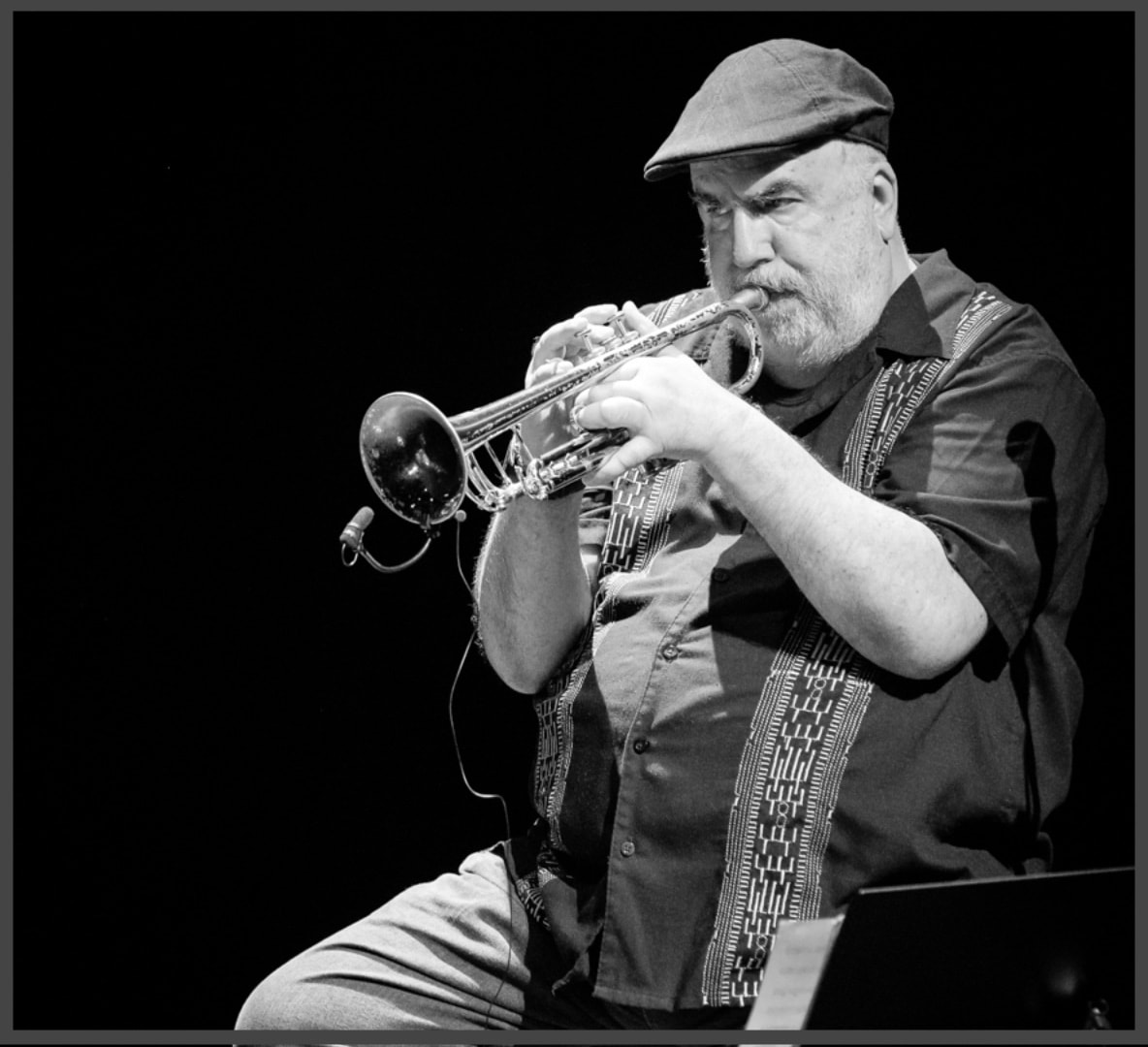
image source: Wikimedia Commons
Randy Brecker is the ultimate jazz utility player—comfortable in hard bop, fusion, funk, and anything in between. Born in Philadelphia, he studied at Indiana University and made early appearances with Clark Terry, Horace Silver, and Blood, Sweat & Tears.
However, his fame skyrocketed with the formation of the Brecker Brothers Band, a funk-jazz powerhouse co-led by his brother, saxophonist Michael Brecker.
Randy’s tone is full and expressive; his phrasing is sharp and street-smart, and his studio credits include Jaco Pastorius, Steely Dan, James Taylor, and more.
These albums will give you a solid tour of Randy Brecker’s playing style.
- The Brecker Bros. (1975)
- Score (1969)
- 34th N Lex (2003)
Check him out playing on the tune “Some Skunk Funk.”
To learn more about his brother Michael Brecker, check out this post on the greatest jazz saxophonists of all time.
36. Wynton Marsalis (b. 1961)
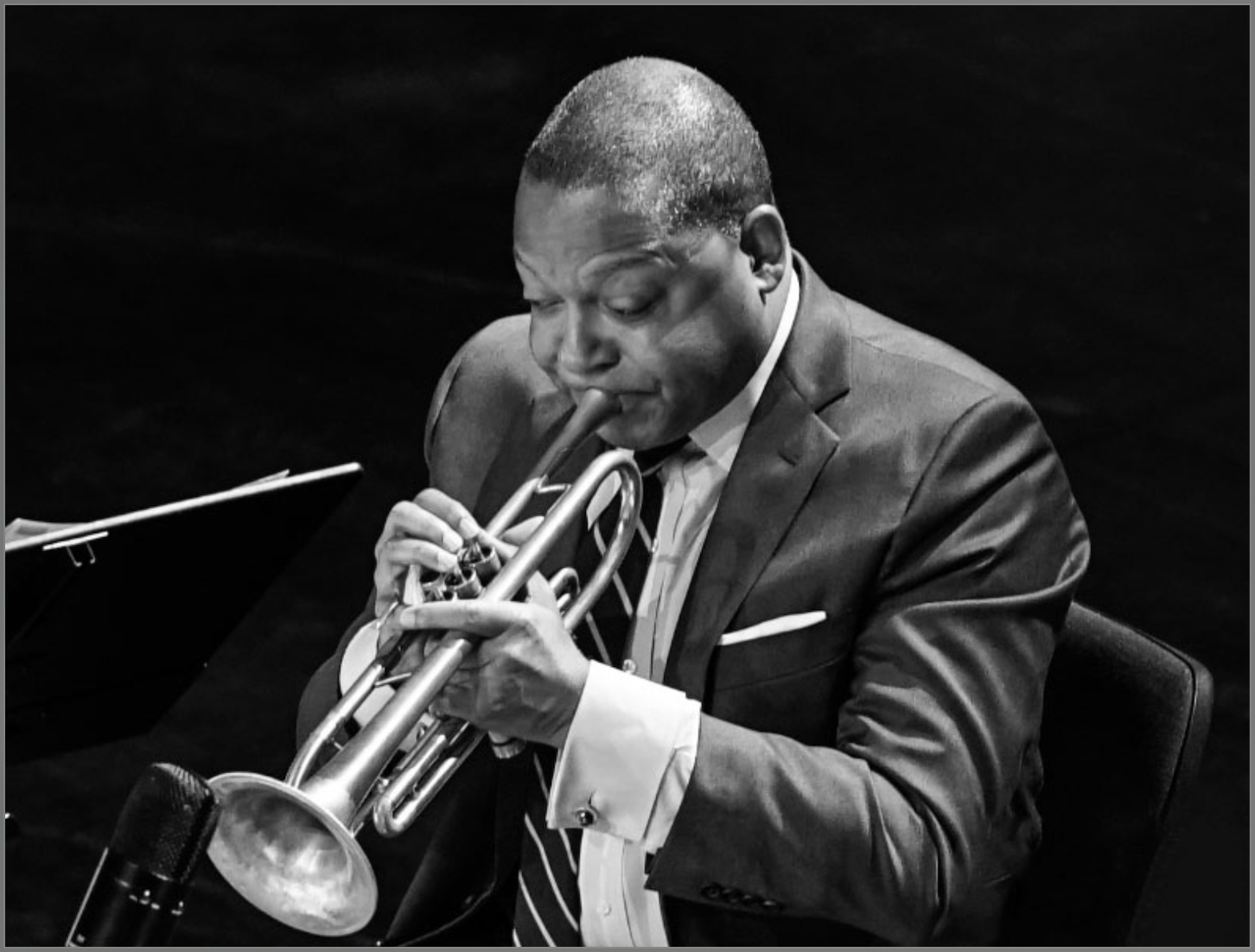
image source: Wikimedia Commons
Growing up in New Orleans, Marsalis studied at Juilliard and played with Art Blakey. He became a leading advocate for the jazz tradition, winning Grammys in both classical and jazz categories, as well as the Pulitzer Prize for his oratorio “Blood on the Fields.”
Wynton Marsalis is a modern trumpet master who’s not only a virtuosic player but also an educator and advocate for preserving jazz music.
Check out these Wynton Marsalis albums:
- Black Codes (From the Underground) (1985)
- Standard Time, Vol. 1 (1988)
- J Mood (1987)
Check out Wynton Marsalis playing traditional jazz with period-accurate instrumentation (banjo instead of guitar!):
37. Terence Blanchard (b. 1962)
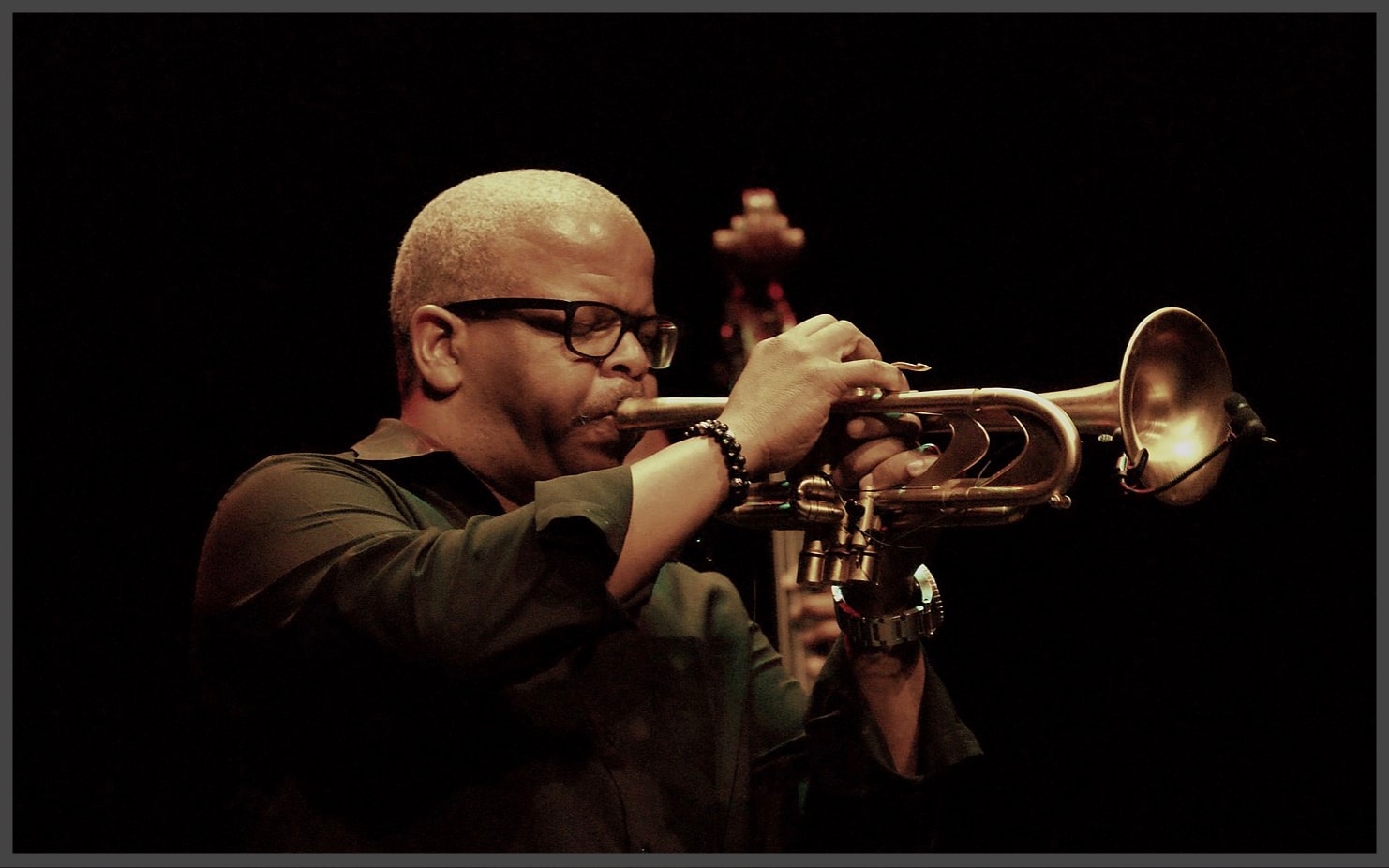
image source: Wikimedia Commons
Terence Blanchard came up through the heart of New Orleans and stepped directly into the legacy of Art Blakey’s Jazz Messengers, taking over the trumpet chair from Wynton Marsalis in the early 1980s. But his career didn’t stop at the bandstand.
Blanchard became a significant voice in cinematic jazz, scoring over 20 films for Spike Lee, including Malcolm X, 25th Hour, and BlacKkKlansman.
His writing extends into the world of opera with Fire Shut Up in My Bones, the first opera by a Black composer performed at the Metropolitan Opera.
Blanchard’s tone is burnished and expressive—at home both on the bandstand and in the orchestra pit.
These albums provide a good sample of his musical range:
- A Tale of God’s Will (A Requiem for Katrina) (2007)
- Breathless (2015)
- Live at the 2022 Monterey Jazz Festival (2023)
Check out his composition “Levees,” written to honor the dead who perished during the Hurricane Katrina disaster.
38. Roy Hargrove (1969–2018)
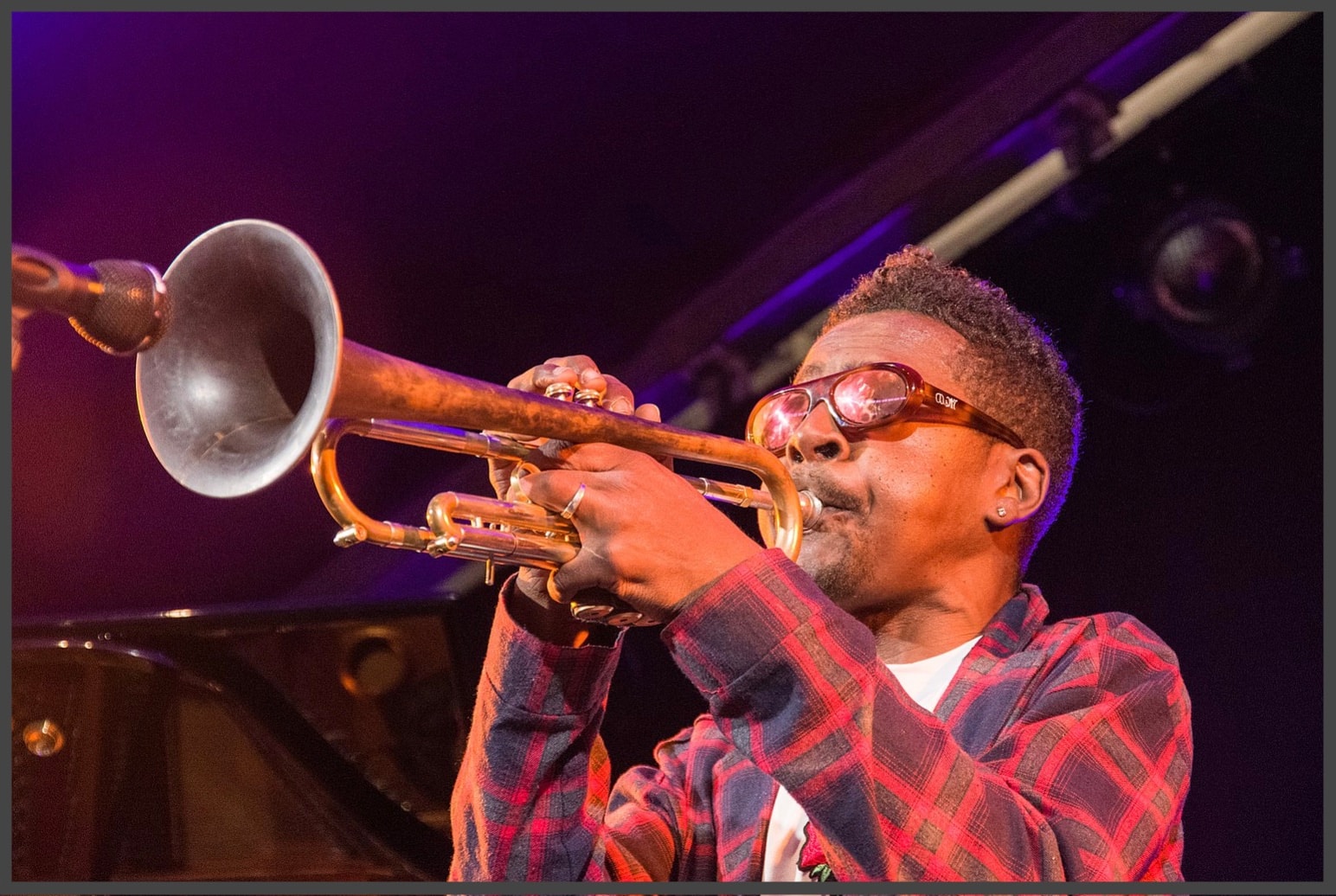
image source: Wikimedia Commons
A trumpet phenomenon with groove to spare, Roy Hargrove emerged from Texas with the endorsement of Wynton Marsalis and quickly made his name in straight-ahead jazz. But Hargrove’s artistry didn’t stop with hard bop.
With RH Factor, he dove headfirst into neo-soul, funk, and hip-hop, collaborating with D’Angelo, Erykah Badu, and Questlove. Hargrove had the phrasing of Clifford Brown and the feel of J Dilla—bridging generations with effortless charisma and total command.
Listen to these great albums to capture the scope of Roy’s playing and artistic vision.
- Earfood (2008)
- Hard Groove (2003)
- With the Tenors of Our Time (1994)
Check out his tune, “Strasbourg / St. Denis.”
39. Nicholas Payton (b. 1973)
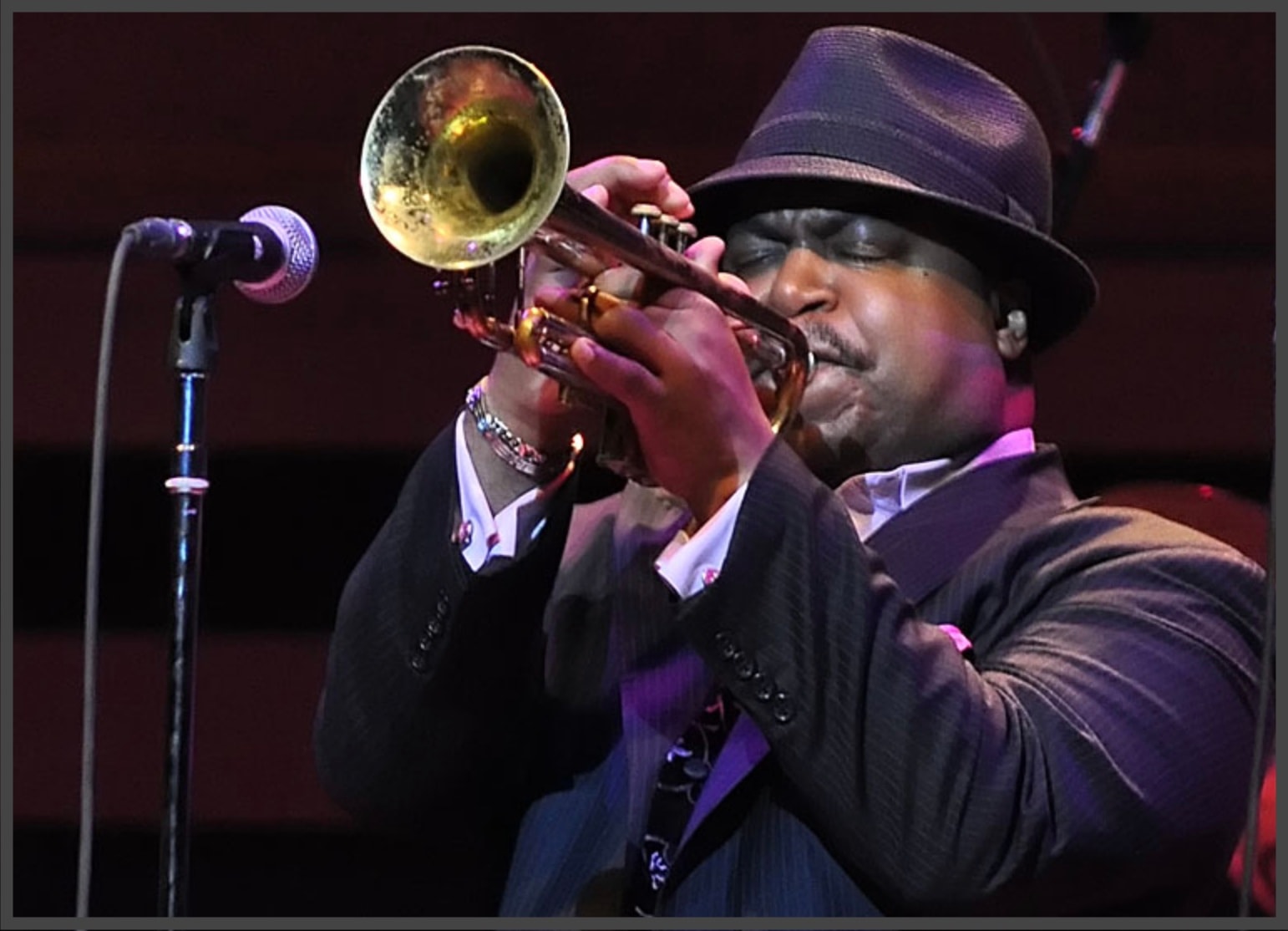
image source: Wikimedia Commons
Nicholas Payton was born in New Orleans in 1973. He was a child prodigy, marching in second-line parades before recording with veteran trumpeter Doc Cheatham in his teens (earning a Grammy for it in 1997).
Since then, he’s released over 20 albums blending traditional New Orleans jazz, modern groove, R&B, and spoken word. A fierce advocate for Black American Music (or #BAM, as he calls it), Payton challenges jazz orthodoxy while honoring its roots.
Listen to these albums to get a deeper understanding of his playing style:
- Gumbo Nouveau (1995)
- Into the Blue (2008)
- Smoke Sessions (2023)
Check out his playing on the tune “Zigaboogaloo.”
40. Dave Douglas (b. 1963)
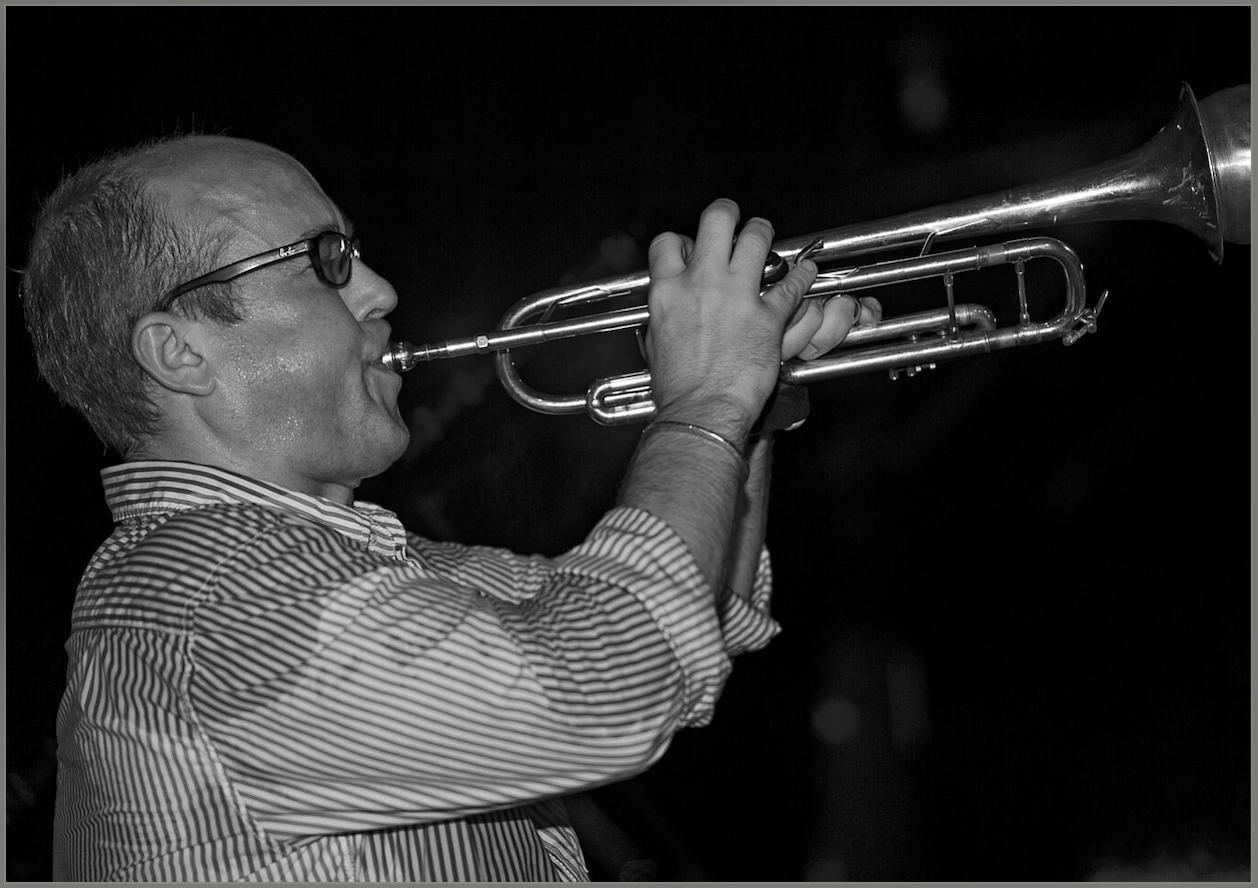
image source: Wikimedia Commons
Dave Douglas is a modern jazz powerhouse. This contemporary jazz trumpet player is an esteemed composer, arranger, and performer who has collaborated with many notable figures in the contemporary jazz scene.
New Jersey–born Douglas studied at Berklee and the New England Conservatory. He draws on Balkan folk, classical, and free jazz and performs with ensembles like Masada.
He got his start playing with Horace Silver in the late 1980s and hasn’t stopped since. Douglas has released numerous albums and has appeared on countless more. He formed the record label Greenleaf Music in 2005, which has released 70 albums to date.
Be sure to listen to some of his albums!
- Parallel Worlds (1993)
- In Our Lifetime (1995)
- Strange Liberation (2004)
Check out the Dave Douglas quintet:
41. Tom Harrell (b. 1946)
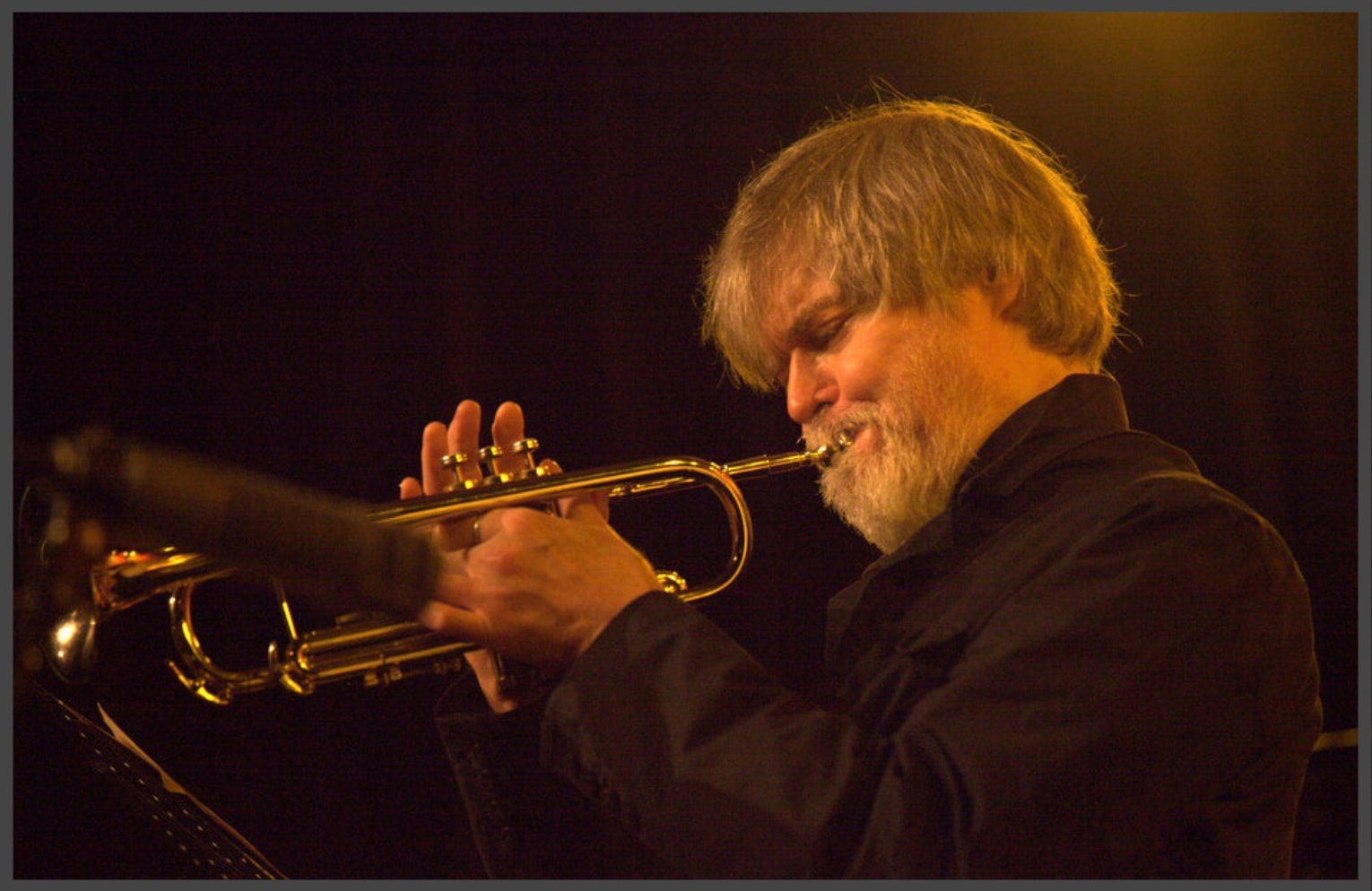
image source: Wikimedia Commons
Tom Harrell has composed and recorded prolifically over five decades, all while managing a lifelong struggle with schizophrenia. Yet his trumpet voice remains singular, serene, and deceptively complex.
A master melodist, Harrell’s work draws from hard bop, modal jazz, and classical chamber textures, often focusing on tightly constructed themes and intricate harmonic landscapes. His tone? Pure velvet.
His story is one of brilliance and enduring beauty.
Listen to these key Tom Harrell albums:
- Sail Away (1989)
- Time’s Mirror (1999)
- Infinity (2019)
Here is one of his most recognized compositions, “Sail Away.”
42. Arturo Sandoval (b. 1949)
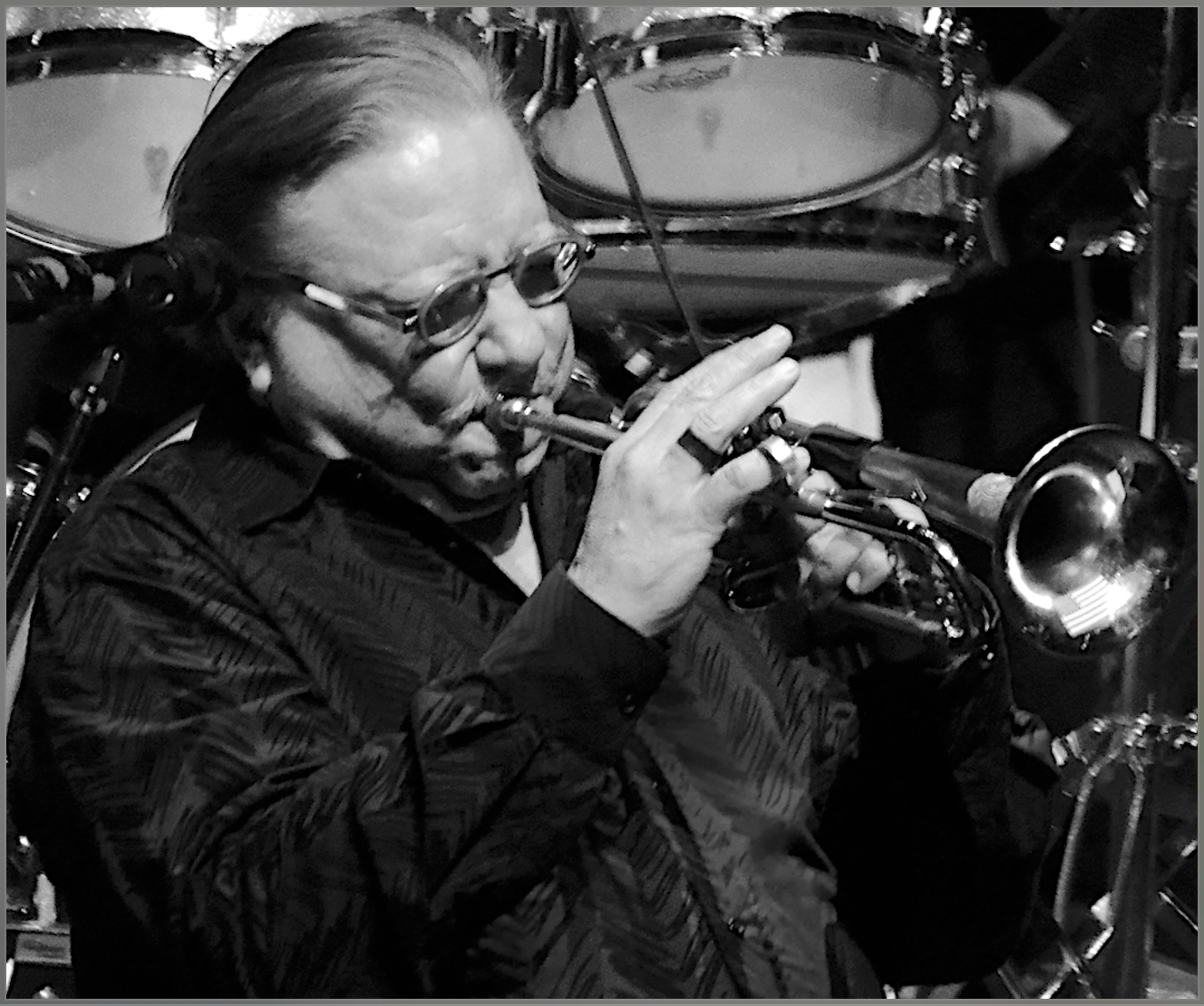
image source: Wikimedia Commons
Arturo Sandoval is a Cuban-born trumpet player who rose to fame in jazz when Dizzy Gillespie took him under his wing and helped him establish a presence in the American jazz scene. This incredible musician has won numerous Grammy Awards and received numerous nominations.
Still active in the scene, he has appeared on numerous albums as a sideman and has released many albums as a band leader.
Check out these Artural Sandoval albums:
- Straight Ahead (1988)
- Hot House (1998)
- Live at Yoshi’s (2015)
Check out Arturo Sandoval playing the jazz standard “There Will Never Be Another You.”
Contemporary Jazz Trumpeters
Today’s trumpeters inherit a century of tradition—and stretch it in every direction. From soulful swing to hip-hop hybrids, minimalist textures to global grooves, modern players blur genres, embrace technology, and further increase jazz music’s century-long reach.
43. Ambrose Akinmusire (b. 1982)
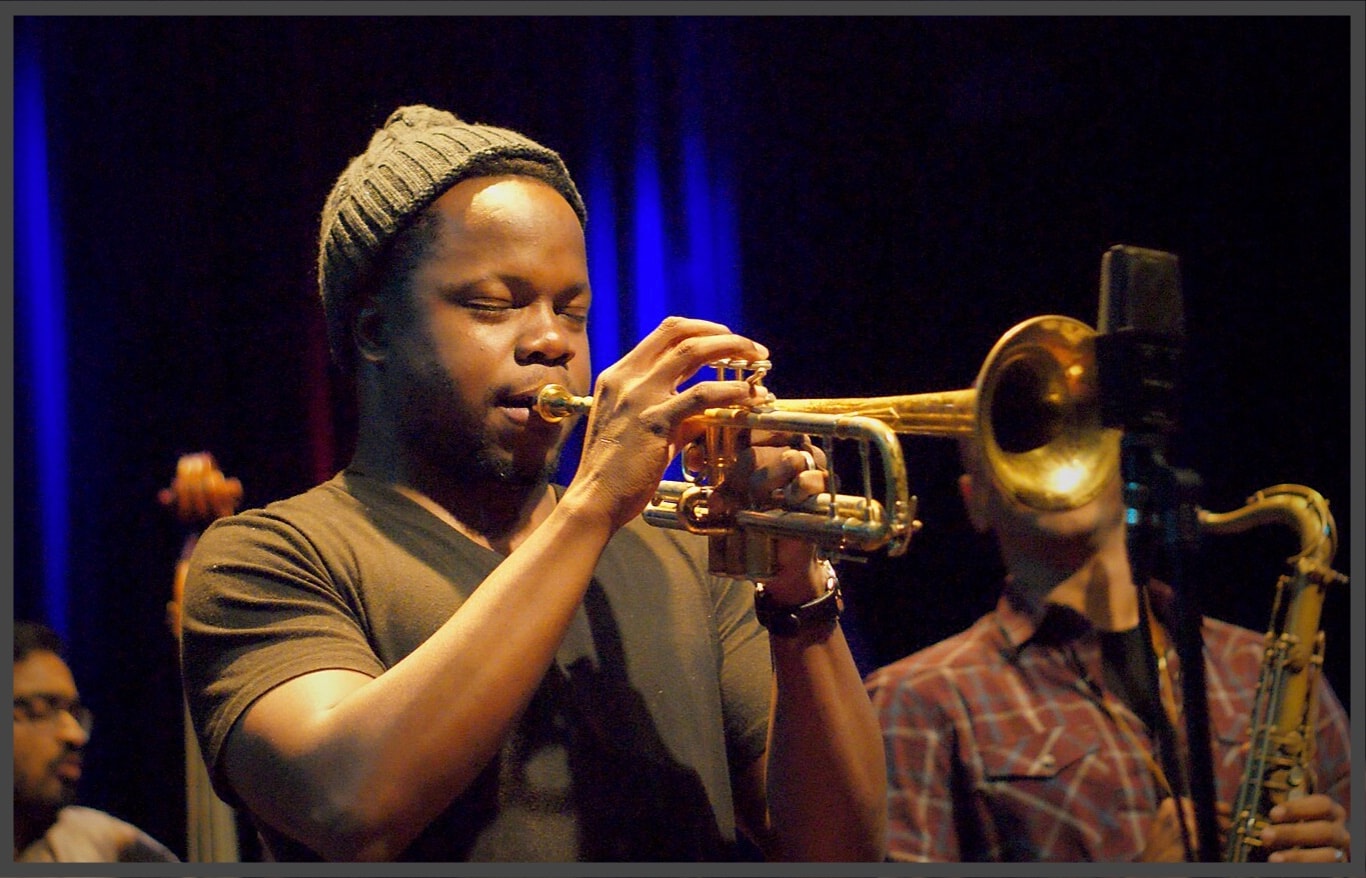
image source: Wikimedia Commons
Born in Oakland, California, Ambrose Akinmusire won the Thelonious Monk Competition in 2007 and soon emerged as one of the most thought-provoking trumpeters of his generation.
His albums combine post-bop, avant-garde textures, classical elements, and hip-hop rhythms, all in the service of deeply personal—and often political—narratives. He’s a storyteller who prefers questions to answers, and his trumpet phrasing can evoke vulnerability or rage in equal measure.
Explore these albums to get a decent grasp of his musical style and personality.
- When the Heart Emerges Glistening (2011)
- Origami Harvest (2018)
- On the Tender Spot of Every Calloused Moment (2020)
Check out his composition “The Beauty of Dissolving Portraits.”
44. Avishai Cohen (the Jazz Trumpeter) (b. 1978)
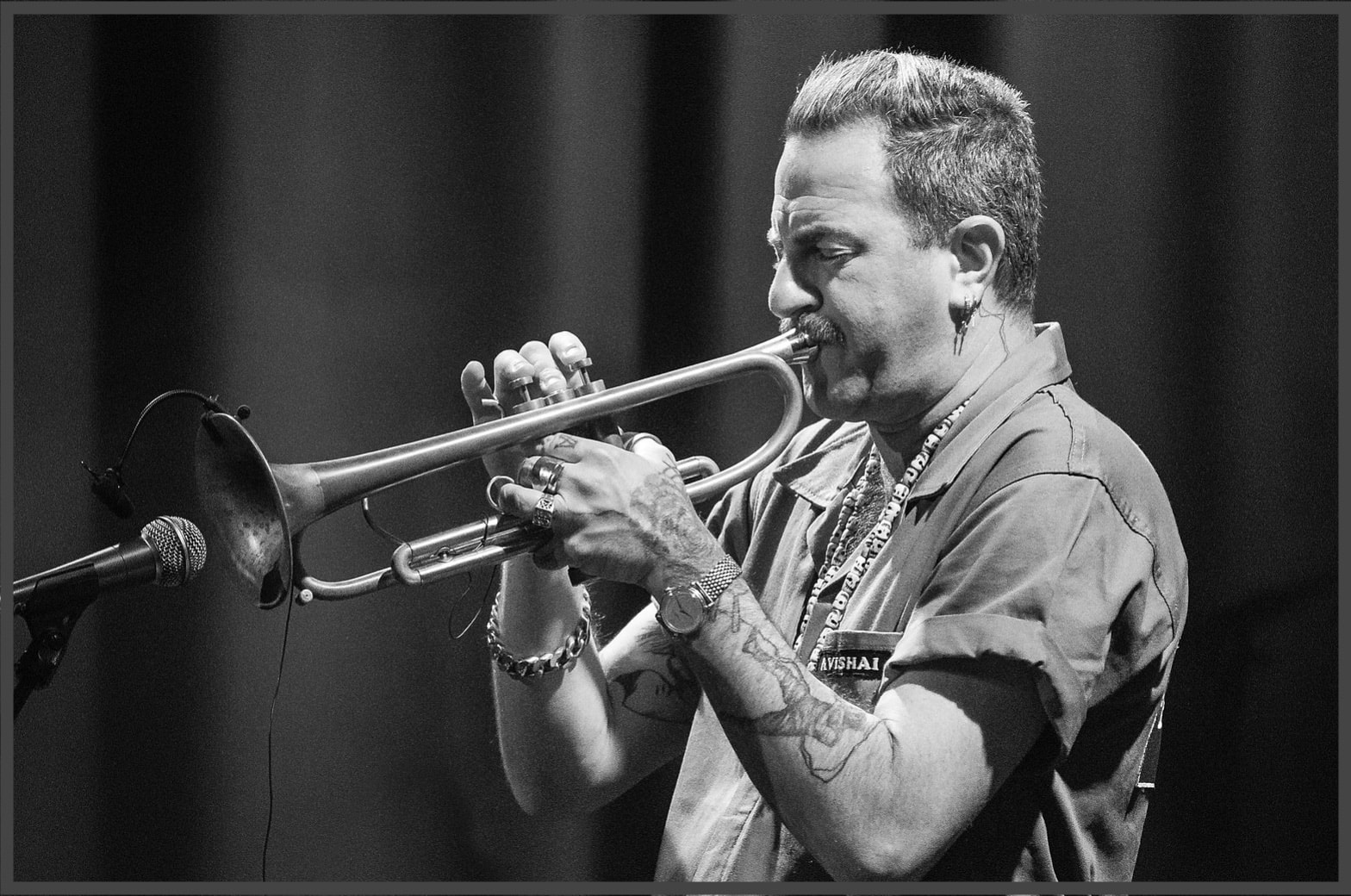
image source: Wikimedia Commons
With a warm, contemplative tone and deep Middle Eastern roots, Avishai Cohen (the trumpeter) stands as a leading figure in contemporary global jazz. Born in Tel Aviv, he grew up in a musical family and studied at Berklee before settling in New York.
Cohen is known for his work with SFJAZZ Collective, the trio Triveni, and his acclaimed ECM albums, where silence and breath are as important as melody. He blends modal jazz with Sephardic, Arab, and Israeli folk influences—often with cinematic results.
Here are some essential Avishai Cohen records:
- Into the Silence (2016)
- Cross My Palm with Silver (2017)
- Naked Truth (2022)
Listen to his composition “Into the Silence.”
45. Jeremy Pelt (b. 1976)
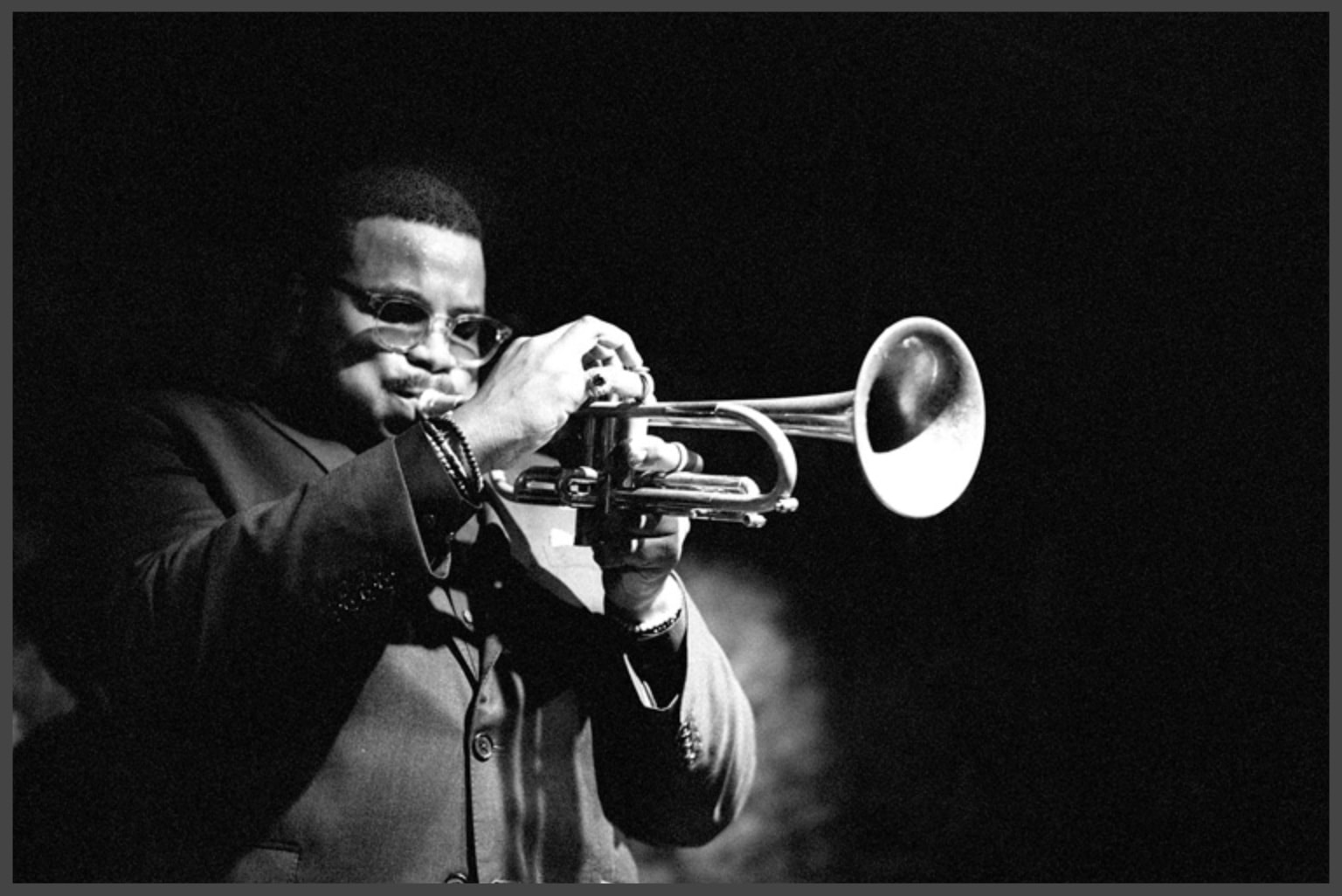
image source: Wikimedia Commons
Jeremy Pelt has the swagger of hard bop and the mind of a modernist. Born in Los Angeles, Pelt studied classical trumpet and made early marks with the Mingus Big Band, Roy Hargrove, and his own tight-knit ensembles.
A disciple of Clifford Brown, his tone is big, brassy, and articulate—but his compositions increasingly explore orchestration, spoken word, and social commentary, making him a dynamic voice in today’s jazz scene.
Take a tour of his musical career by checking out these albums.
- Face Forward, Jeremy (2014)
- Men of Honor (2010)
- Soundtrack (2022)
Check out his composition “Face Forward, Jeremy.”
46. Takuya Kuroda (b. 1980)
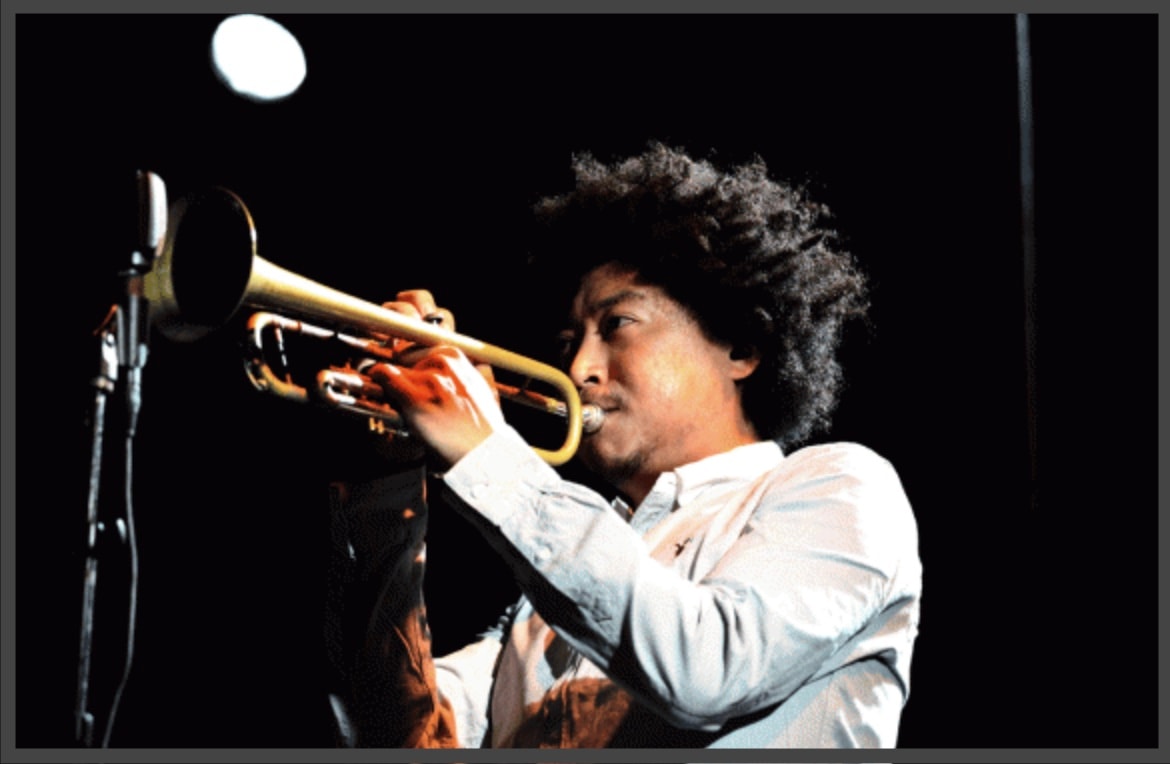
image source: Wikimedia Commons
Japan’s Takuya Kuroda brings the groove back to the trumpet. Born in Kobe, Kuroda studied at Berklee and The New School before making waves in New York with a heady blend of jazz, soul, funk, and hip-hop.
His Blue Note debut, Rising Son, produced by José James, features reworks of classics like “Afro Blue” alongside his own beat-driven originals. His horn playing is rhythmic, fluid, and perfectly matched to modern pocket.
These albums provide a great overview of his musical career.
- Rising Son (2014)
- Zigzagger (2016)
- Midnight Crisp (2022)
Check out his tune “Rising Son.”
47. Christian Scott aTunde Adjuah (b. 1983)
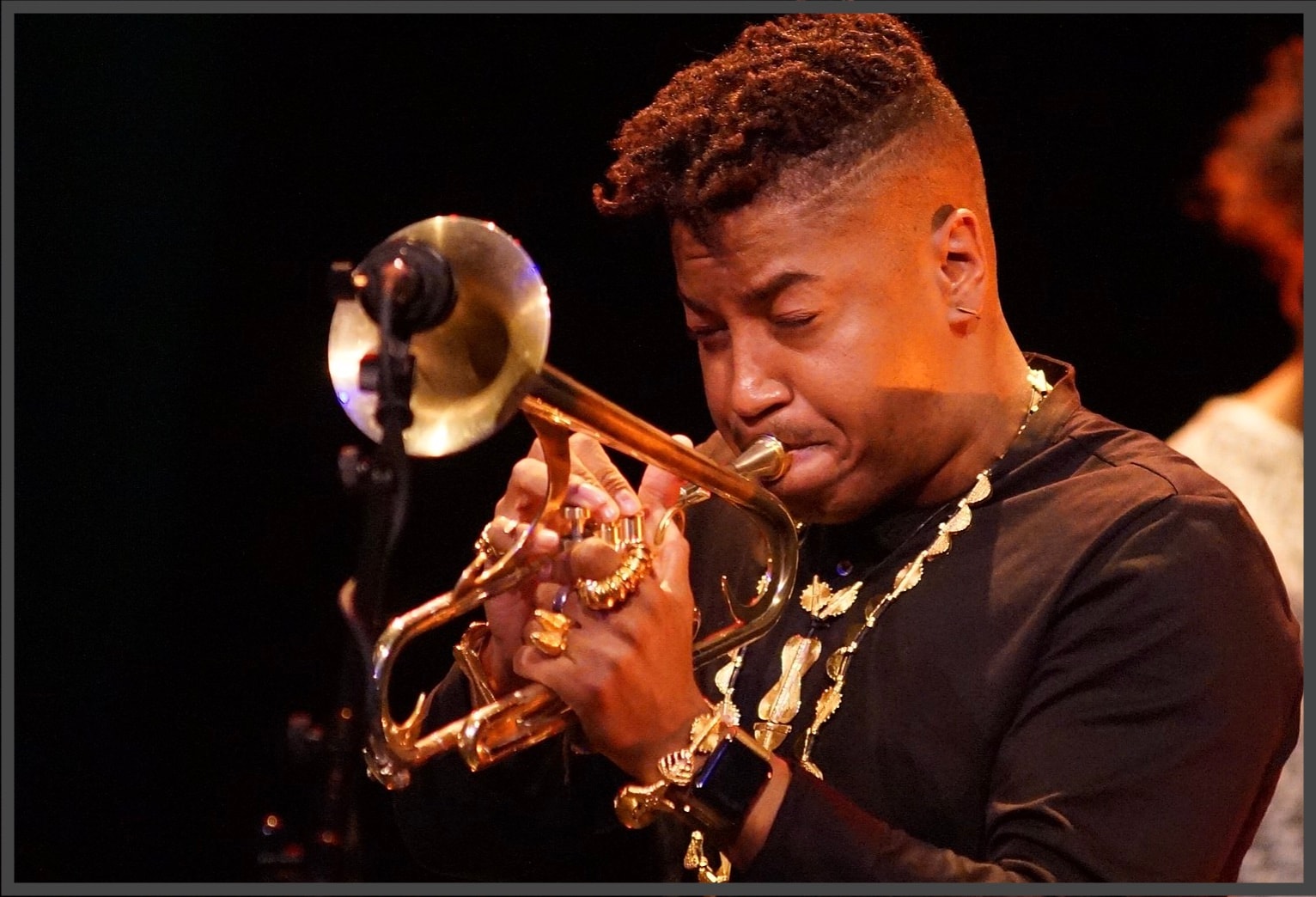
image source: Wikimedia Commons
A bold innovator from New Orleans, Christian Scott aTunde Adjuah coined the term “Stretch Music” to describe his genre-defying approach that stretches jazz to include trap beats, West African rhythms, ambient textures, and protest themes.
Grandson of Big Chief Donald Harrison Sr. and nephew of saxophonist Donald Harrison, Adjuah blends tradition and rebellion in equal measure. His albums are often conceptually rich, tackling identity, trauma, and resilience through layered sonic storytelling.
Be sure to listen to these albums!
- Stretch Music (2015)
- Diaspora (2017)
- Ancestral Recall (2019)
Check out his composition “West of the West” from the album Stretch Music (2015).
48. Ibrahim Maalouf (b. 1980)
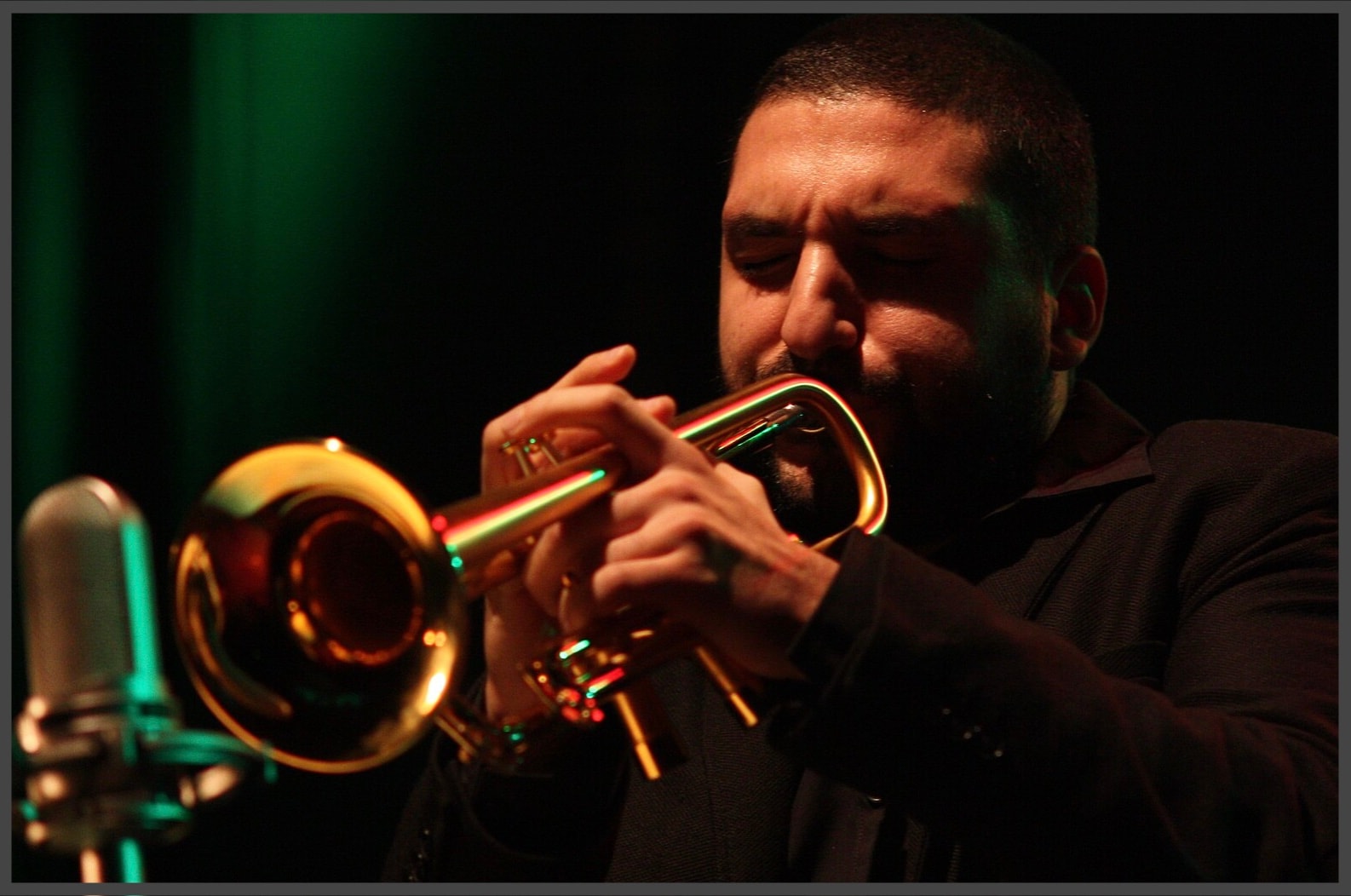
image source: Wikimedia Commons
Born in Beirut and raised in Paris, Maalouf fuses classical training (including a stint as a baroque trumpeter) with jazz, funk, and Middle Eastern traditions. His music is both epic and personal—tracing his family’s journey and his own identity.
Maalouf plays a quarter‑tone trumpet invented by his father to express Arabic maqams. He fuses classical, rock, and jazz influences on albums such as Kalthoum.
Check out these Ibrahim Maalouf albums:
- Diasporas (2007)
- Kalthoum (2015)
- S3NS (2019)
Listen to his hauntingly beautiful composition “Beirut.”
49. Nate Wooley (b. 1974)
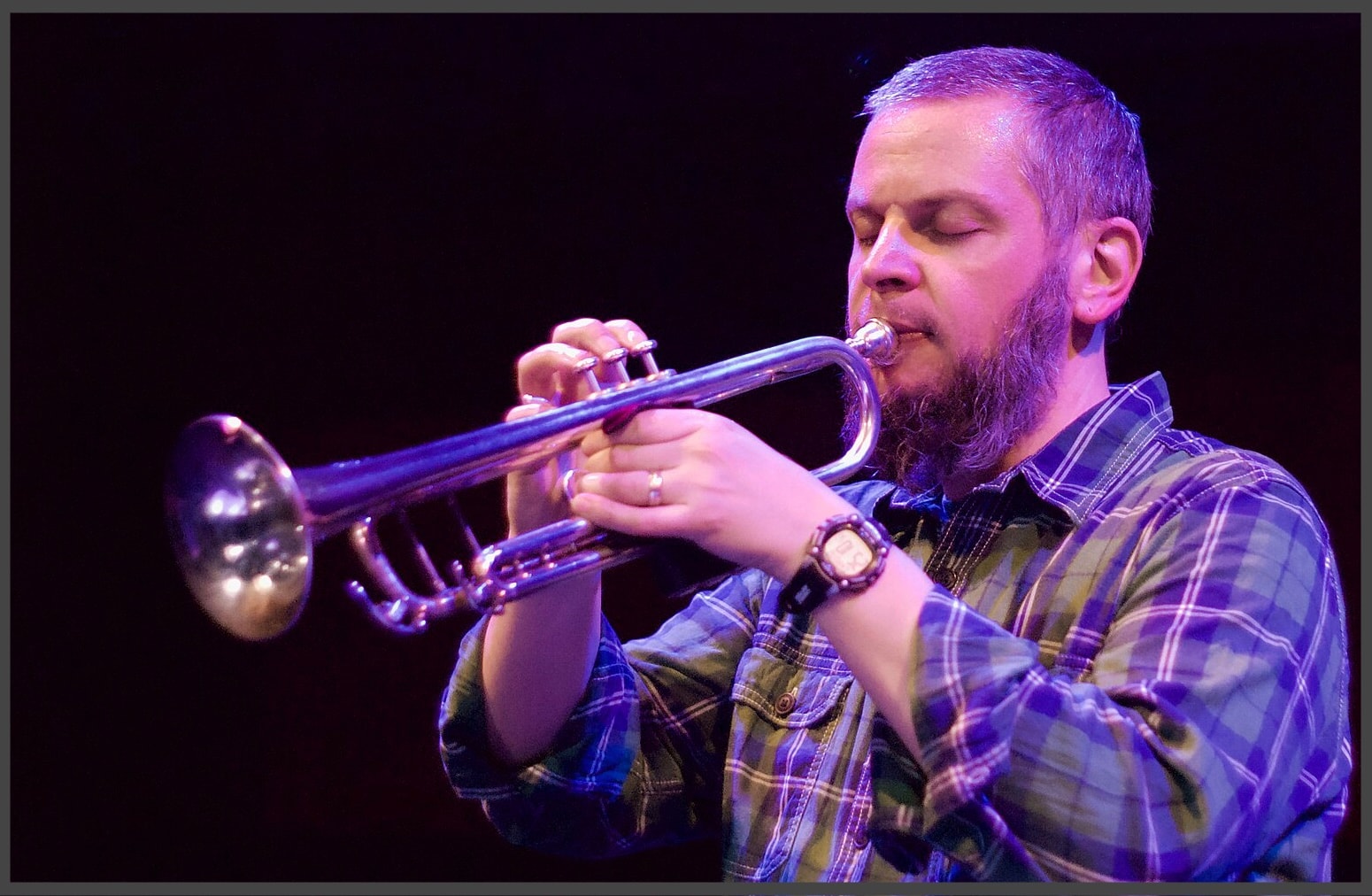
image source: Wikimedia Commons
Raised in Clatskanie, Oregon, Wooley has become a key figure in experimental and noise-driven jazz, often exploring extended techniques, circular breathing, feedback, and multiphonics.
His long-form series Seven Storey Mountain blends jazz improvisation with electronics, spoken word, and chamber textures, forming ritual-like sonic experiences.
Listen to these key Nate Wooley albums.
- Seven Storey Mountain VI (2020)
- Battle Pieces (2015)
- Trumpet/Amplifier (2013)
Check out his playing on the tune “Seven Storey Mountain VI.”
50. Etienne Charles (b. 1983)
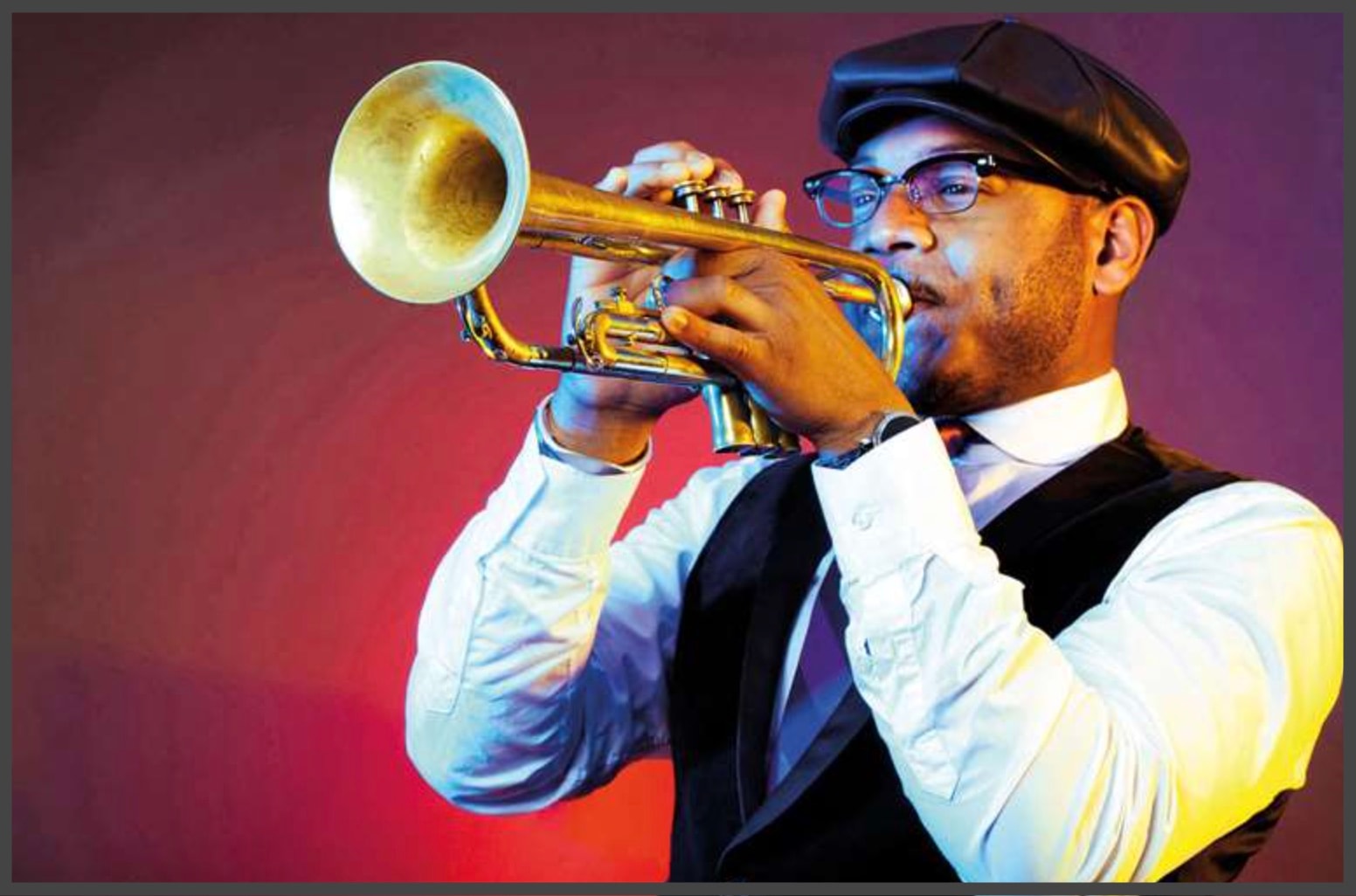
image source: jazzwise.com
Etienne Charles brings the Caribbean to the forefront of jazz. Born in Trinidad, he infuses his music with the spirit of calypso, steelpan, and Creole traditions, creating jazz that’s festive, grounded, and full of life.
Educated at Juilliard and the Manhattan School of Music, Charles also serves as a professor at Michigan State University, where he mentors the next generation of jazz voices. His work celebrates heritage while pushing the idiom forward.
Listen to these great Etienne Charles albums:
- Creole Soul (2013)
- Carnival: The Sound of a People (2017)
- Earth Tones (2022)
Check out the title track “Creole Soul.”
Over 100 Years of Jazz Trumpet Players!
These 50 trumpeters collectively illustrate the breadth of jazz history—from the pioneering sound of Louis Armstrong to the modern innovations of Ambrose Akinmusire and Christian Scott aTunde Adjuah.
Their diverse backgrounds and musical visions have expanded the expressive possibilities of the trumpet and continue to inspire new generations. Exploring their recordings offers a musical journey through more than a century of jazz.
Check out our jazz trumpet players’ beginner’s guide if you are feeling inspired and want to learn how to play jazz trumpet like the pros!
Take Your Jazz Chops to the Next Level. Join the Inner Circle.
If you are ready to level up your jazz playing skills, then you need to check out the Learn Jazz Standards Inner Circle!
The Inner Circle has everything you need to help you break through practice plateaus and ascend to the next level!
Improve in 30 Days or Less. Join the Inner Circle.