
You’ve probably heard the term tempo rubato, but have you ever thought about what it really means? Some musicians may dismiss it as playing “free” or “out of time,” but those explanations fail to capture this powerful musical technique’s real essence and context-dependent meanings.
Tempo rubato is an essential skill that every jazz musician needs to practice. Whether talking a saxophone cadenza-like Sonny Rollins or playing an elaborate solo piano piece like Bill Evans, tempo rubato is an important style within the jazz idiom.
In this article, we’ll define tempo rubato, listen to the jazz greats employ this technique in their own jazz performances, and explore different ways you can practice mastering this critical technique.
If you want to seriously upgrade your jazz chops and master essential musical techniques like tempo rubato, check out The Learn Jazz Standards Inner Circle. The Inner Circle has everything you need to take your jazz playing to the next level!
Improve in 30 Days or Less. Join the Inner Circle.
Table of Contents
Understanding Tempo Rubato
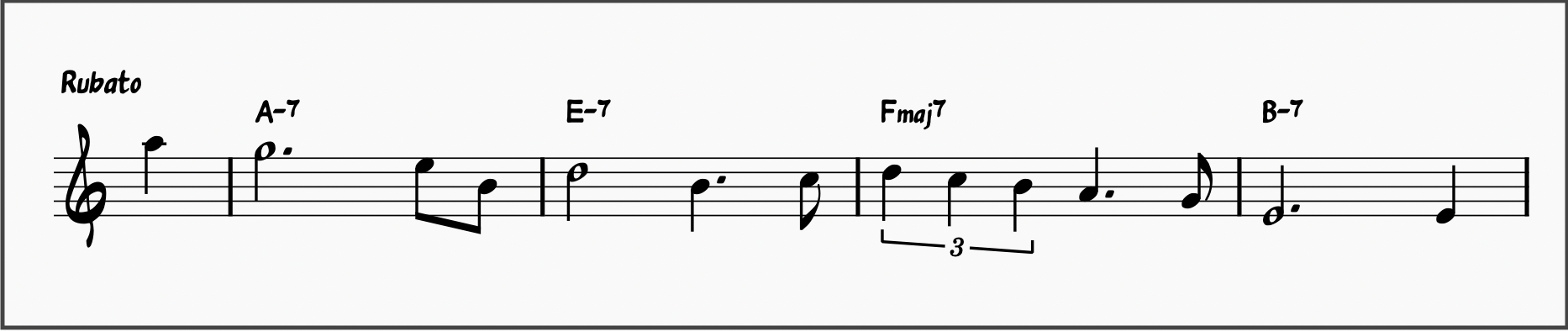
Tempo rubato comes from the Italian word for “stolen time.” It is a technique that allows musicians to push and pull the timing of notes. This “robbed time” adds a certain humanity and expressiveness to musical performances, contrasting with playing strictly in time, which can sound mechanical.
Tempo rubato has both a strict and a casual definition. Playing with tempo rubato traditionally meant a soloist or conductor employed rhythmic freedom of expression. They could slow down or speed up to heighten the emotional gravity of the music.
However, it has since come to mean several closely related things.
- Speeding up and slowing down at the discretion of a sole performer or conductor to heighten the emotional effect of the music. This is the classical definition of tempo rubato.
- Playing with the musical expression of a melody by stretching, contracting, slowing down, and speeding up the melodic phrasing, while the accompaniment remains in time. This is often the definition singers give to tempo rubato.
- Playing free, without a metronomic pulse guiding the flow of the music. Traditionally, this would have been described as ad libitum, but many musicians now use tempo rubato to describe this type of musical expression.
As you might expect, there is much overlap among these three definitions. Regardless of the definition you prefer, it’s clear that mastering tempo rubato is essential for freely playing expressive musical phrases, whether you play in a classical, jazz, or pop style.
Jazz musicians must think beyond the traditional definition of speeding up or slowing down the overall tempo. For a modern player, rubato can also mean temporarily elongating some beats while compensating elsewhere, ensuring that the overall musical structure remains intact, like a jazz singer.
Tempo Rubato is storytelling that isn’t locked down to a metronomical grid.
The perceived effect of tempo rubato is an organic ebb and flow in the musical performance, which feels loose. However, that looseness helps convey a powerful, dramatic musical message.
It is not playing out of time!
Rubato in Jazz
For jazz musicians, rubato is an invaluable tool. While swing feel dominates the jazz idiom, rubato moments—especially in ballads, intros, solo performances, or cadenzas—offer a means of breaking free from the strict pulse of traditional 4/4 swing.
Unlike classical rubato, which is often conductor-driven or pianist-led, jazz rubato is more conversational, driven by interplay between performers, or by a sole performer and his or her accompaniment.
Where Do We Hear Tempo Rubato In Jazz:
Let’s explore some listening examples! Here, we’ll hear how jazz musicians perform using the tempo rubato technique.
Ballads & Solo Intros
Pianists like Bill Evans and Keith Jarrett use rubato in intros and outros, and they might even play entire tunes with a rubato feel.
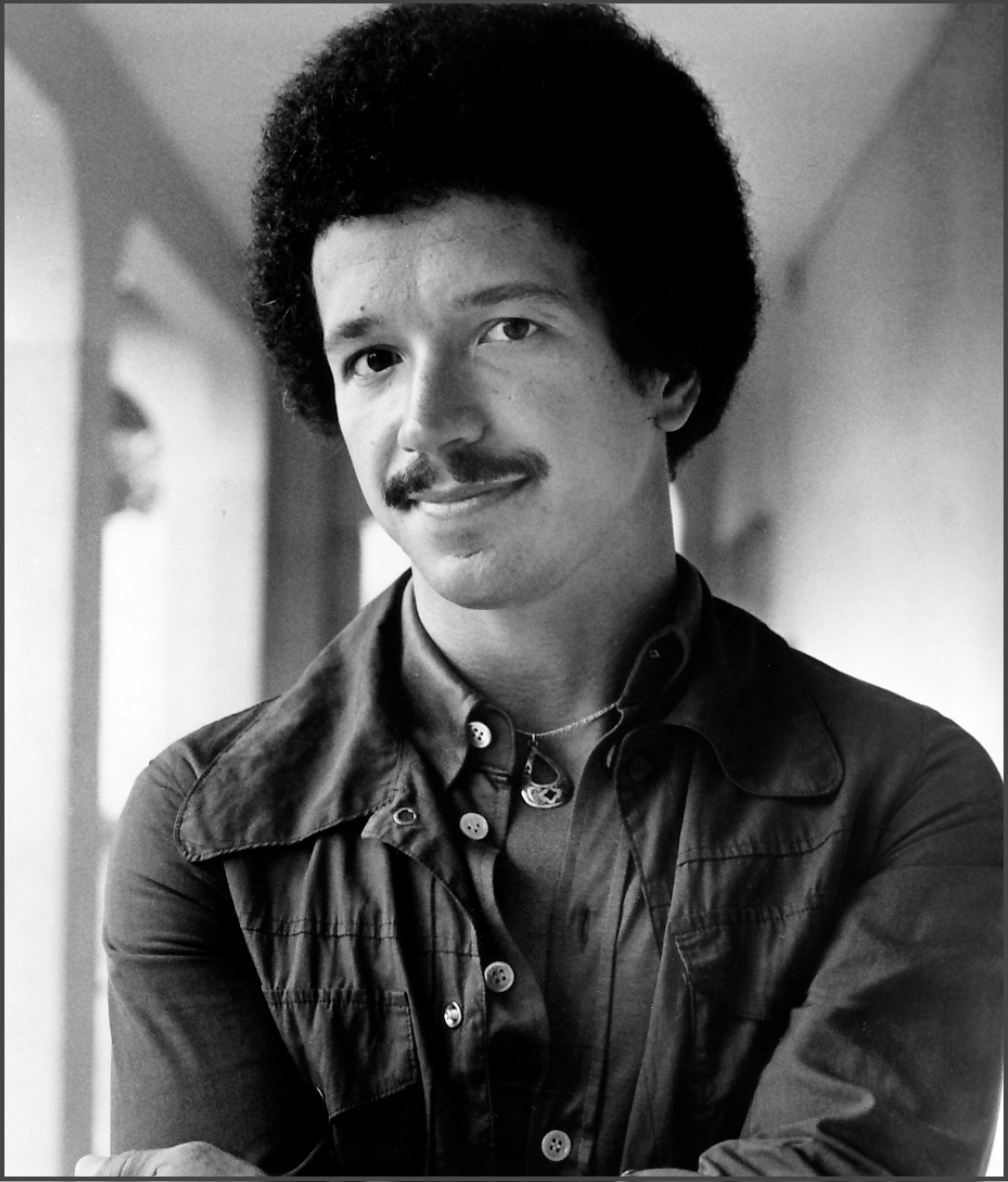
image source: Wikimedia Commons
Listen to this performance of “Somewhere Over the Rainbow” by Keith Jarrett. It is an incredible example of rubato ballad piano-playing in action.
Check out this article to learn more about Keith Jarrett and other incredible jazz piano players.
Guitar players like Jim Hall use subtle rhythmic flexibility to enrich their expression and phrasing, pulling back or pushing forward to add tension and release.
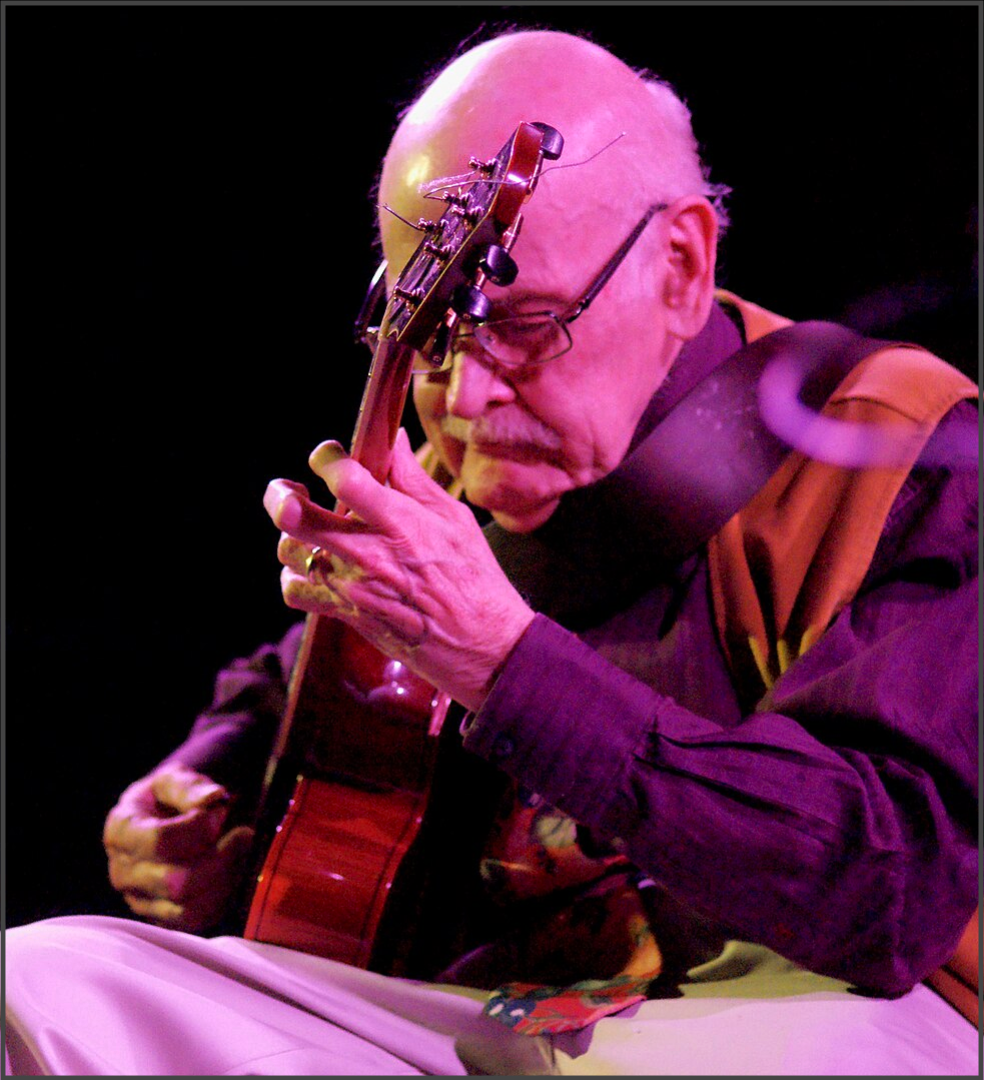
image source: Wikimedia Commons
Listen to Jim Hall play a bluesy Rubato intro to his original composition, find the groove, and then play rubato on the way out.
Check out this article for more on jazz guitar players like Jim Hall.
Jazz Singers
Singers like Frank Sinatra and Shirley Horn masterfully stretch and compress phrases, giving their performances an intimate, behind-the-beat feel, even when their accompaniment is playing in time.
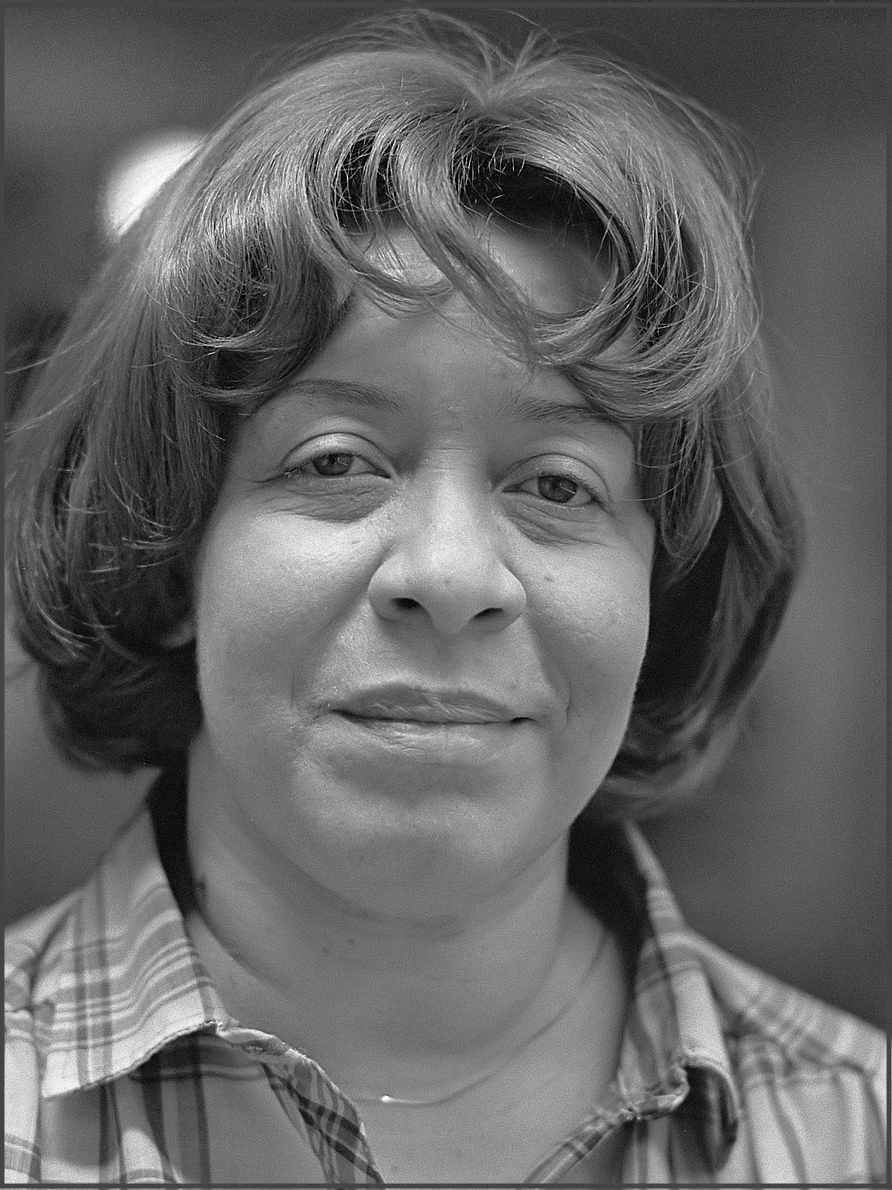
image source: Wikimedia Commons
Check out Shirley Horn’s mastery of rubato in this performance from 1994. Her emotive phrases float over her piano accompaniment and the orchestra playing behind her.
Here is an example of Frank Sinatra stretching the melody of “I Get Along Without You Very Well” in a live performance.
Check out this article on Frank Sinatra songs to learn more about Frank Sinatra.
Free Jazz & Avant-Garde
Musicians like Ornette Coleman and Cecil Taylor take rubato to its extreme, completely abandoning strict time for pure expressive flow.
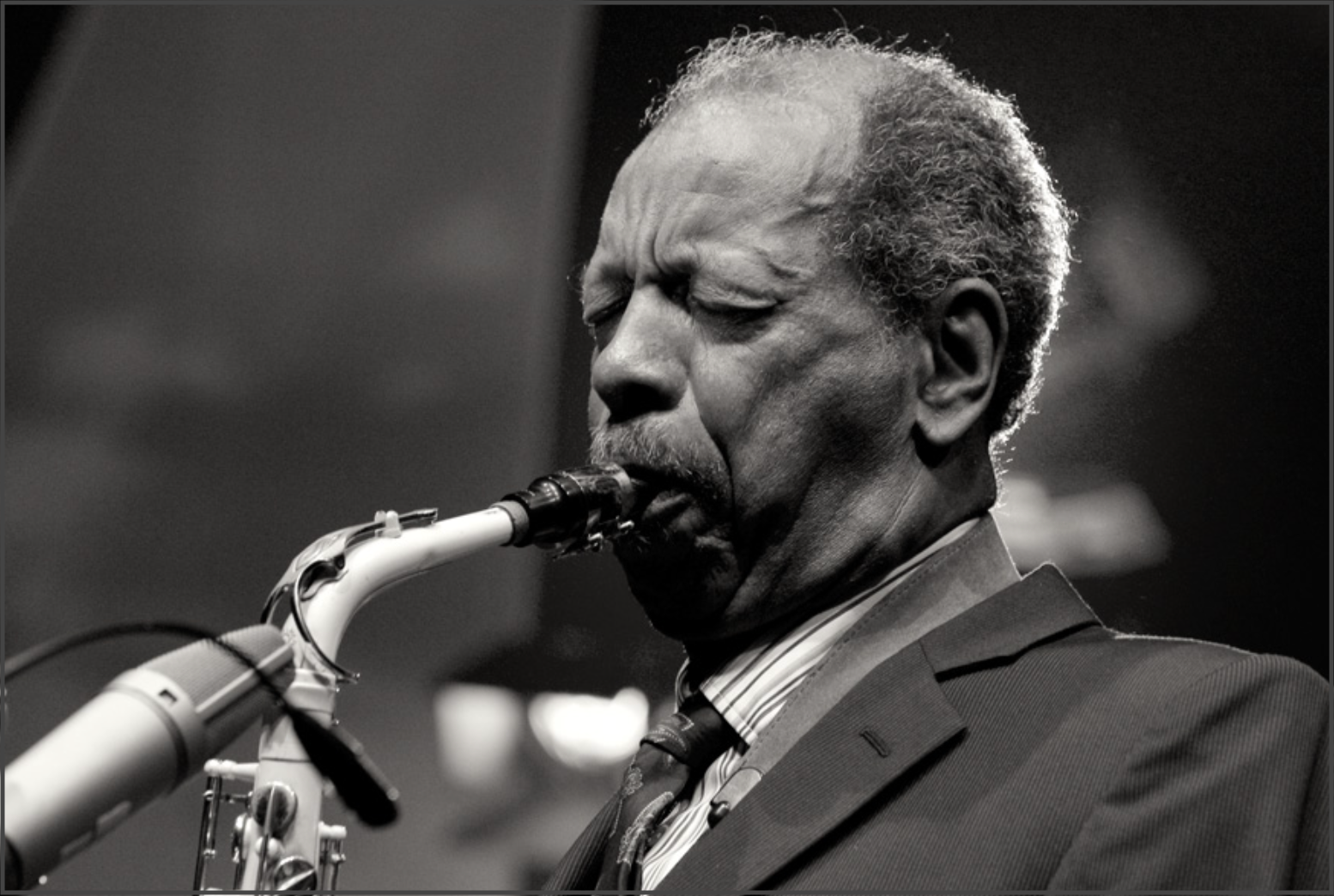
image source: Wikimedia Commons
Listen to saxophonist and composer Ornette Coleman play his tune “Unknown Artist.” Here is an excellent example of solo rubato playing that evolves into group rubato.
Check out this article for more on jazz saxophonists like Ornette Coleman.
Jazz Duos
Some favorite examples of group tempo rubato come in classic jazz duo performances. Gary Burton and Chick Corea stand out to me as masters of this shared “robbed time” feel.
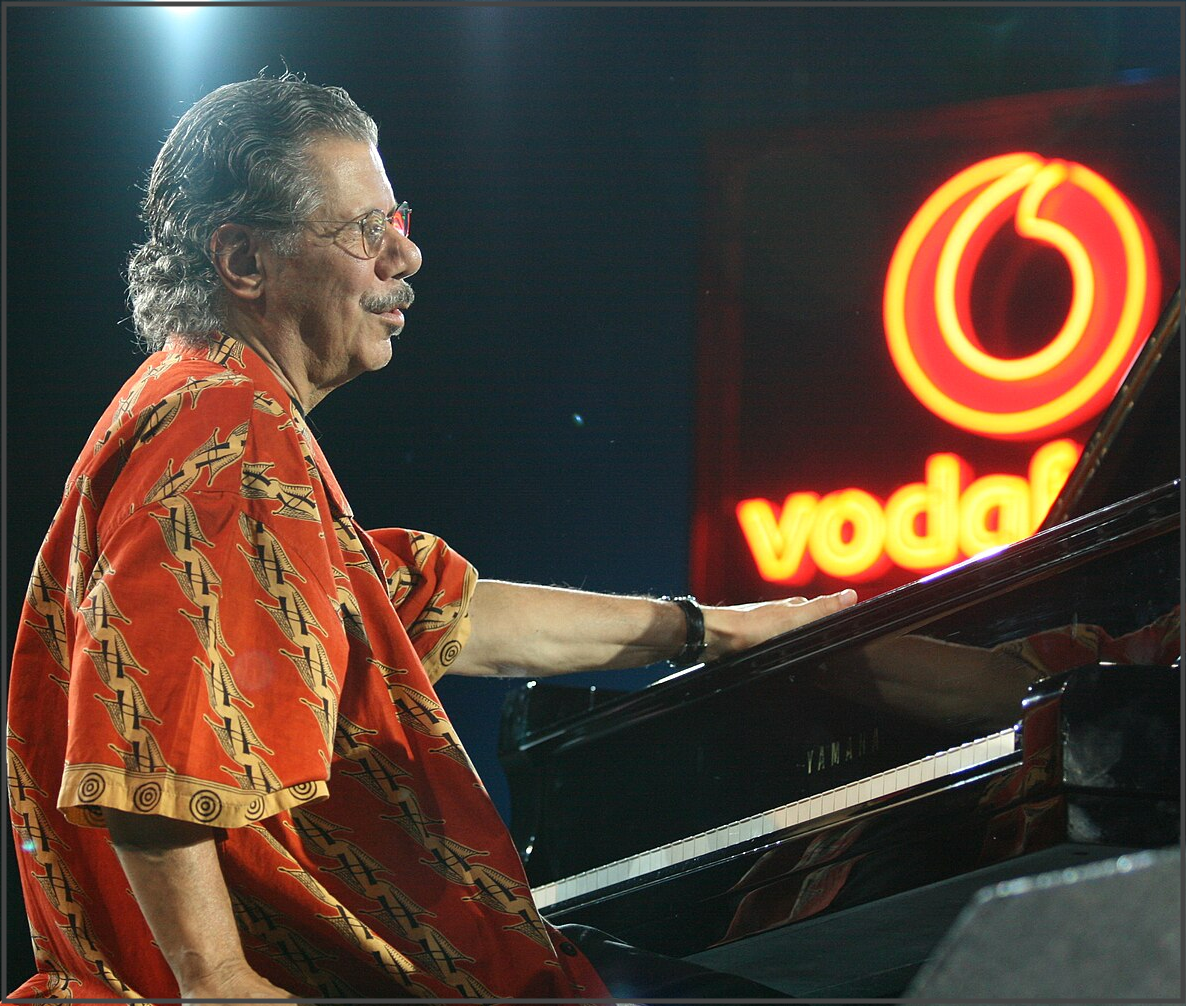
image source: Wikimedia Commons
Check out Chick Corea and Gary Burton playing the classic Corea composition “Crystal Silence.” They effortlessly execute tempo rubato as a team. Listen to how they play rubato, then find a shared pulse before returning to rubato for the last bit of the tune.
As you can tell from these amazing performances, effectively executing tempo rubato requires acute sensitivity to time, ensuring that rhythmic deviations feel intentional rather than arbitrary. Without the proper training and deliberate execution, tempo rubato will likely sound out of time.
Developing a Strong Underlying Pulse
One of the paradoxes of tempo rubato is that, while it involves rhythmic flexibility, it must be grounded in a solid internal pulse. Without a clear sense of time and structural proportion, tempo rubato risks sounding off, unprofessional and amateur.
Rubato in jazz is about feeling rather than calculation. Unlike classical music, where the pianist or conductor often dictates rubato, jazz emerges organically from the interaction between musicians or through the sole creative effort of the soloist.
For jazz musicians, this internal pulse is crucial.
Even when playing freely, the underlying pulse and structure of the tune should be so well-ingrained that the performer can effortlessly return to it. This is particularly important in ensemble settings, where rubato needs to be used carefully to avoid disrupting the group’s cohesion.
So, how do you work on developing your internal pulse so you can play tempo rubato like the pros?
Strategies for Strengthening Your Internal Pulse:
Here are some basic tips to strengthen your inner sense of time.
Practicing with a Metronome:
Begin by playing a phrase in strict time, then experiment with slight rhythmic variations while keeping the metronome on. This helps internalize where the beat is, even when departing from it.
Subdividing Internally
Thinking in subdivisions (e.g., eighth notes or triplets) allows for better control over rhythmic stretching. This is especially useful in jazz, where rhythmic elasticity is often tied to swing feel.
Studying Accelerando and Ritardando
These gradual tempo changes differ from rubato but help train sensitivity to rhythmic flexibility. Mastering them will refine a musician’s ability to manipulate time organically.
Playing with Recordings
Listening to and transcribing recordings of artists who use rubato effectively—such as Bill Evans, Keith Jarrett, or Shirley Horn—helps you follow in the footsteps of the jazz greats.
Check out this article to learn more about famous jazz legends like Bill Evans.
Applying Rubato in Musical Performance
Rubato is not a one-size-fits-all technique; its use depends on style, context, and the performer’s intent. Whether in classical, jazz, or contemporary music, its function is to heighten emotional impact.
Remember, tempo rubato can mean several related but slightly different things.
In Solo vs. Ensemble Performance
Solo Performances: Soloists have the greatest freedom to use rubato without constraints. Pianists, for example, can stretch time freely in a ballad introduction, shaping phrases with expressive fluidity. Traditionally, this is closer to ad libitum playing.
A solo performer can jump back and forth between tempo rubato and strict time at will.
Ensemble Playing: Rubato must be applied with greater sensitivity when playing with a group. Musicians must communicate through subtle cues—like breath, dynamics, or slight ritardando—to ensure the ensemble stays together.
Listen to the audio examples above to hear the different types of tempo rubato in action!
A singer or instrumentalist may pull back slightly on a phrase, prompting the rhythm section to follow suit. Contrastingly, a singer’s accompaniment might keep strict time while the singer floats freely over it.
While playing in time, Rubato phrasing is closer to the true meaning of “robbed time,” where the overall structure and proportion of the musical piece need to be considered when stretching or accelerating the melody.
Creating Tension and Release
Rubato is particularly effective in moments of harmonic resolution.
For example:
- Delaying a chord change can build suspense before resolving into a strong downbeat. This anticipation makes the harmonic resolution stronger.
- Pulling back on the melodic peak and then accelerating into the resolution can add depth and contrast. Pauses in momentum help support and strengthen the surrounding notes, creating a dramatic emotional emphasis.
Keep in mind that these applications mirror techniques found in spoken language! Playing tempo rubato can be like an emotional monologue or a casual conversation. Pauses for emphasis, acceleration for excitement, and stretching syllables for dramatic effect all play into the craft of tempo rubato.
Take Your Jazz Playing to the Next Level—Join the Learn Jazz Standards Inner Circle.
Want to take your jazz playing to the next level? The Learn Jazz Standards Inner Circle helps musicians like you break through practice plateaus and focus on the things that matter so you can become the best jazz musician you can be!
Improve in 30 Days or Less. Join the Inner Circle.