
“The Girl From Ipanema” is a classic Bossa Nova song that helped kick off the Bossa Nova craze in the United States. It is one of the most famous jazz standards and possibly the second most recorded song in history, after “Yesterday” by the Beatles.
In this article, we will learn how to play this incredible Bossa Nova tune. We’ll cover—
- A brief history of Bossa Nova and The Girl From Ipanema
- Bossa Nova Characteristics like Rhythm and Chord Shapes
- The Girl From Ipanema chords (harmonic analysis)
- Six versions you need to check out!
If you want to learn more classic jazz standards like this and improve your jazz chops, check out the Learn Jazz Standards Inner Circle. We have everything you need to take your playing and theory skills to the next level!
Improve in 30 days or less. Join the Inner Circle.
Table of Contents
History of Bossa Nova (And The Girl From Ipanema)
Bossa Nova is an important subgenre of jazz that originated in Rio de Janeiro in the late 1950s and early 1960s. The genre is known for its smooth, nylon string guitar playing, which featured syncopated samba-inspired rhythms.
The Brazilian movie Black Orpheus (1959) helped solidify this new style of music in the Brazilian consciousness. Though the rhythms were familiar, jazz-inspired harmonies were introduced to the Brazilian public in a new way.
This and the laid-back attitude of its main personalities added to the genre’s relaxed, carefree mystique, especially as it hit the US during the Cool Jazz period. Speaking of the US, the first album to go mainstream stateside was Getz/Gilberto (1963), which featured our tune, The Girl From Ipanema.
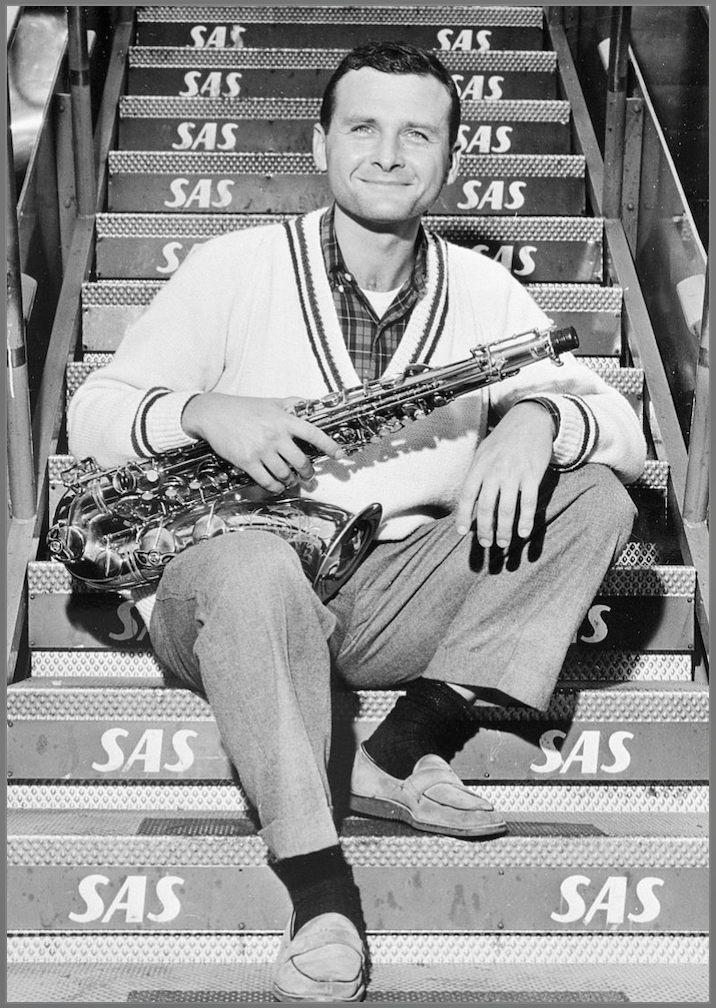
image source: Wikimedia Commons
Antonio Carlos Jobim and The Girl From Ipanema
Antônio Carlos Jobim wrote the music for the Girl From Ipanema in 1962 for a musical comedy titled Dirigível, which never succeeded. The playwright, Vinícius de Moraes, was also the lyricist for Garota de Ipanema (Portuguese for Girl From Ipanema).
Antônio Carlos Jobim’s music would appear on the 1963 album Getz/Gilberto and was made famous by Stan Getz and João Gilberto. Their version of The Girl From Ipanema became an international hit and solidified this song as one of the most recorded tunes in history.
Astrud Gilberto, João Gilberto’s wife, sang the English verses.
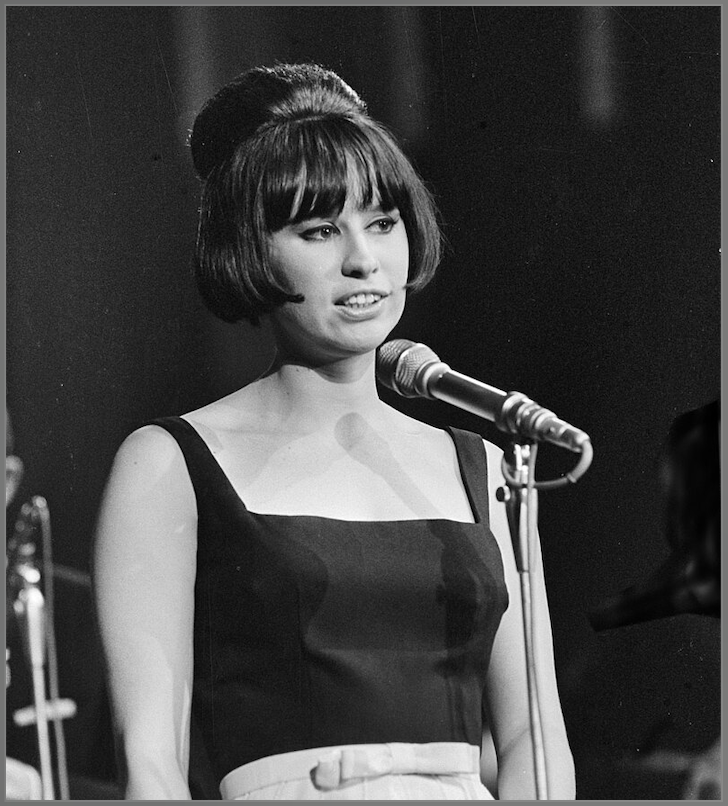
image source: Wikimedia Commons
The Girl From Ipanema English Lyrics
Tall and tan and young and lovely
The girl from Ipanema goes walking
And when she passes
Each one she passes goes “ahh”
When she walks, she’s like a samba
That swings so cool and sways so gentle
That when she passes
Each one she passes goes “ooh”
But I watch her so sadly
How can I tell her I love her
Yes, I would give my heart gladly
But each day, when she walks to the sea
She looks straight ahead, not at me
Tall and tan and young and lovely
The girl from Ipanema goes walking
And when she passes
I smile but she doesn’t see
Lyrics by Norman Gimbel
Garota De Ipanema Portugese Lyrics
Olha, que coisa mais linda
Mais cheia de graça
É ela, menina, que vem e que passa
Num doce balanço, a caminho do mar
Moça do corpo dourado
Do sol de Ipanema
O seu balançado
É mais que um poema
É a coisa mais linda que eu já vi passar
Ah, por que estou tão sozinho?
Ah, por que tudo é tão triste?
Ah, a beleza que existe
A beleza que não é só minha
Que também passa sozinha
Ah, se ela soubesse
Que quando ela passa, o mundo sorrindo
Se enche de graça e fica mais lindo
Por causa do amor
Lyrics by Vinícius de Moraes
Bossa Nova Elements You Need To Know
Though many Bossa Nova songs are considered jazz standards, Bossa Nova tunes have several characteristics that make them distinct from jazz in the traditional sense.
For example, Bossa Nova tunes do not swing and often have a percussive atmosphere quite different from straight-ahead jazz. However, Bossa Nova and regular jazz share harmony and song structure similarities.
Let’s explore some basic Bossa Nova rhythms and dive into common chords you can use when playing through The Girl From Ipanema chords.
Bossa Nova Comping Rhythms

image source: Wikimedia Commons
The rhythms used in the Girl From Ipanema come from Samba, a broad term for traditional Brazilian and Afro-Brazillian rhythms. Here are a few common Bossa Nova comping patterns you can use when playing through The Girl From Ipanema chords.
Bossa Nova Comping Pattern 1

Bossa Nova Comping Pattern 2

Bossa Nova Comping Pattern 3

5 Common Bossa Nova Guitar Chord Voicings You’ll Encounter in Girl From Ipanema
Below, I’ve provided a few chord diagrams that you can use to play all the The Girl From Ipanema chords. All you have to do is learn these five groups of chords, and you can transpose them along the neck to play all the chords you need.
Fmaj7 and F6(add9)
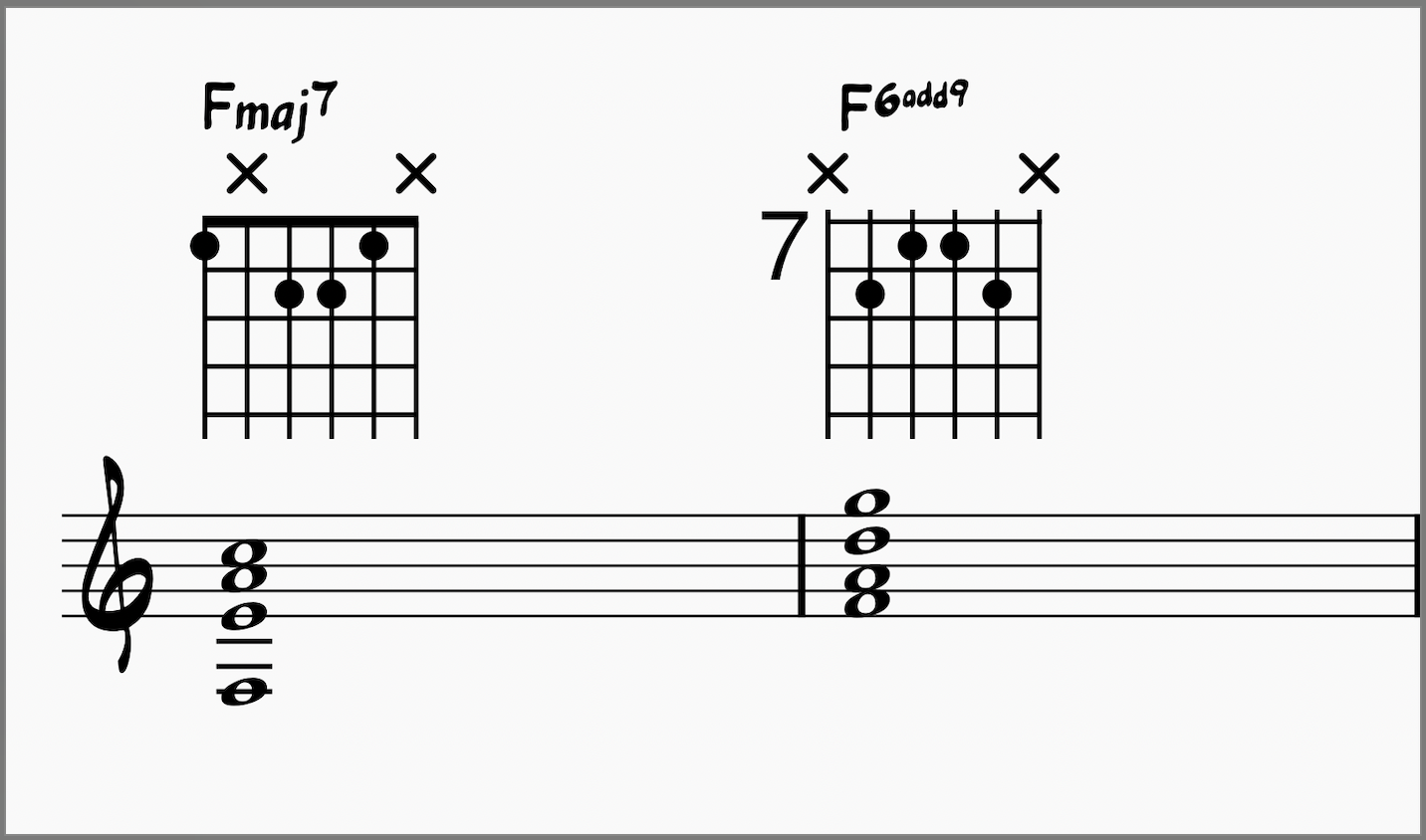
Though the chord symbol says Fmaj7, you can move these shapes up one fret to play the Gbmaj7 in the bridge.
G7#11
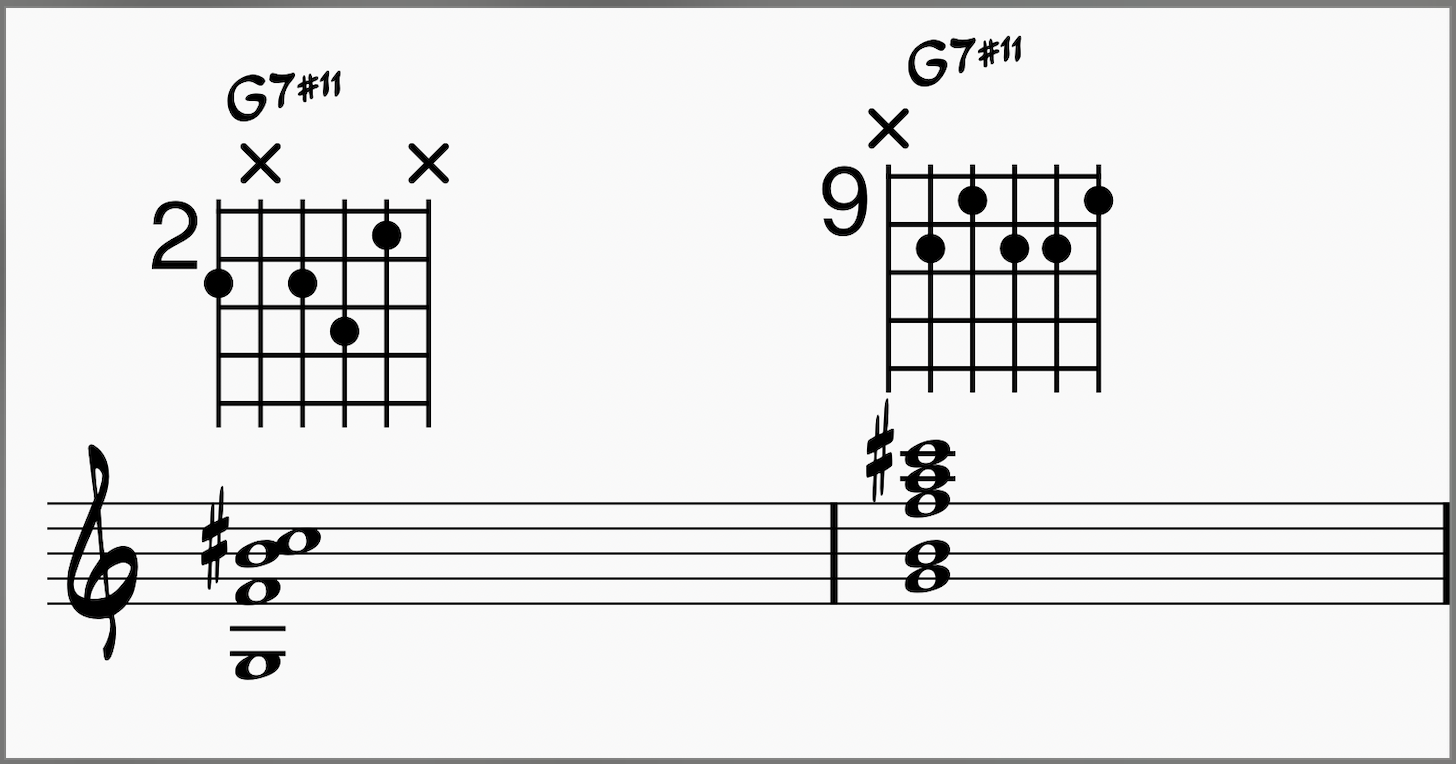
This chord shape can be used for G7#11, Gb7#11, and even other dominant chords in this tune.
Gb7 and Gb9
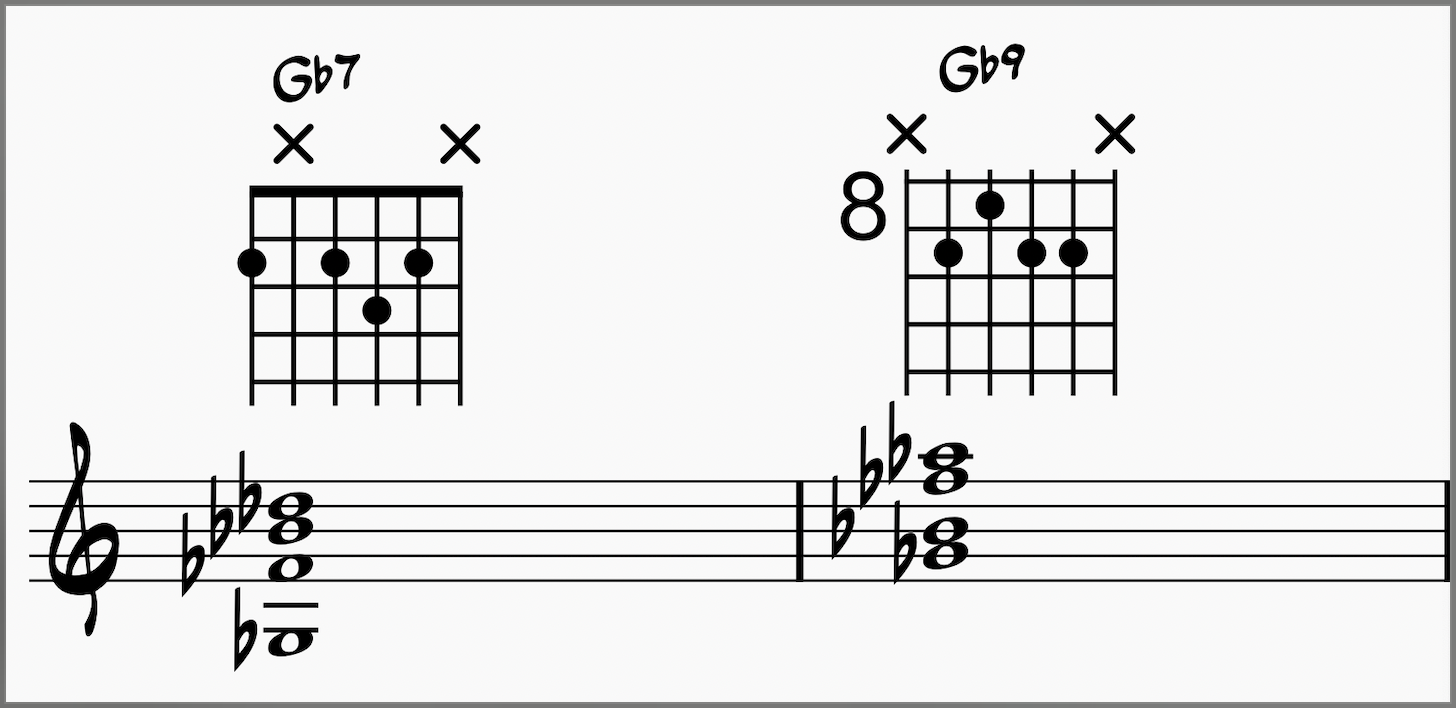
These chord shapes can be used for any unaltered dominant chord in the tune.
G-7 and G-9
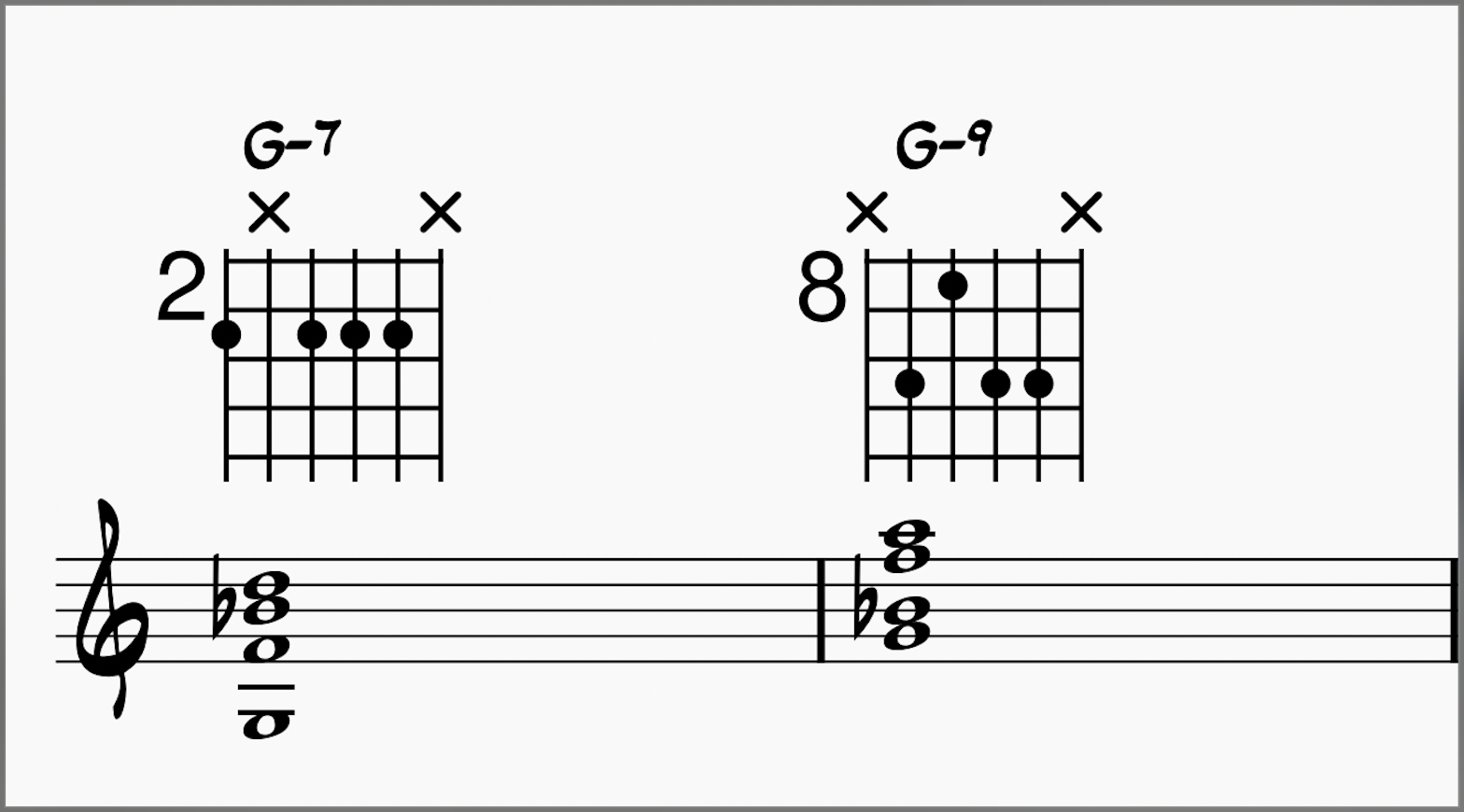
These chord shapes can be used for any -7 chord in the tune.
D7#5
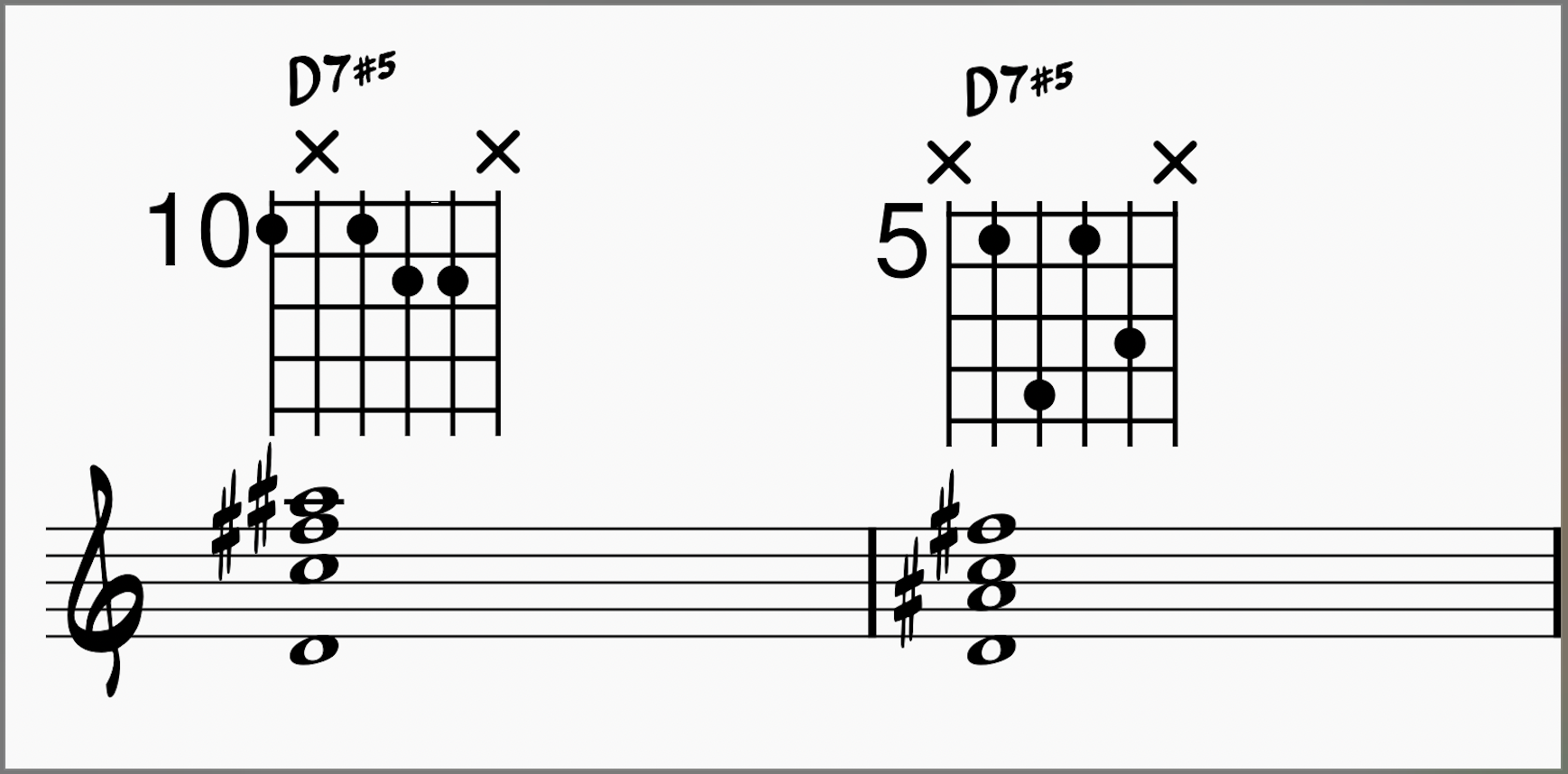
These chord shapes can be used to play the two altered dominant chords at the end of the bridge.
Check out our article on jazz guitar chords for other guitar chord shapes. Or, check out this article to learn more about jazz piano chords.

The Girl From Ipanema Chords: Harmonic Analysis
Now it’s time to explore the Girl From Ipanema chord progression! Try to incorporate the shapes and comping rhythms shown above when playing through these changes.
The Girl From Ipanema is 40 bars and uses an A-A-B-A form. The B section is 16 bars, which is less common than an 8-bar bridge. Usually, this song is played in Db major in Brazil, but it is generally played in the key of F major in the United States.
We’ll learn it in the key of F major, but I’ve included a Roman Numeral Analysis so you can easily transpose this chord progression into other keys. Let’s start with the A section.
The Girl From Ipanema Chords: A Section
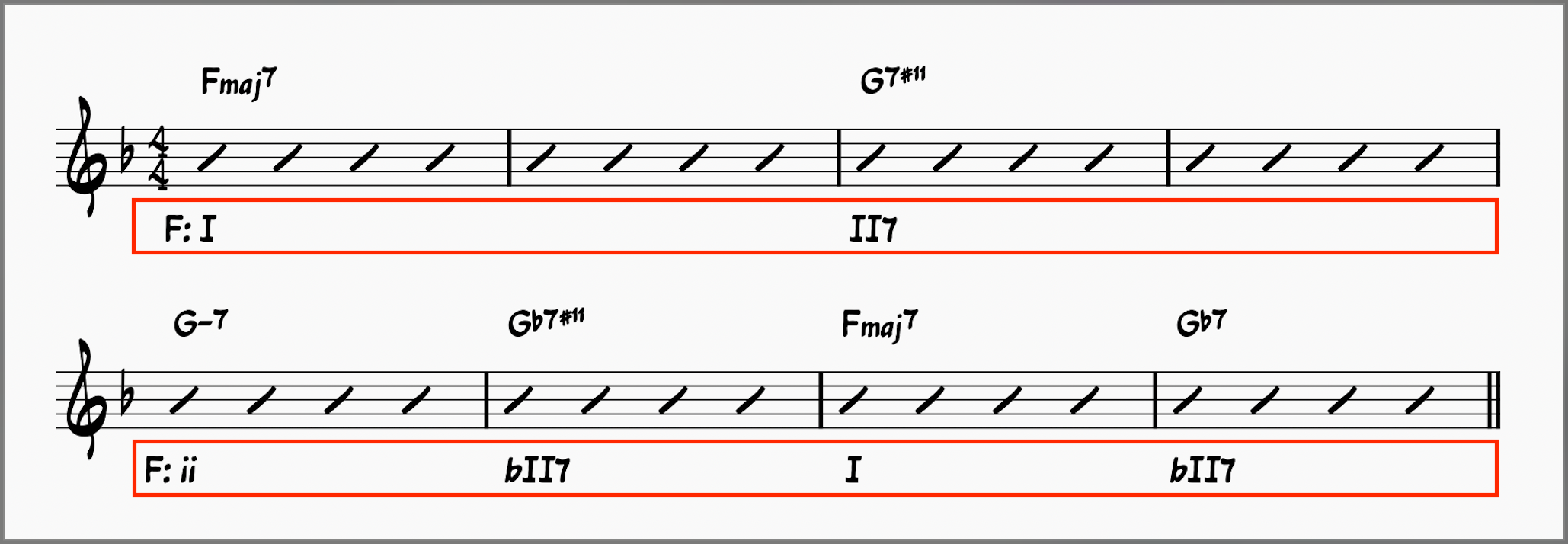
The song opens on the tonic chord (Fmaj7) and moves to a dominant II chord (G7#11) in the third and fourth measure. Then, the dominant II chord turns into a minor ii chord (G-7), which becomes a Gb7#11 chord. This chord is a tritone away from what would typically be the V chord or C7.
Therefore, Antonio Carlos Jobim uses a tritone sub of the V chord instead of the V chord itself. Tritone subs share the same guide tones as the chords they replace. Below, you’ll see that C7 and Gb7 share the same guide tones (Bb and E).
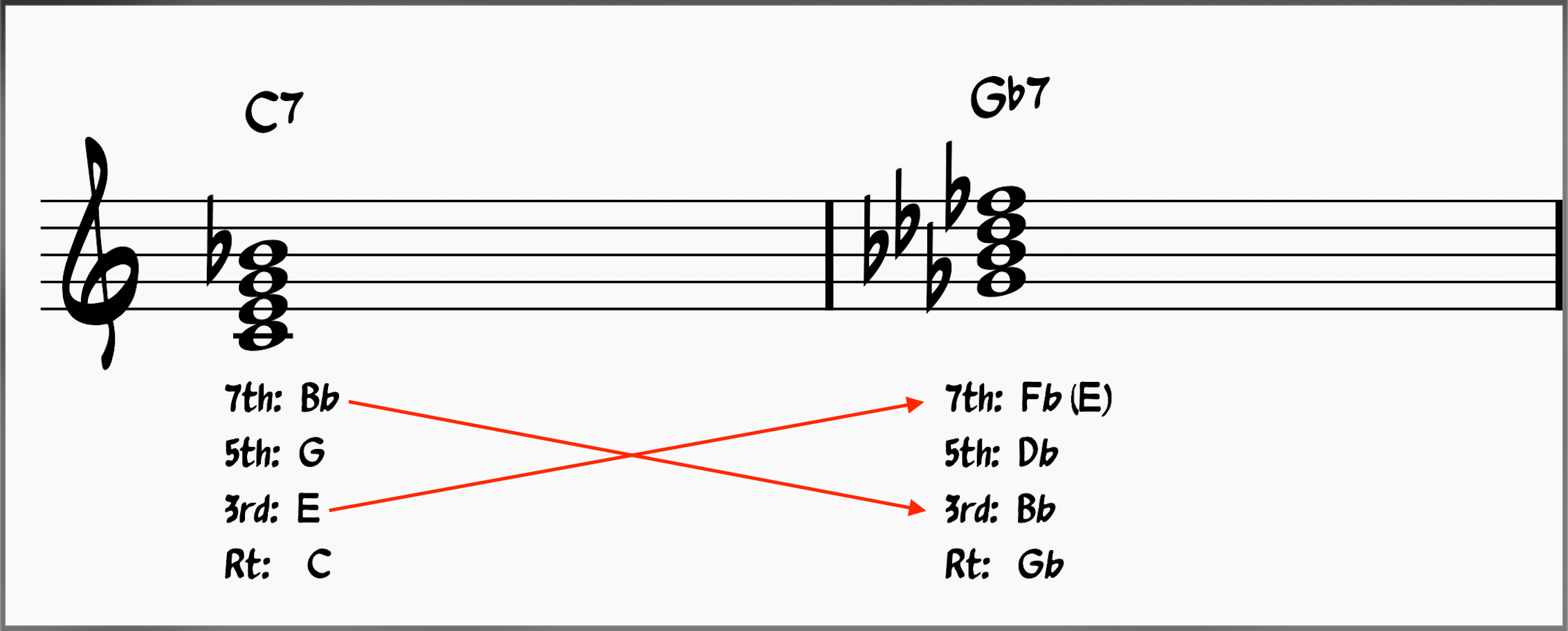
Instead of a typical ii-V-I progression, Jobim chooses a ii-bII7-I chord progression. Check out this article to learn more about tritone substitutions.
The opening chord progression, where we start on the tonic, move to the dominant II, and then play a ii-V back to the tonic, is found in other jazz tunes like “Take the A Train.” Even “Donna Lee” uses a variation of this jazz chord progression (I-VI-II-ii-V-I).
The Second A Section
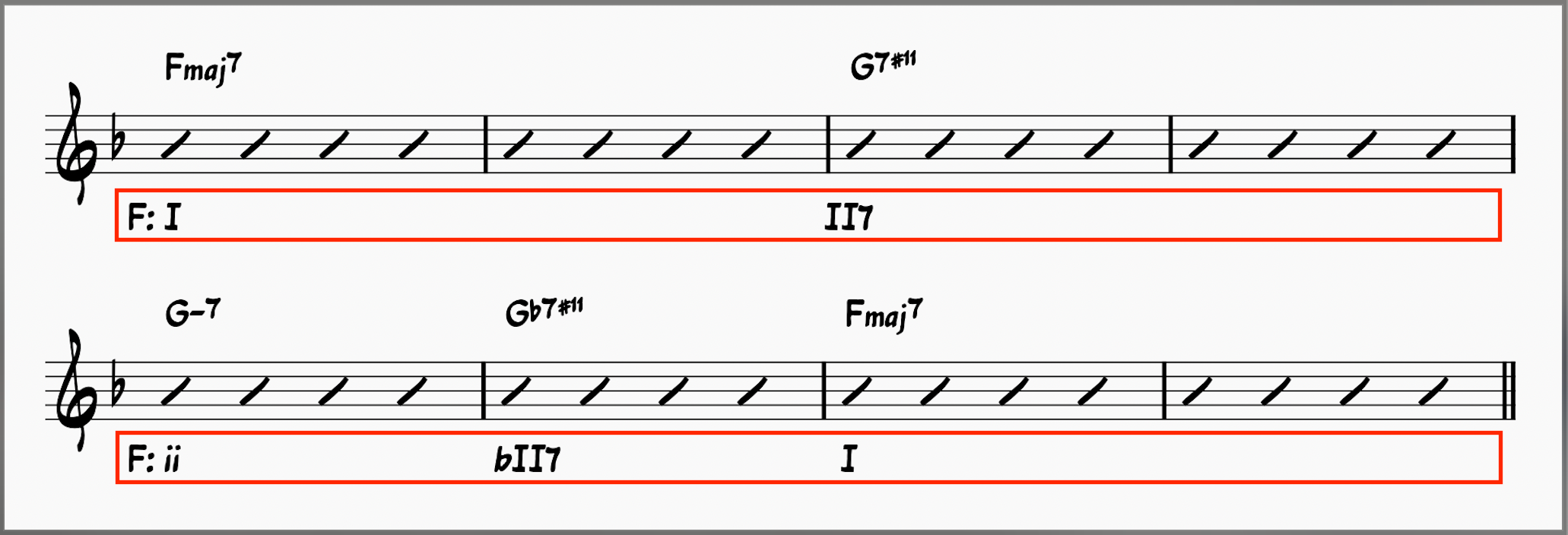
The second A section is nearly identical to the first. The only difference is in the last measure. Instead of playing a Gb7 chord, which is a tritone sub for C7, we stay on Fmaj7. This makes the modulation in the B section more abrupt.
The Girl From Ipanema Chords: B Section
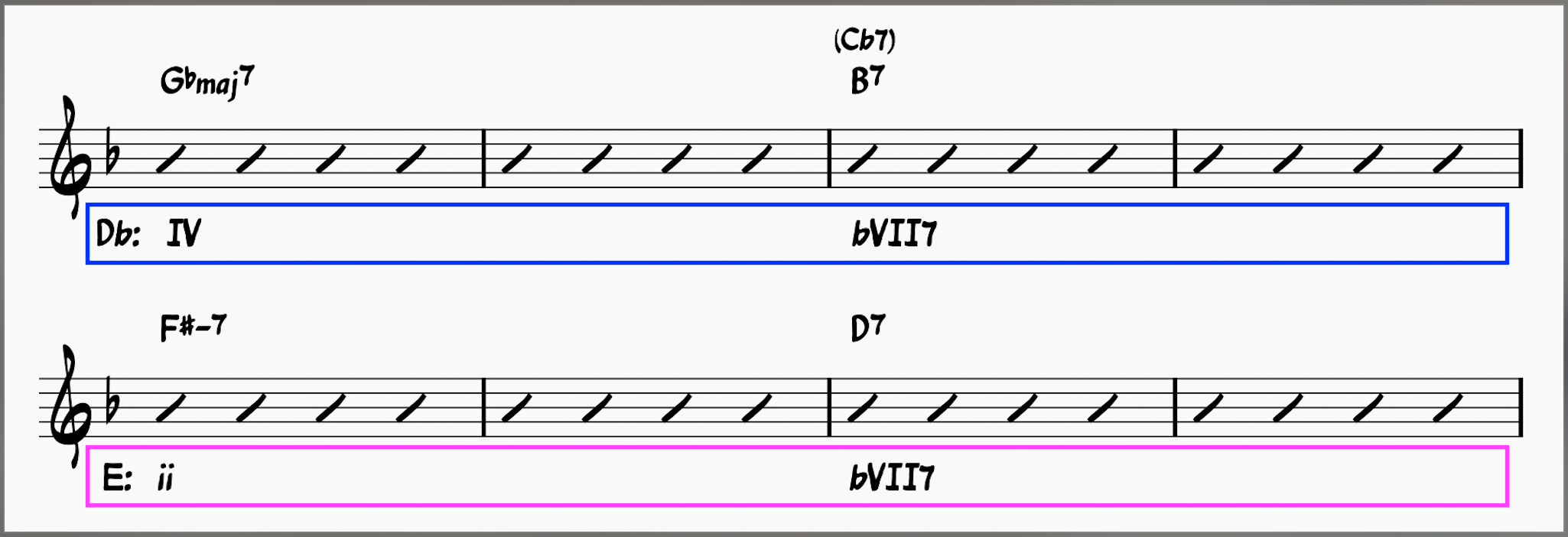
The B section of The Girl From Ipanema is truly unique. I think the B section sets this song apart from other jazz songs.
We start the B section in the key of Db, but we never end up playing Db. Instead, we start on the IV chord (Gbmaj7), which is a half step up from where we were at the end of the A section. We then play a backdoor dominant chord, which is a dominant chord built from the b7th scale degree of the key.
In this case, that’s a Cb7 (or B7). However, this dominant chord never resolves up a whole step to Db. We end up on F#-7 instead. We are now in the key of E, sitting on a ii chord. And again, instead of a regular V chord, we play a D7, which is the backdoor dominant in the key of E.
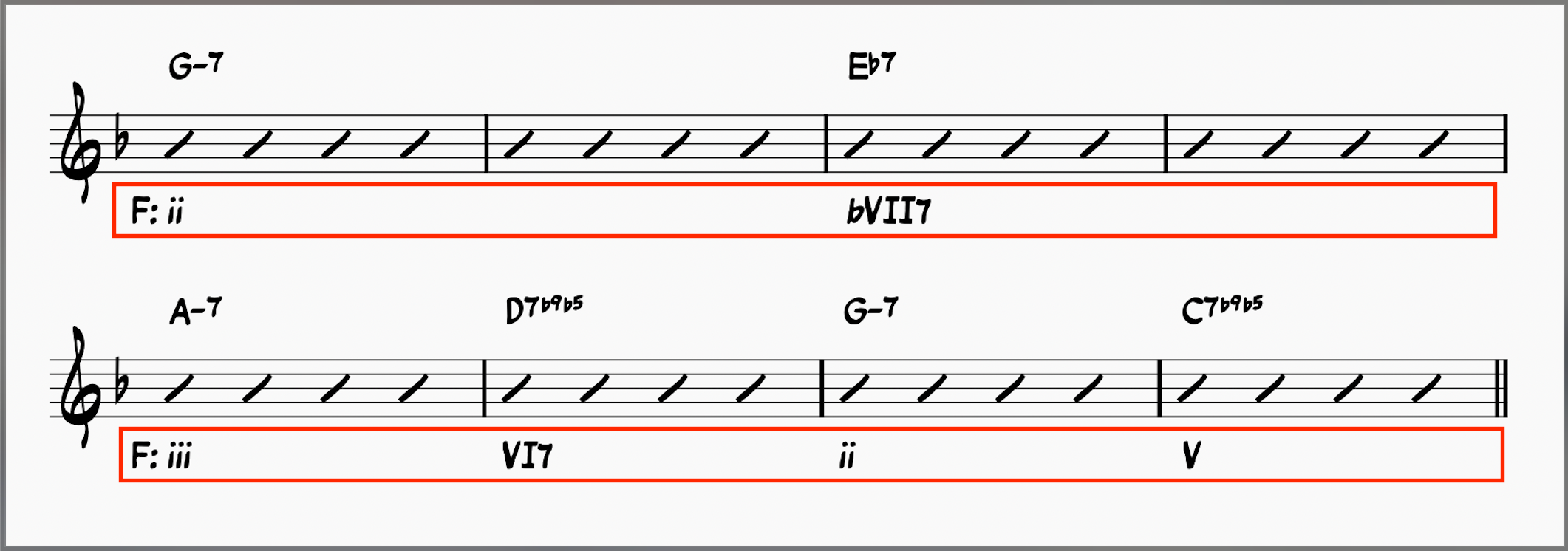
This trend continues into the following 8 bars of the B section. The D7 resolves where we’d expect it to if it weren’t a backdoor dominant chord—G-7, our new ii chord. We are back in the key of F!
The G-7 moves to another backdoor dominant chord, which is an Eb7 in the key of F. We wrap up the bridge of The Girl From Ipanema with a standard iii-VI-ii-V chord progression.
Backdoor dominants are common in jazz. Check out this article to learn more about backdoor dominants. Also, check out this article to learn more about jazz chord progressions.
The Girl From Ipanema Chords: The Last A Section
Finally, we come to the last A section of the tune. Luckily for us, there is nothing new here! It is identical to the first eight bars of the song.
Loving the Girl From Ipanema chords? Check out this article to learn more about Bossa Nova chord progressions and the basic elements of Bossa Nova.
6 Versions Of The Girl From Ipanema You Should Check Out
The Girl From Ipanema might be the second most-recorded song in history, so many versions exist to explore! To help you narrow down the playing field, here are some versions of Girl From Ipanema you should definitely listen to!
1. The Pery Ribeiro Version: The First Recording
2. The Classic Recording: The Getz/Gilberto Album Version
3. Live Version With Astrud Gilberto and Stan Getz
4. The Antonio Carlos Jobim and Frank Sinatra Version
5. The Gilberto/Jobim Version (The Original Portuguese Lyricist)
6. The Amy Winehouse Version (A Fun Departure From Traditional Jazz)
Be sure to check out these and other versions of The Girl From Ipanema!
Want To Learn More About Jazz Standards Like Girl From Ipanema? Join The Learn Jazz Standards Inner Circle.
Ready to take your jazz chops and music theory knowledge to the next level? Check out the Learn Jazz Standards Inner Circle. We’ve got everything you need to supercharge your musicianship skills.
Improve in 30 days or less. Join the Inner Circle.